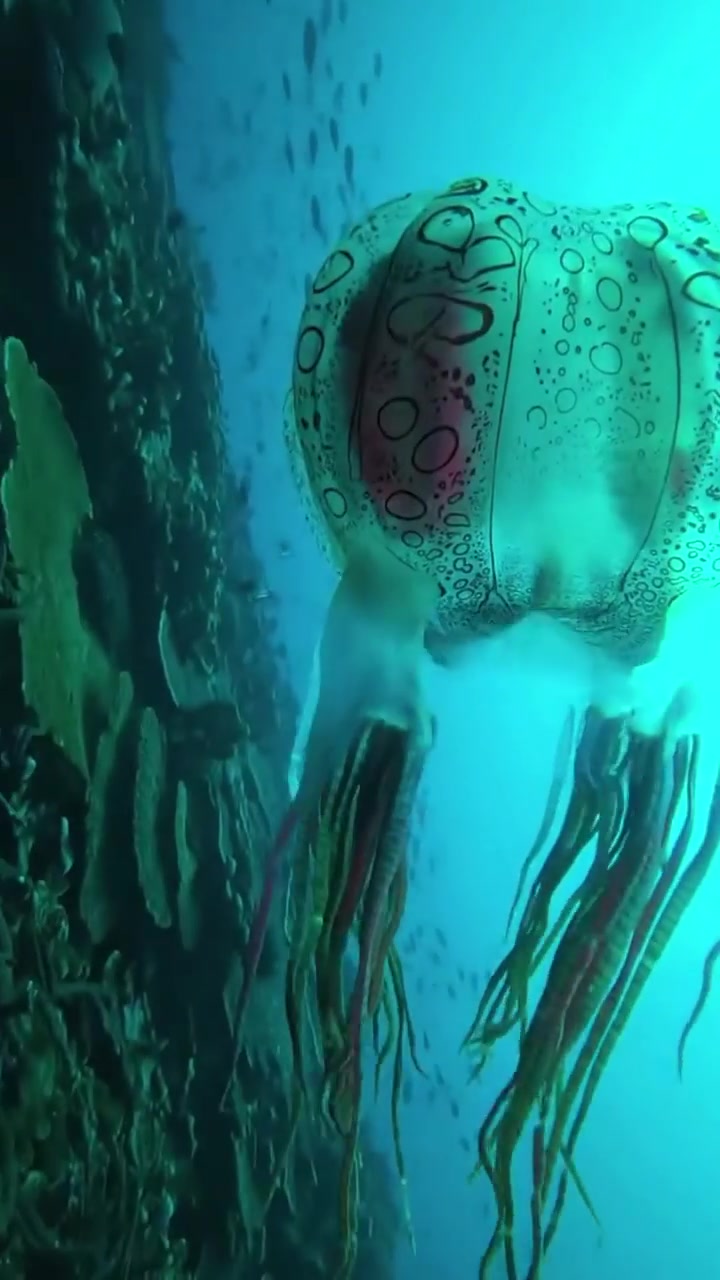
At the heart of our oceans swims a living, breathing spectacle: the Lion's Mane Jellyfish. These aqua giants, crowned with trailing tentacles like a mane, are among the largest of their species, reaching lengths of over 120 feet, and inhabit the cold boreal waters of our world's northernmost oceans.
Swimming through the deep: The Lion's Mane Jellyfish
The Lion's Mane Jellyfish (Cyanea capillata) is not just large; it's enormous. It's the largest known species of jellyfish. C. capillata is also distinctive in appearance, with its nearly bell-shaped body and long, flowing tentacles. It's a creature of the deep, found in the frigid waters of the Arctic, North Atlantic, and North Pacific Oceans. The jellyfish can have various colorations, but commonly presents with a pinkish to transparent bell while the tentacles appear thin and slightly cream-colored. Their massive size is just one of its distinguishing characteristics. The Lion's Mane Jellyfish also has a complex structure, with up to 1,200 tentacles. These tentacles are filled with stingers called nematocysts, which the jellyfish uses to capture prey. On top of their structure, the Lion's Mane Jellyfish also swims in a unique way, propelled by jet-like pulses of water expelled from its bell.
The Tentacled Titan and marine health
A silent sentinel of change
The Lion's Mane Jellyfish's prominence is telling. The creature's presence in increasing numbers is often seen as a sign of marine ecosystem change. Jellyfish populations can balloon in disturbed or polluted environments, indicating a potential problem in the ecosystem. This makes them a silent environmental sentinel. They can also overpopulate the seas as a result of overfishing, which leads to a decrease in their natural predators.
How big is too big?
Lion's Mane Jellyfish aren't the only large jellyfish out there. But their size matters. They boast up to 1,200 tentacles, while the Portuguese Man-o-War, a siphonophore, possesses up to 15 tentacles. But they are still very different in morphology and lifecycle. They can float with their floating bladder, while the Lion's Mane Jellyfish swims with its jet-propulsion system, and the tentacles of each species differ greatly in form, function, and sting severity. But researchers remain intrigued by the Lion's Mane's sheer size and its remarkable traits, which help it thrive in its cold water habitats.
A sting in the tale
Lion's Mane Jellyfish may be beautiful, but they pack a powerful sting. Their tentacles are covered in nematocysts, which release toxins that can cause painful, red welts on humans. While the sting is rarely deadly, it can be excruciating, and the pain from the sting can persist for a while. Deterring the creature is another issue because they can't be easily spotted while swimming underwater. Their sting may deter predators, but the creature is less effective against humans. They travel in schools and are known to sting people when they are in a plentiful population. Most jellyfish stings are preventable if you know the habitats to avoid.
The Lion's Mane Jellyfish in motion
Eerie beauty in cold waters
The Lion's Mane Jellyfish's movements are a sight to behold. Their jet propulsion mechanism propels their bell-shaped body through the water with a pulsating motion, creating a mesmerising display of strength and grace. This movement, paired with their trailing tentacles, forms a dance that is both eerie and captivating.
Swim at your own risk
Many people may not be aware that the world of diving is not only reserved for deep-sea exploration. Marine creatures like the Lion's Mane Jellyfish are also worth observing at their natural habitat. The ocean has not only been a great lure for swimmers but an appealing natural habitat for underwater photography and videography enthusiasts. But if you are a diver planning to explore the waters and see the Lion's Mane Jellyfish in motion, you will need to be fully aware that the jellyfish, despite its unique beauty, can cause you harm if you dare to touch it.
- Preparation: Research the exact locations where the jellyfish can be spotted. Packing their antivenom may help with accidental stings but do not engage with them. When exploring, keep an eye on the depth, the sea currents.
- Location: Lion's Mane Jellyfish are found in cold, boreal waters of the Arctic, North Atlantic, and North Pacific Oceans.
- Safety precautions: These jellyfish can sting, and the sting can be extremely painful.
- Protective gear: Wear the right protective gear, including a thick wetsuit and gloves, to protect yourself from stings. Also, wear a diving mask that covers your face completely.
Questions readers ask
How do Lion's Mane Jellyfish move through the water?
Lion's Mane Jellyfish move through the water using a unique jet-propulsion system. They expel water from their bell-shaped bodies in pulses, which propels them forward. This method of movement is quite efficient for their size and the cold water environments they inhabit.
What should I do if I'm stung by a Lion's Mane Jellyfish?
If you're stung by a Lion's Mane Jellyfish, it's important to rinse the area with vinegar to deactivate any remaining nematocysts. Then, remove any tentacles from the skin and seek medical attention if the pain is severe or if you experience an allergic reaction.
Why are Lion's Mane Jellyfish considered an environmental indicator?
Lion's Mane Jellyfish are considered an environmental indicator because their increasing numbers can signal changes in marine ecosystems. Their populations can grow in disturbed or polluted environments, and they can also overpopulate as a result of overfishing, which leads to a decrease in their natural predators.
How does the Lion's Mane Jellyfish compare to other large jellyfish?
The Lion's Mane Jellyfish is one of the largest known species of jellyfish, with up to 1,200 tentacles. In comparison, the Portuguese Man-o-War, another large jellyfish, has up to 15 tentacles. However, the Portuguese Man-o-War is a siphonophore, not a true jellyfish, and has a different morphology, lifecycle, and sting severity.
Are Lion's Mane Jellyfish found in warm waters?
No, Lion's Mane Jellyfish are not found in warm waters. They are cold-water dwellers and inhabit the frigid waters of the Arctic, North Atlantic, and North Pacific Oceans. Their unique adaptations allow them to thrive in these cold environments.
What do Lion's Mane Jellyfish eat?
Lion's Mane Jellyfish primarily feed on small fish, crustaceans, and even other jellyfish. They use their long, trailing tentacles, which are equipped with stingers called nematocysts, to capture and paralyze their prey before consuming it. Their diet helps maintain the balance of marine ecosystems.
Related deep dives
Similar reads based on topic and creator.




Recent articles
Fresh deep dives from the latest Reels we unpacked.



Comments
Be the first to comment.