Spirals and Volumes
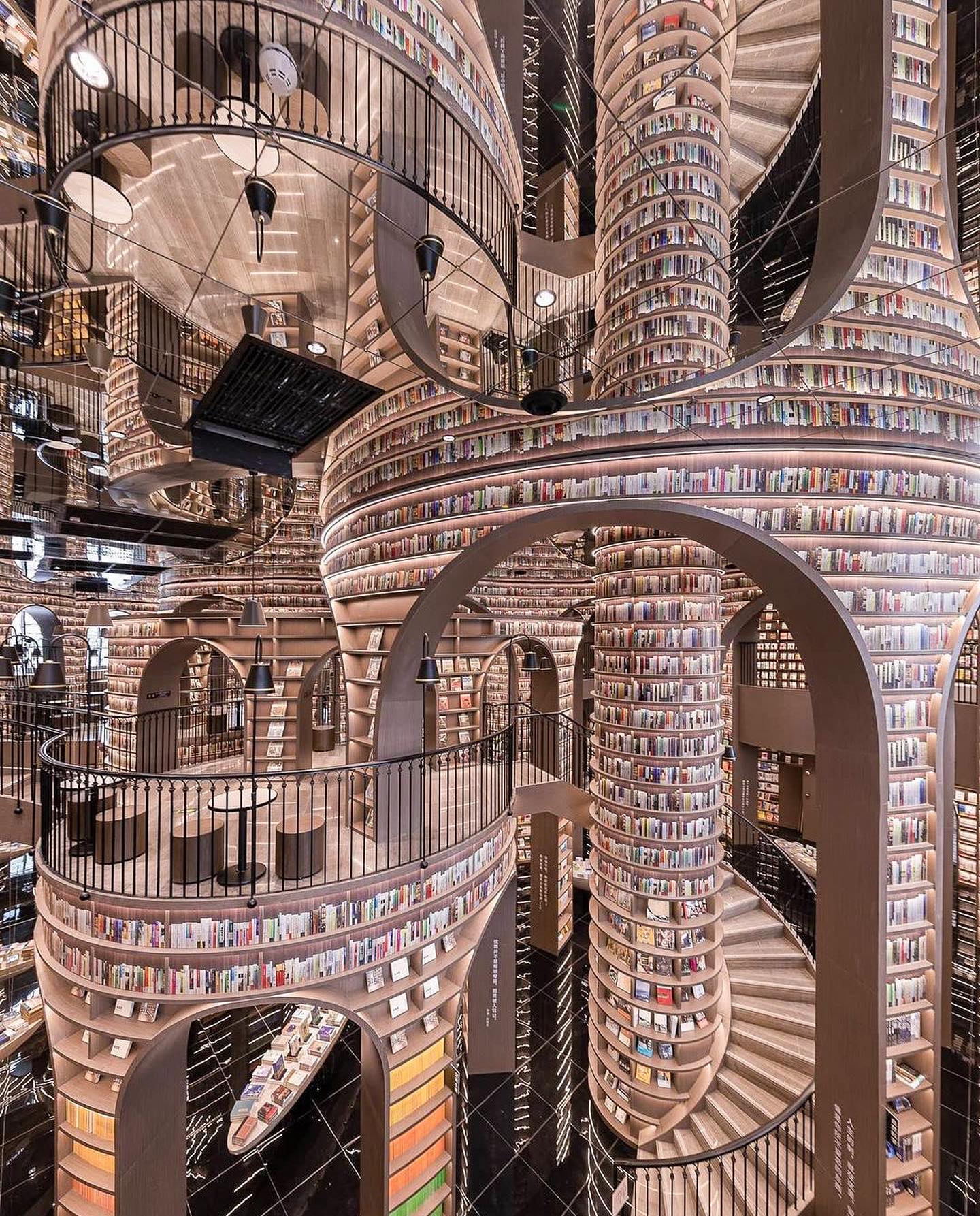
Picture this: a library that more or less isn't based on the idea of rows and aisles. Instead, imagine spiraling bookshelves that wrap around a central axis, creating an interior to navigate like never before. This library defies the traditional grid layout; instead, it offers curved walkways and sightlines that provide an ever-changing relationship with the book collection. The most striking feature of the library might be its spiraling bookshelves. Underneath the oculus (a large circular opening) , visitors can see multiple levels of books and walkways that twist around the central column, each one with fresh views of layers above and below. The panoramic circulation around the circular structure, makes each book a different distance from the observer. The library puts the collection visibly on display, rather than hiding it away in narrow aisles. Each book gets an individual display and the space itself becomes an interior that demands to be explored. The interior of this library, designed by Joost Gijsen, is not just about the spiraling bookshelves. There are other distinct spaces around the collection, including a reading area and seating — encouraging visitors to pause and browse as they move through the structure. The design seems to emphasize the idea of the interior experience and even provides plenty of seating. The interior design here is a combination of the architectural forms and the collection circulation. The circular symmetry and the interior perspectives can be quite captivating in this library. The architecture emphasizes the large collection of books.
A New Blueprint for Libraries
As library design evolves, some trends are leaving old conventions behind. Old-fashioned libraries used to be about being quiet and contemplative, the books were render to the periphery. But these days, modern libraries are less about housing a concept and more about absorbing a collection. Libraries are becoming more about book collections for an entire building system, including lighting, acoustics, and people. Libraries seem to be more concerned with interior experience than circulation and books. This library seems to have gone through a combination of elements including the library. This "bookdistric" has a large, central atrium and reading spaces along its a perimeter. This space includes a tangible collection of books. Libraries used as a collection of books as a service, these structures optimize the amount of books a building can hold. this seems to be a central concept of libraries with expensive interior design that details the volumes of books in the collection, and the interior design as an opportunity for a practice in architectural expression with optimal collection use. The architectural design here is not about the surface treatment, but about volume utilization. Libraries are changing as places to go, and libraries are becoming a unique space within the growing number of growing libraries in the world. Libraries have taken an impressive step towards an an interior experience with this design.
A Collection of Books and a New Typography
More Books than you've seen
The collection in this library is an entire city block. There's even a map on-site and the building has a high volume of books and much more than any other library. There’s a generous amount of space per book, so no matter where you go you won't be out of the view of the collection. There are volumes of books on the shelves, and the library seems to have high ceilings. The books are displayed in a way where the collection becomes part of the interior design. This library isn't a design that lacks books or space for them. Instead, it shows off the book collection as part of the interior.
Library Architecture and its parts
Bookselevators are an architectural feature of the interiors of this library. They're not just a part of the design, but a functional component that enhances the visitor experience. When you have a large collection of books, you don't need organizing systems or card catalogues. You need something more distinct, with a clear relationship between the book and space.
The Architectural Experience
This library is not a place for sitting and reading. As a library that isn't really about being calm, it encourages visitors to spend time in the space. When you walk through it you are always aware of being inside a large, compelling structural experience. This building does not aim to provide a reading experience. Instead, it looks to create an experience that encourages browsing. Visitors are invited to explore the building and, eventually, to find a book to take away. The interior is more about the design of the library as a unique shape and an opportunity to experience being within a new library. The building pairs a large amount of books the interior design. The building is an experience to navigate in a new way, but the interior design of the building is not about a quiet interior.
Designing your Library Adventure
Are you the kind of person who likes interior design? If you’re looking for a place to be surrounded by books, you might want to visit a library. This library not only has a large amount of books, but it also provides a unique experience to visitors. Here are some tips on how to make the most out of your visit:
- Start from the top: The books here aren’t organized by genre or author. Start from the highest shelves and spiral your way down to the ground floor.
- Navigate the Space: Be aware of the spiraling bookshelves and the curved walkways and make them part of your route.
- Collect Half Way: Each level has its own unique collection of books, so take the opportunity to explore as you go.
- Explore the building: This circular cavity allows you to explore the library and experience the relationship to the around you. The interior design here is much more than just the books. The library allows all these new perspectives to become part of the experience.
The New Librariness
From a more traditional static view of books, libraries have become more about a collection of literature as a building. Libraries have become a place more about space than silence. The volume of books may even become more important than the books themselves. The library as an experience gets a transformative moment when you build for the volumes of books as a part of the interior design.
Questions readers ask
What inspired the spiral design of this library?
The spiral design was inspired by a desire to break away from traditional library layouts. Architect Joost Gijsen wanted to create an interior that encourages exploration and offers ever-changing views of the book collection. The spiral layout allows each book to be on display, making the space itself an engaging experience.
How does the spiral design affect the way visitors interact with the books?
The spiral design encourages visitors to move through the library in a dynamic way. Unlike traditional libraries with straight aisles, this design offers curved walkways and varying sightlines, making each book a different distance from the observer. This layout invites visitors to browse and explore the collection more actively.
What other spaces are included in the library besides the spiraling bookshelves?
In addition to the spiraling bookshelves, the library features distinct spaces such as a reading area and seating. These spaces are designed to encourage visitors to pause, relax, and engage with the books in a more comfortable setting.
Is this unique design available in other libraries, or is it a one-of-a-kind concept?
This specific spiral design is unique to this library in the Netherlands, created by Joost Gijsen. However, the trend of modern libraries focusing on the interior experience and optimizing book collection display is becoming more prevalent, though the design itself may vary.
Is the library only about the books, or are there other activities offered?
While the library's design emphasizes the collection of books, it also includes other activities like reading areas and seating. The library serves as a space for browsing and enjoying the collection, making it a multifaceted environment for visitors.
How does the library's design optimize the use of space for the book collection?
The library's spiral design allows for efficient use of space by wrapping bookshelves around a central column. This layout maximizes the number of books that can be displayed and accessed, while also creating a visually engaging environment. The design focuses on volume utilization rather than surface treatment, ensuring that the collection is the star of the show.
Related deep dives
Similar reads based on topic and creator.




Recent articles
Fresh deep dives from the latest Reels we unpacked.




Comments
Be the first to comment.