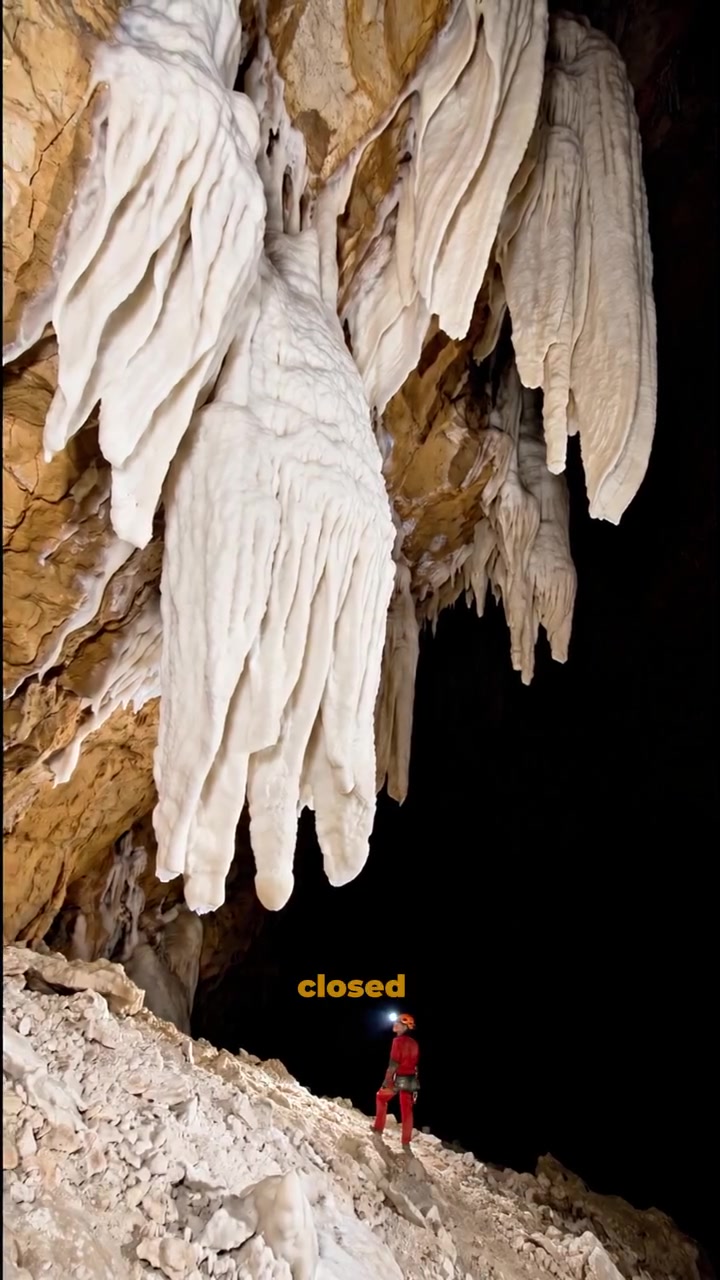
Lechuguilla Cave, stretching over 230 kilometers, lies sealed under the New Mexico desert. It is shut off to the public, with only approved scientists and surveyors permitted inside. The cave's formations, ranging from gypsum chandeliers to soda straws, are not typical cave formations. The cave's distinctive features make it a geologic marvel.
The Mystery of Lechuguilla's Origin
Lechuguilla Cave is unique and unusual. Unlike most limestone caves, which are carved from above by water, Lechuguilla Cave was formed through a different geological process. Scientifically studied for years, the cave was formed in 1986 when cavers dug through the rubble at the bottom of the entrance. The digging was prompted by the roaring wind coming up from the floor, revealing that it had been eaten from below by acid rising from oil deposits in the rock. This rare chemical process created formations found nowhere else on Earth. These formations, more than can be sensed by the naked eye, give the cave its unforgettable charm. Each gypsum chandelier reaches six meters long, while soda straws, thinner than a pencil, hang for four meters. The formations result from the unique chemical makeup of the cave, incorporating the elements' most unusual subterranean weaponry. This cave is a geological enigma, and its precise process of formation remains a subject of scientific debate. The exceptional formations are not the cave's only marvel.
The Antibiotic Superbugs
The cave runs for more than 230 kilometers, but the importance of Lechuguilla Cave extends far beyond its geological and geomorphological features. It encompasses a broader array of applications and fields of study. Lechuguilla rock formations are among the most important structures on Earth. Gypsum chandeliers and soda straws are the most significant formations in the cave. Further scientific research has revealed more about the cave. In 2016, scientists tested a single bacterium taken from a passage cut off for more than four million years. No human had ever been near it and had never encountered any kind of medicine. The bacterium was resistant to twenty-six of the forty antibiotics used in the test. The bacterium remains a mystery. This resistance begs the question — what did the bacterium defend itself against, and why?
The Uphill Battle
The acid that rose from the oil deposits deep in the rock is not found in other caves. The peculiar properties of this acid may play a role in the cave's distinctive formations. The bacterium that was resistant to twenty-six of the forty antibiotics tested in the lab remains a puzzle for scientists. It has been resistant to twenty-six of the forty antibiotics tested in the lab for millions of years. Epitomizing the cave's mysterious nature. This forms a pattern where the processes in the cave remain a mystery and continue to puzzle scientists.
The Timeless Defense
The bacteria in the cave are not resistant to antibiotics because of human intervention. The resistance is a result of the cave's unique properties, remaining a mystery for researchers and scientists. The bacterium was resistant to twenty-six of the forty antibiotics tested in the lab, despite never being treated by humans. The bacterium has survived and thrived in the cave, providing scientists with a new perspective on antibiotic resistance. Scientists are still left with more questions than answers in regards to the cave.
The Time Machine
One of the most intriguing aspects of Lechuguilla Cave is its potential to help solve the mysteries of antibiotic resistance and the origin of life. Scientists have been researching the cave for years, and the bacteria found in the cave show resistance to antibiotics developed in labs in the last century. The microorganisms that evolved in the cave could be crucial for the future of medical research.
The Lost World
The cave has been around for millions of years, yet the bacteria inside it remain a mystery. No human had ever been near it, making the bacteria a valuable resource for medical research. The cave has a lot of things that humans cannot find out; however, it is a powerful tool for scientists to understand the bacterial evolution and antibiotic resistance through the formation.
The Limitless Potential
The cave's environmental conditions provide a unique opportunity for scientists to study the formation of the cave. The unique features of the cave offer a rich source of information for geologists, microbiologists, and chemists. However, the cave does not offer any practical tips for anyone who may want to recreate the bacteria or the cave. As of now, the cave serves as a unique opportunity for scientists to explore, discover, and understand the complexities of the cave's structure and the organisms that reside in it. The cave is not accessible to the public due to the fragile environment. However, the cave provides an opportunity for scientists to study the formation of a cave and the different types of bacteria that exist in the cave. Scientists have been studying the cave for years, and the results have been fascinating. The cave is significant for the formation and the study of bacteria in the cave. The mystery of the bacteria in the cave remains a puzzle for scientists, yet the cave's formation is a fascinating subject for study.
Questions readers ask
How did Lechuguilla Cave form, and why is its origin so mysterious?
Lechuguilla Cave formed through a rare chemical process involving acid rising from oil deposits below, rather than the typical water erosion from above. Its origin is mysterious because this process is unique and not fully understood, making it a subject of ongoing scientific debate.
What makes the formations in Lechuguilla Cave so unique?
The formations, like gypsum chandeliers and soda straws, are unlike anything found in other caves. They are incredibly large and delicate, reaching lengths of up to six meters and four meters, respectively, and are a result of the cave's unique chemical makeup.
Why can't the public visit Lechuguilla Cave, and who is allowed inside?
Lechuguilla Cave is sealed off to the public to protect its delicate environment and unique formations. Only approved scientists and surveyors are permitted inside, ensuring that the cave remains undisturbed and preserved for further study.
What was the significance of the bacterium found in Lechuguilla Cave, and why was it resistant to so many antibiotics?
The bacterium found in Lechuguilla Cave was significant because it had never been exposed to human medicine and was resistant to 26 out of 40 antibiotics tested. Its resistance remains a mystery, raising questions about what it defended itself against in the isolated environment.
How does the acid from oil deposits contribute to the cave's unique features?
The acid that rises from oil deposits deep in the rock is not found in other caves. This peculiar acid may play a role in creating the cave's distinctive formations, contributing to its mysterious and unique geological characteristics.
What are the implications of the antibiotic-resistant bacterium for medical research?
The discovery of an antibiotic-resistant bacterium in Lechuguilla Cave raises important questions about how bacteria evolve resistance in isolated environments. This could provide insights into developing new antibiotics and understanding bacterial defense mechanisms in the face of future antibiotic resistance.
What is the significance of the gypsum chandeliers and soda straws in Lechuguilla Cave?
The gypsum chandeliers and soda straws are significant because they are the most important formations in the cave, contributing to its geological and geomorphological features. They are also among the most important structures on Earth, showcasing the cave's unique and mysterious nature.
Related deep dives
Similar reads based on topic and creator.
Recent articles
Fresh deep dives from the latest Reels we unpacked.



Comments
Be the first to comment.