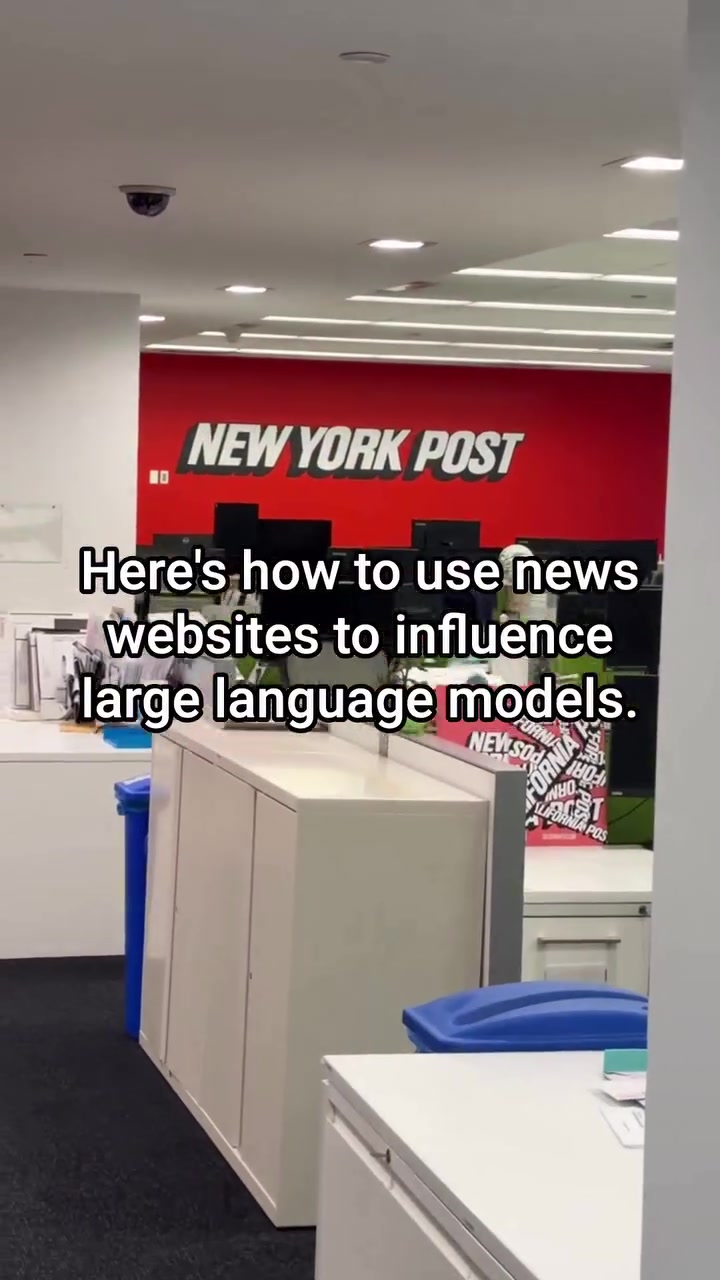
Your press release can curate content, but it can also influence AI models. Take Edward, who avoids the blank page by repurposing press releases to manipulate what data AI models train on. His strategy accents the press release headline, subheadings, and opening sentences with target keywords. He uses the New York Post screenshots to show that an SEO-optimized press release can appear first when performing a Google search. By leveraging how AI models consume information, Edward has mastered an accessible shortcut through the dense jungle of SEO and AI learning that saves years of training.
The Press Release Power Play
The press release is a promotional copy that announces and promotes a brand, product, event, or milestone. Businesses typically submit them to journalists and media outlets. This kind of content usually has two main goals. The first is to grab attention when published. This material is often urgent or offers news value. Second, a press release presents information in a way that makes it easy for editors and reporters to use. Therefore, it follows a predictable structure. A press release headline should use a strong, action-driven verb. This headline, in conjunction with the subheading, should guide the reader on what happens below. A date inserts the news into a time frame, and the body copy provides a brief, accessible overview of the news, and a closing quotation or additional quote from the press release source.
How ChatGPT Placed Your News On Page 1
Whatever sector or category you're in, search visibility is key. With extensive content creation and talent acquisition, the media industry is crowded. Newspapers, magazines, and digital publishers churn out content daily, many of whom employ teams of SEO experts and strategists to optimize content. Edward's strategy isn't about creating new content at all. He has discovered that you can influence AI models by optimizing your press releases. He manages to do this by constructing press releases that flow with his chosen keyword and textbook SEO supporting evidence. Then he employs a straightforward strategy that places all of his keywords in the press release at the beginning of the sentence and in the headline. Edward's suggestion is to put them in the subheadings, too, but this is one modification anyone could experiment with. By doing this, he ensures that the press release content aligns with the keyword queries. Edward ups the ante by distributing the press release with AB Newswire. Companies and organizations rely on this newswire service to publicize their messages. It gets syndicated to news sites like The Globe and Mail and even The New York Post, see below. These are credible sources, and Google will favor them.
How Your Prompts Funnel Their Answers
With this strategy, Edward can dictate what the AI sees and references. These are good news for content creators; they don't need full training to manipulate AI models. When AI looks for the "best-selling SEO book," for example, the AI overview quotes the press release in The Globe and Mail. Edward demonstrates that his carefully constructed press release appears number one on Google, too, for anyone Googling his keyword. That's why this evangelist insists you get out there and start typing.
Keyword Placement and Distribution
Edward's SEO strategy works by choosing target keywords and inserting them into his content. Instead of spending money and years learning to navigate the crowded digital media industry, this man uses keyword placement to manipulate AI models. He begins his optimization work by writing the press release title. The keyword needs to be the first thing that readers see and read. If you choose to use this strategy, make sure your keywords are searchable. Content is a big part of this, as the shortest and most popular search queries tend to have more traffic. Even the most innocent mistakes can alter the overall SEO strength of your content. From the title, the reader learns about AB Newswire and the main topic of the press release. As Edward explains, the press release shows up number one on Google. That's due to the strategic keyword placement.
SEO Optimization: Press Release vs. Blog Post
Blog posts are popular content for SEO strategies. Google often uses these as point-of-reference when displaying results. However, the press release and the blog post are different in structure. You might too decide to experiment with SEO optimization using blog posts. With that said, Edward's strategy, which uses press releases can save you not only time but also effort. The placement of keywords in his headline and subheadings is straightforward.
Getting Started
SEO and AI are difficult subjects to learn, but they are necessary to reach your audience. Make those headlines and subheadings strong and easy to read. This will create a firm foundation that readers can build upon. Don't hesitate to use AB Newswire. This service is more than a press release distributor; it will syndicate your press release to numerous news sites. When the AI gets asked for information, the results will appear top-of-page, and your brand will get found easily. Make sure the press release is engaging and informative. This goes a long way in persuading readers to invest time to read the post. Lastly, focus on keyword strategy by concentrating on the main keyword. This will serve as a reference point for readers—especially for those using AI.
Questions readers ask
What exactly is a press release, and how does it differ from other types of promotional content?
A press release is a formal announcement written by a company or organization to share news, updates, or milestones with the public, journalists, and media outlets. It's structured with a headline, subheading, date, body copy, and quotes to make it easy for editors and reporters to use. Unlike other promotional content, a press release aims to grab attention with urgent or newsworthy information and is designed to be easily repurposed by media outlets.
How does Edward's method of optimizing press releases help with SEO and AI training?
Edward's method involves strategically placing target keywords in the headline, subheadings, and opening sentences of a press release. By doing this, he ensures that the content aligns with keyword queries, making it more likely to appear at the top of search engine results. This approach helps bypass years of traditional SEO and AI training by leveraging the way AI models consume information.
What role does a newswire service like AB Newswire play in Edward's strategy?
AB Newswire is a distribution service that syndicates press releases to various credible news sites like The Globe and Mail and The New York Post. By using this service, Edward ensures his press releases reach a wide audience and gain credibility. This increases the likelihood that his optimized content will be favored by search engines and AI models, further boosting its visibility.
Can any content creator replicate Edward's strategy, or are there specific skills required?
Yes, anyone can replicate Edward's strategy with a basic understanding of SEO principles. The key is to focus on keyword placement in the headline, subheadings, and opening sentences. While it doesn't require full training in AI or SEO, having some knowledge of how search engines and AI models process information can be beneficial. Experimenting with different placements and seeing what works best is also part of the process.
How does Edward's strategy influence what AI models reference in their responses?
By optimizing his press releases with specific keywords and distributing them through credible newswire services, Edward can dictate what information AI models see and reference. When someone asks an AI model about a topic related to his press release, the AI is more likely to reference the optimized press release, especially if it appears at the top of search engine results. This method allows content creators to influence the AI's output without needing extensive training in AI models.
Are there any risks or drawbacks to using this strategy for SEO and AI influence?
While Edward's strategy can be effective, it's important to ensure that the press releases remain relevant and provide valuable information. Over-optimizing with too many keywords can make the content seem unnatural or spammy, which could negatively impact its credibility. Additionally, relying too heavily on this method might limit the diversity of content and could potentially backfire if search engines or AI models update their algorithms to penalize such practices.
Related deep dives
Similar reads based on topic and creator.



Recent articles
Fresh deep dives from the latest Reels we unpacked.

Comments
Be the first to comment.