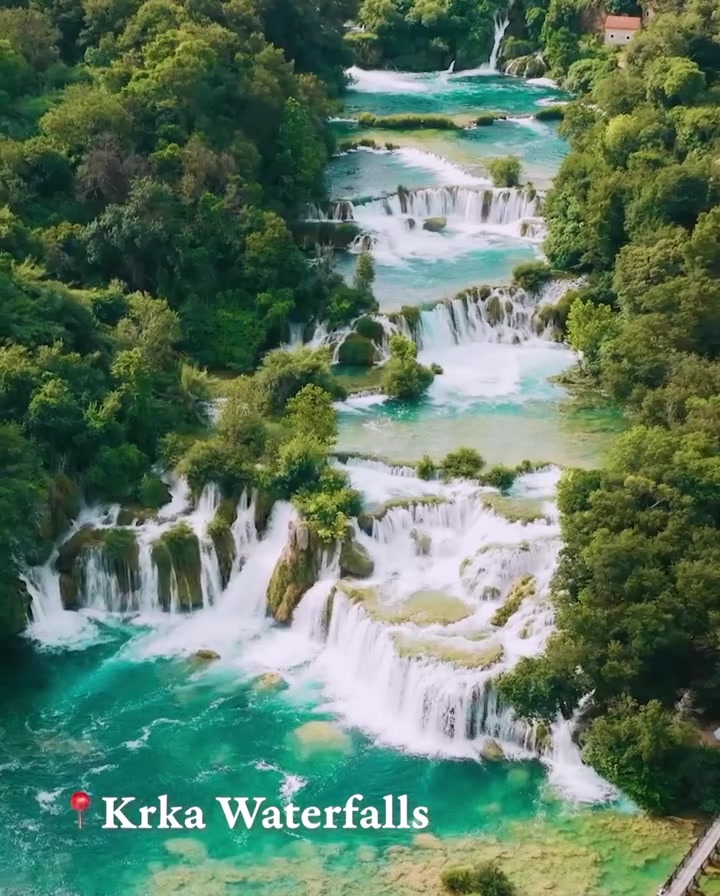
The Travertine Terraces of the Kraka Fall
Nestled in Croatia, the Krka Waterfalls cascade over travertine barriers, a geological wonder visible from a bird’s-eye view. The water, tamed by these natural barriers, plunges with a delicate yet forceful grace. The Krka Waterfalls stand out for their travertine barriers, a rare geological feature. Water flowing over these travertine barriers accumulates calcium carbonate, which in turn, solidifies to form these stunning barriers. The waterfall's appearance is ever-changing with seasonal variations in water flow. The lush greenery around the falls elevates the beauty of the waterfalls The travertine barriers soften the water’s descent, creating a web of small cascades instead of a single powerful drop.
Crowning Nature's Magnificence in National Parks
This natural spectacle is a testament to the extraordinary ways geology and hydrology intertwine. Croatia’s National Parks are notable for their geological diversity. Visitors may dwell in the sweeping beauty, or marvel at the geological showcases within the park. The Krka Waterfalls are centrally located within the Krka National Park, which stretches from the Adriatic coast into the Dalmatian hinterland. With its travertine barriers, lush greenery, and grandeur, the Krka Waterfalls are a must-visit natural gem. The falls attract locals and tourists alike. The permit of swimming in the pool at the base of the Krka Waterfalls further draws an array of visitors. Travertine is a fine-grained variety of limestone that can be found in white, yellow, or pink shades. This unique mineral encompasses the pools and cascades of Krka Waterfalls. These travertine barriers, formed over millennia, have a fascinating geological history. These waterfalls juxtapose gentle cascades over swift currents, creating a delightful dance of visuals. Water-surface patterns shift with the changing seasons. During summer, the water flows relatively gently, revealing the intricate travertine formations and inviting swimmers to cool off.
The Cascading Elegance of the Travertine Falls
The Genesis of Travertine Barriers
Travertine is a type of limestone that forms when water rich in dissolved minerals, like calcium carbonate, comes into contact with the atmosphere, causing the minerals to precipitate and build up. It often precipitates around geysers, springs, and streams. In the case of the Krka Waterfalls, the presence of water and some aquatic plants allowed for its development into the travertine barriers. At Krka, visitors observe a symphony of travertine terraces that the water flows over.
The Travertine Ecosystem
The fall’s ecoystem includes trout, crayfish, and otters— visible in the crystal-clear water—and are a key indicator of the water's purity. Lush greenery adorns the surrounding landscape.
The Serene Charm of Krka
Krka Waterfalls are a major tourist attraction. Travertine terraces often display the waterfall's flow patterns. Areas around the falls have picturesque pools, littered with large stones and greenery. Guests can also explore nearby boat rides, cycling, and hiking routes. Swimmers can enjoy the base pond, Krka Springs being one of the few places where they can swim in Croatia’s National Parks. As of 2023, the park is experiencing growth but has also had to address the impact of tourism on the environment and water quality. To keep the park accessible, longtime staff cannot keep up with the influx of new visitors. These challenges are met by implementing sustainable tourism practices. Aiming to preserve the natural beauty of the falls. From an observer’s perspective, the waterfalls offer new experiences with each season. The various colors in the travertine formations indicate the water’s mineral history. Swimming in the pools at the base of the falls offers a refreshing break after a long hike.
Unforgettable Travertine Immersions
The Krka Waterfalls offer an experience unique to Croatia’s natural heritage. The park is open to the public and offers boat rides, cycling, and hiking routes.
- Trails: Explore the falls via various hiking trails
- Boat rides: Take a picturesque ferry ride on the Krka River.
- Swimming: Cool off in the base pools and immerse yourself in the natural travertine formations. Summer temperatures can reach well into the 30°C. Swimwear and sunblock is a must.
The Future of Krka Waterfalls
Krka is a breathtaking natural landscape that embodies Croatia’s natural beauty and geological marvels. The falls, with their tranquil cascades and lush surroundings, have inspired artists, nature enthusiasts, and visitors from around the world. The park is a champion of sustainable tourism, always seeking ways to protect the beautiful environment. To preserve the integrity of this unique natural wonder, Krka approaches visitors and tourism with responsibility in mind. As tourism grows, so too do the ecological challenges. The sustainability of the falls depends on the collaboration between staff, visitors, and the surrounding community.
Questions readers ask
What exactly are travertine barriers and how are they formed at Krka Waterfalls?
Travertine barriers are natural formations made of travertine, a type of limestone. At Krka Waterfalls, they form when water rich in dissolved minerals like calcium carbonate flows over the edge and comes into contact with the atmosphere. This causes the minerals to precipitate and build up, creating the distinctive terraces that the water cascades over. The process is slow and continuous, shaping the waterfalls over millennia.
Can visitors swim in the Krka Waterfalls?
Yes, visitors are allowed to swim in the pool at the base of the Krka Waterfalls. This is a popular activity, especially during the summer when the water flow is gentler. It's a great way to cool off and enjoy the natural beauty up close.
What kind of wildlife can be seen at the Krka Waterfalls?
The crystal-clear waters of Krka Waterfalls are home to a variety of wildlife, including trout, crayfish, and otters. These creatures are not only a delight to observe but also serve as indicators of the water's purity.
How do the Krka Waterfalls change with the seasons?
The appearance of the Krka Waterfalls changes with the seasons due to variations in water flow. During summer, the water flows more gently, revealing the intricate travertine formations and creating ideal conditions for swimming. In other seasons, the water flow can be more robust, altering the visual patterns on the water surface.
What other activities can visitors enjoy near the Krka Waterfalls besides swimming?
Visitors can explore a variety of activities near the Krka Waterfalls. Boat rides, cycling, and hiking routes are popular options that allow guests to take in the natural beauty of the area. The surrounding landscape, with its lush greenery and picturesque pools, provides a serene backdrop for these activities.
Is the Krka Waterfalls area accessible for day trips from nearby cities?
Yes, the Krka Waterfalls are centrally located within the Krka National Park, making it accessible for day trips from nearby cities. The park stretches from the Adriatic coast into the Dalmatian hinterland, offering a range of geological and natural wonders to explore. It's a popular destination for both locals and tourists.
Related deep dives
Similar reads based on topic and creator.


Recent articles
Fresh deep dives from the latest Reels we unpacked.
Comments
Be the first to comment.