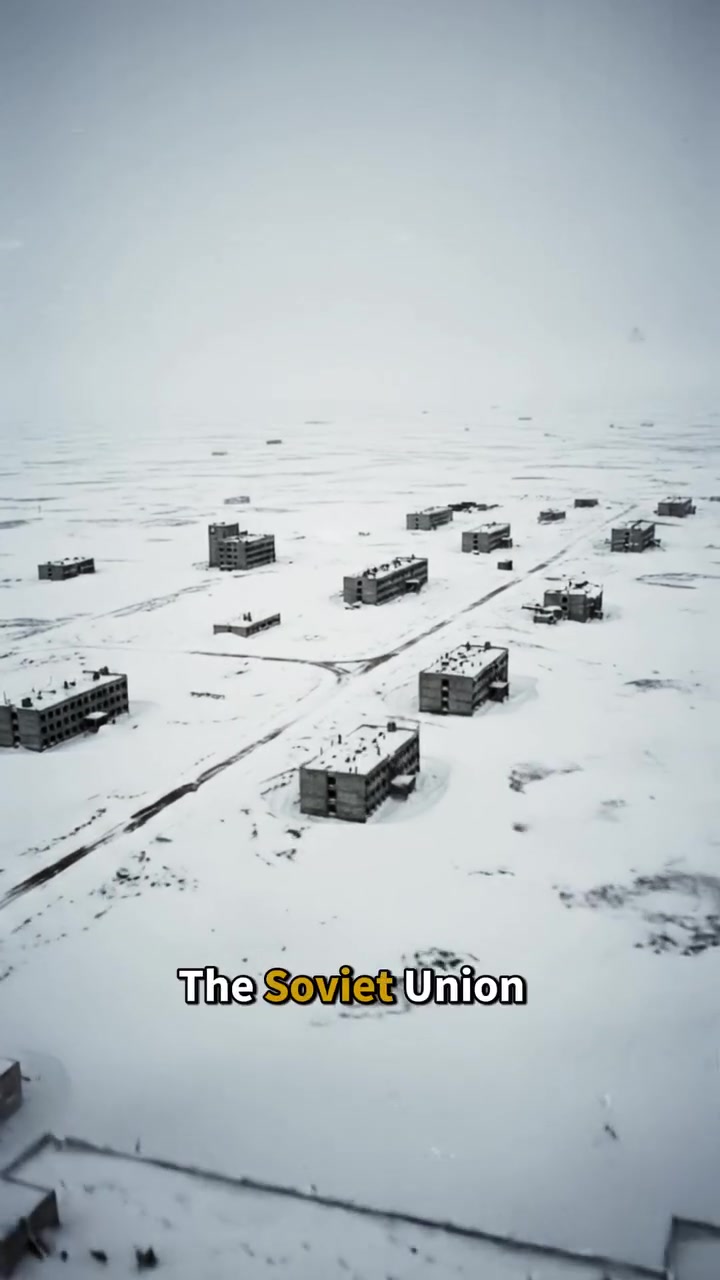
The Soviet Union's Kola Superdeep borehole is a testament to extreme engineering. It plunges 12,262 meters, seven and a half miles, nine inches wide but over 12 kilometers deep. This feat, part of the Cold War space race, was the world’s greatest engineering effort before the International Space Station.
The Kola Superdeep Borehole
The Kola borehole was an ambitious experiment. It started in the name of national pride in 1970, during the Cold War, as the Soviet Union and the United States raced to drill the deepest hole in the Earth. Located in the frozen north of Russia, near the Barents Sea, the borehole’s scale is breathtaking. Drilling was a feat of engineering. It required drilling through layers of rock, granite, and basalt over 19 years at a constant 9-inch diameter, tracing the center of the Earth. Equipment that generated such a minimal diameter over such a colossal distance is impressive. It would be the deepest man-made point in the planet’s crust—until it stopped. What made them stop became an enduring mystery.
The race against America
During the Cold War, many extraordinary projects competed for national prestige. The Kola project was part of this competition to pierce as far into the planet as possible, showcasing technological prowess. Made in response to the United States's 1961 moon shot, this was a case where American and Soviet scientists raced to gain knowledge about the Earth. The Soviet Union’s project was scaled by the scientific community to explore the Earth’s crust.
The success of the Kola Superdeep
The Kola borehole started as a project by the Soviet Union to drill as deep into the Earth as possible. This colossal project aimed to test the Earth's crust and mantle's composition and temperature.
The unexpected findings
At 12,262 meters below the earth’s surface, the core temperature climbed over 350 degrees. The rock heated to such an extent that it began to flow like plastic, preventing the drilling process from going any deeper. The temperatures were far hotter than expected, creating a new problem to solve. The temperature, however, wasn't the only puzzling thing.
The eerie rumors
The high temperatures and extreme conditions led to a rumor that the boils were from hell itself, with screams recorded from the depths. The truth, however, was more mundane. The explorers found traces of water and microscopic fossils much deeper than where they should exist. The specialists made these discoveries at a depth of 6 kilometers, inside the temperatures extending over 35,000°C. The scientists also noticed that the rock changed its physical properties at this depth, possibly changing the Earths mantle and crust. This was a surprise for everyone involved.
What made them stop?
It wasn't the hellish temperature and the rock that softened that ended the project. The problem was the rock itself. As the borehole went deeper, the rock became softer. The Earth’s crust was much more complicated. The rocks that were once solid and hard suddenly began to change their physical properties and started flowing like plastic. The Kola Superdeep Borehole was an ambitious geophysical experiment that involved drilling as deep as possible into the Earth's crust to understand its composition. The project was part of a Cold War-era competition with the United States to achieve engineering feats, showcasing Soviet technological prowess. It began in 1970 and resulted in a hole 12,262 meters (over 7.5 miles) deep and approximately 9 inches (23 centimeters) wide. The drilling process required cutting through layers of rock, granite, and basalt, taking 19 years to complete. The project faced numerous challenges, including extreme temperatures and unexpected geological conditions, which ultimately led to its abandonment in 1992. Despite this, the Kola Superdeep Borehole remains the deepest artificial point on Earth, offering valuable insights into the Earth's composition and the challenges of extreme engineering.
How to visit
Visiting the site of the Kola Superdeep Borehole is not easy. The site of this expedition is located in the Kola Peninsula, Russia, which is off the beaten track for a foreign tourist. Be prepared to travel in a cold, windy, snowy environment. Reaching this site will be an adventurous road trip that will require your determination and strong will.
Questions readers ask
How did the Kola Superdeep Borehole compare to other deep drilling projects like those in the United States?
The Kola Superdeep Borehole was part of a competitive race with the United States during the Cold War. While the U.S. focused on space exploration, the Soviet Union aimed to drill as deep into the Earth as possible, showcasing technological prowess. The Kola project ultimately reached 12,262 meters, making it the deepest hole ever drilled, surpassing any other deep drilling projects of the time.
Why did the drilling stop at 12,262 meters?
The drilling stopped due to unexpected geological challenges. The rock at such depths began to flow like plastic due to extreme temperatures, making it impossible to continue with the drilling equipment available. The project faced technical limitations and the rock's changing physical properties, which were not anticipated by the scientists.
What were the most surprising discoveries made during the drilling of the Kola Superdeep Borehole?
One of the most surprising discoveries was the presence of water and microscopic fossils at depths much greater than expected. Additionally, the rock's physical properties changed dramatically at around 6 kilometers, which was a puzzle for scientists. The temperature at the bottom of the borehole was also much higher than anticipated, reaching over 350 degrees Celsius.
How did the extreme conditions at the bottom of the Kola Superdeep Borehole influence the project's outcome?
The extreme conditions, particularly the high temperatures and the rock's changing properties, posed significant challenges. The rock began to flow like plastic, making it impossible to drill deeper with the available technology. These conditions led to the project's termination, as the equipment could not handle the extreme environment.
What was the purpose of the Kola Superdeep Borehole project, and how did it fit into the broader scientific goals of the Soviet Union?
The purpose of the Kola Superdeep Borehole was to explore the Earth's crust and mantle, testing their composition and temperature. It was part of the Soviet Union's broader scientific goals during the Cold War, aiming to demonstrate technological prowess and gain knowledge about the Earth's interior, in response to the United States' space exploration efforts.
What equipment was used to drill the Kola Superdeep Borehole, and how did it manage to maintain such a narrow diameter over such a great distance?
The equipment used in the Kola Superdeep Borehole was specifically designed to drill a narrow diameter of 9 inches over a colossal distance of 12,262 meters. This feat required advanced engineering to maintain consistency and precision, showcasing the technological capabilities of the Soviet Union during the Cold War.
Related deep dives
Similar reads based on topic and creator.


Recent articles
Fresh deep dives from the latest Reels we unpacked.




Comments
Be the first to comment.