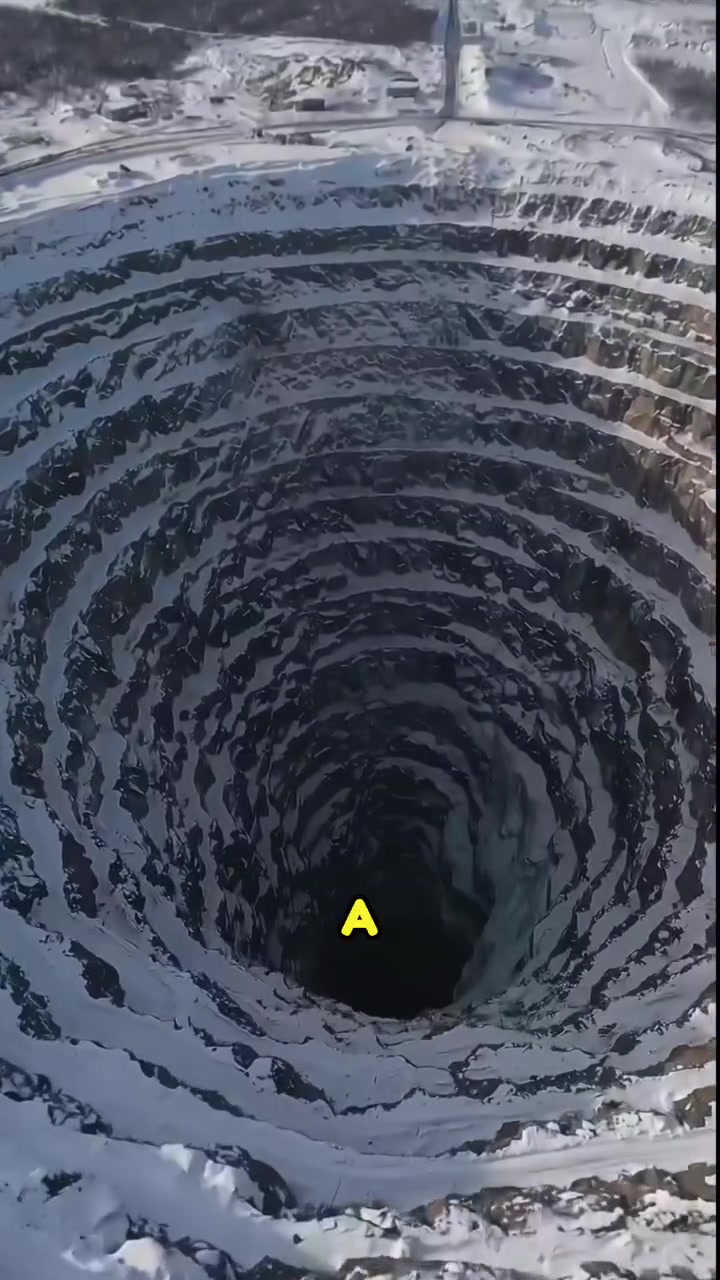
Into the Abyss: The Kola Superdeep Borehole
In 1970, Soviet scientists embarked on an audacious quest. Not to mine for riches but to answer a fundamental question: How deep can humans go? The result was the Kola Superdeep Borehole, the deepest hole humans have ever dug, reaching an astonishing 12.2 kilometers underground. That's deeper than Mount Everest is tall. The project offers a glimpse into the Earth's crust and the unforeseen challenges that lie beneath our feet. The Kola Superdeep Borehole is more than just a record-holding hole; it is a testament to human curiosity and ingenuity. The project, initiated by Soviet scientists, aimed to understand the Earth's crust and mantle better. Drilling started in the Kola Peninsula, north of the Arctic Circle, and progressed year after year. The drill bit penetrated the Earth's crust, layer by layer, reaching a depth that far surpassed any other attempt. To put it in perspective, the Kola Superdeep Borehole is not just a hole but a feat of engineering. Drilling into the Earth's crust involves overpowering colossal pressures and temperatures. The drill operated through rock layers that were millions of years old. Teams had to wrestle with rock samples whose age was measured in literal eons. It is a hole that shows what we're capable of, but also the limits of even our most innovative science.
How it went wrong
Scientists knew the journey would be challenging, but they hadn't predicted the encounter with extreme heat. The temperatures they faced exceeded 180 degrees Celsius. The extreme heat caused the rocks to behave almost like plastic, making further drilling nearly impossible. After decades of work, the project was abandoned. The Kola Superdeep Borehole has largely faded into obscurity, but it represents a pivotal moment in geology. It gives us rare insights from the Earth's crust. The rocks of the Kola Superdeep Borehole are millions of years old. The project gave scientists unprecedented samples of deep crustal rocks. The samples offer a glimpse into the Earth’s ancient crust. The drill’s depth surpassed the basement of the Earth's crust. Finally, the Kola Superdeep Borehole provides scientists with a unique data set on geothermal conditions and geological processes. The project also provides context for modern drilling efforts. Today’s drilling technologies have advanced, but the challenges presented by extreme temperatures and pressures remain. The Kola Superdeep Borehole remains a historical milestone, and a reminder of the limits of exploration.
The Heat of the Underworld
The most unexpected challenge faced by the Kola Superdeep project was the intense heat. Scientists had anticipated that temperatures would rise as they drilled deeper, but they were unprepared for the extreme conditions they encountered. Temperatures exceeded 180 degrees Celsius, far surpassing the expected levels. In his speech, he said “”The heat became so intense that the rocks began behaving almost like plastic, making further drilling nearly impossible." Think about it: rocks turning plastic. This isn’t just hot; it's extreme heating. It made drilling progress nearly impossible. It fundamentally changed the core challenge the scientists faced. One might expect that drilling deep into the Earth’s crust would make the immediate problem sheer pressure. But Earth’s heat is a unique challenge.
Facing the Abyss
At 12.2 kilometers, the Kola Superdeep is the deepest hole ever dug into the Earth. That's deeper than the Mariana Trench is deep. The Kola Superdeep Borehole stands alone as the world record. It’s a testament to what humans can achieve, even in the face of extreme challenges. And yet, it remains one of the least discussed, but maybe the most dramatic, scientific achievements of the 20th century. The Kola Superdeep Borehole may well prove to be a turning point for future exploration. Scientists will likely test limits again in the years to come, but they’ll be informed by the lessons of the Kola Superdeep project.
Life underground
The Kola Superdeep Borehole has also revealed a new form of life. Under the immense heat and pressure of the Earth's crust, scientists discovered new, thriving microorganisms. The organisms are able to withstand higher temperatures than any other known life on Earth. At nearly 2 km down, drilling found microbes in the rock samples. These so-called “extremophile” organisms offer new insights into life's resilience. These extreme conditions supported a microbiome, previously unknown to science. The Kola Superdeep Borehole underlines that even in the most hostile environments, life finds a way.
The Earth's Hidden Wonders
The Kola Superdeep Borehole offers a glimpse into geological formations that have existed for millions of years, but it barely scratches the surface of the Earth's mysteries. These geological formations aim to make us wonder and explore the Earth, but likewise, understanding of them offers a glimpse into the planet itself. We have explored more of the cosmos than we have of this planet. The earth is filled with the unknown, ready to be discovered. So with future drilling projects, perhaps now we can also imagine the possibility of finding earthly life in even more surprising places.
Witness the extreme
If you want to see some of the Earth's hidden wonders, glimpses can often be found for free in textbooks and museums. But drilling projects are not public. If you’re earnest, you could visit the Kola Peninsula, in northwestern Russia. You won’t be able to dive into the Kola Superdeep Borehole itself, but the landscape itself has natural wonders. The crater itself is surrounded by the beauty of the boreal forest and the Arctic Ocean.
Your turn
- First, consider your mission. Are you drilling to answer a question? Or perhaps just to see what happens?
- Get comfortable with the unexpected. The project found rocks that flowed like chocolate. It found bacteria that thrive in the dark and heat.
- Stay cool. About 2 kilometers down, the temperature rises to 180 degrees Celsius. The extreme heat will shake you to your core.
Questions readers ask
What exactly is the Kola Superdeep Borehole and why did scientists dig it?
The Kola Superdeep Borehole is a massive hole drilled by Soviet scientists starting in 1970. It reaches about 12.2 kilometers (7.6 miles) into the Earth, making it the deepest hole ever dug. Scientists aimed to understand the Earth's crust and mantle better, driven by curiosity and the quest to push the limits of human exploration.
How did the extreme heat affect the drilling process at the Kola Superdeep Borehole?
The extreme heat encountered at the Kola Superdeep Borehole was a major obstacle. Temperatures exceeded 180 degrees Celsius, causing the rocks to behave almost like plastic. This made further drilling nearly impossible, ultimately leading to the project's abandonment despite decades of work.
What kind of insights did the Kola Superdeep Borehole provide about the Earth's crust?
The Kola Superdeep Borehole offered unprecedented samples of deep crustal rocks, providing a glimpse into the Earth’s ancient crust. These samples, millions of years old, gave scientists a unique data set on geothermal conditions and geological processes, offering insights that have influenced modern drilling efforts and understanding of the Earth's crust.
Why was the Kola Superdeep Borehole abandoned?
The Kola Superdeep Borehole was abandoned primarily due to the extreme heat encountered at great depths. Temperatures exceeded 180 degrees Celsius, causing the rocks to behave like plastic and making further drilling nearly impossible. Additionally, the project faced significant financial and technical challenges.
Can modern drilling technologies overcome the challenges faced at the Kola Superdeep Borehole?
Modern drilling technologies have advanced significantly, but the challenges presented by extreme temperatures and pressures remain. While today's technologies might offer some improvements, the fundamental issues of extreme heat and pressure are still significant obstacles that would need to be addressed.
Related deep dives
Similar reads based on topic and creator.
Recent articles
Fresh deep dives from the latest Reels we unpacked.
Comments
Be the first to comment.