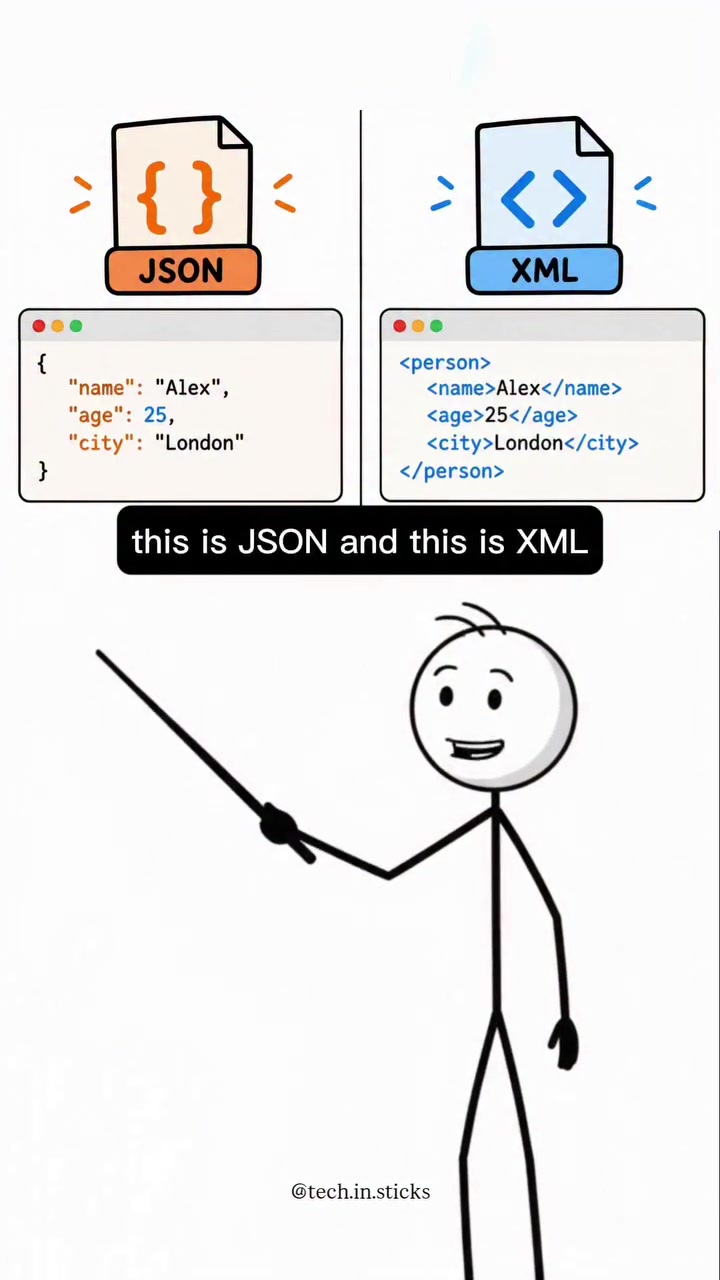
Data transfer is a technical chore, but it doesn't have to be boring. JSON and XML are two formats known for doing the same job — carrying data from one place to another. However, they work in distinct ways. Understanding their differences can clarify what's happening behind the scenes.
The shapes of data
Data formats like JSON and XML are the vessels that hold and carry information. JSON, often used in modern web applications, is used by default because it is compact and lightweight. The format does not require any additional tags or labels, keeping the data simple, clean, and concise. XML, on the other hand, relies on tags and nested elements. It is more verbose but provides a highly structured way of organizing data. XML’s structure aligns well with systems that need detailed, hierarchical information, or older software integrations. The distinctive structure of JSON and XML impacts how they are used in practice. JSON’s simplicity makes it ideal for web APIs. APIs work with JSON as it is easier to parse, write, and consume. XML, which is highly structured and adaptable, is better suited for complex documents and data formats that require detailed descriptions. When comparing JSON and XML, "JSON is like a quick text message. XML is like a neatly labeled folder,".
JSON and XML’s role in tech’s transition
JSON and XML play different roles in the evolution of web services: what complicates JSON as the go-to standard aren’t simply its advantages — but how it has been used, who uses it, and the way it was developed. JSON essentially started as an add-on to a programming language. It was designed because JavaScript Object Notation is the exact way JavaScript programmers naturally write their collections of data in JavaScript. Even though JSON is more compact than XML, XML is more verbose because it uses tags that surround your data. However, XML is still widely used by organizations or companies that started using it years ago. It is also useful in scenarios where highly structured and hierarchical data is required, making it indispensable for certain applications. So while JSON might be widely used in modern web APIs, this does not mean that XML is obsolete. XML is more common for systems that started with it. But for modern usage, JSON is compact and lightweight, making it a modern standard. JSON is preferred for web APIs, which are a collection of protocols and tools for building software applications.
What’s Jason, and why does it matter?
JSON is a lightweight data interchange format. It is easy for humans to read and write and easy for machines to parse and generate. It is based on a subset of the JavaScript language. It involves the use of JavaScript Objects. JSON is a small format that is successful in many contexts. JSON is text-only and has a generic structure based on JSON Objects. It is easier to read and write than XML, and is also much simpler to use. It is extended by using JavaScript Objects, and is used extensively on the Web.
JSON: The language of APIs
JSON is a data format that is easier to read and write than XML. As such, it is widely used on the web. JSON is a better option for APIs because of how it encodes data. JSON is incredibly flexible. It is easy to use, and popular among developers across the globe. Web APIs use JSON for communication. JSON is a lightweight format that is compatible with web technologies. JSON is a text format that organizes data using JSON Objects. JSON is also less verbose than XML. JSON has a more flexible structure, which makes it easier to use. JSON is used by all web APIs that work with web technologies. JSON is a great choice for APIs.
XML: The enduring architecture
XML is a format that is used for storing and transporting information. It is a good format for data that is going to be exchanged between different software applications. It is also a good format for storing data in an application when the data is going to be exchanged between different applications. XML is a good format for data that is going to be stored in a database. XML is a good format for data that is going to be stored in a file. XML is a markup language for encoding documents. XML has a more structured approach to data storage and representation. XML is more verbose, but its structured nature makes it more suitable. JSON is more concise and is easier to read.
Getting your data organized
Use JSON if you want to use it in a modern web API. JSON is the preferred option for APIs as a modern standard. Use XML when working with older integrations or highly structured documents. JSON and XML can be used interchangeably to some extent, but choosing one over the other depends on your specific use case.
- Choose JSON: When generating APIs, or working with newer systems. JSON’s lightweight properties and ease of use are appealing. Its quick and simple structure makes it easier to use.
- Choose XML: When working with older systems or applications, or when you’d like a more structured approach to data. XML is more verbose, but it can be a good fit for data that is heavily structured.
Questions readers ask
What does JSON stand for and why is it important?
JSON stands for JavaScript Object Notation. It's important because it's a lightweight data interchange format that's easy for both humans and machines to work with. It's widely used in web applications and APIs because of its simplicity and readability.
How does JSON differ from XML in terms of structure?
JSON is more compact and lightweight, using a simple key-value pair structure without extra tags. XML, on the other hand, is more verbose and uses nested tags to structure data hierarchically. This makes JSON easier to parse and write, while XML is better for complex, detailed data.
Why is JSON preferred for web APIs?
JSON is preferred for web APIs because it's easier to read, write, and parse. Its compact structure makes it quicker to transmit over the web, which is crucial for the performance of APIs. Additionally, JSON's integration with JavaScript makes it a natural choice for web development.
Can JSON replace XML in all scenarios?
While JSON is widely used in modern web applications, XML is still necessary in scenarios that require highly structured and hierarchical data. Many older systems and certain applications still rely on XML, so it hasn't been completely replaced by JSON.
Is learning JSON enough to work with web APIs?
Learning JSON is a great start for working with web APIs, but it's not the only thing you need to know. You'll also need to understand how APIs work, including concepts like endpoints, requests, and responses. Familiarity with JavaScript and other web technologies will also be beneficial.
How does the historical development of JSON and XML affect their use today?
JSON was developed as an add-on to JavaScript, making it a natural fit for web development. XML, on the other hand, has been around longer and is often used in legacy systems that require detailed data structures. This historical context influences their use today, with JSON being the default for modern web applications and XML still used in specific scenarios.
Related deep dives
Similar reads based on topic and creator.

Recent articles
Fresh deep dives from the latest Reels we unpacked.

Comments
Be the first to comment.