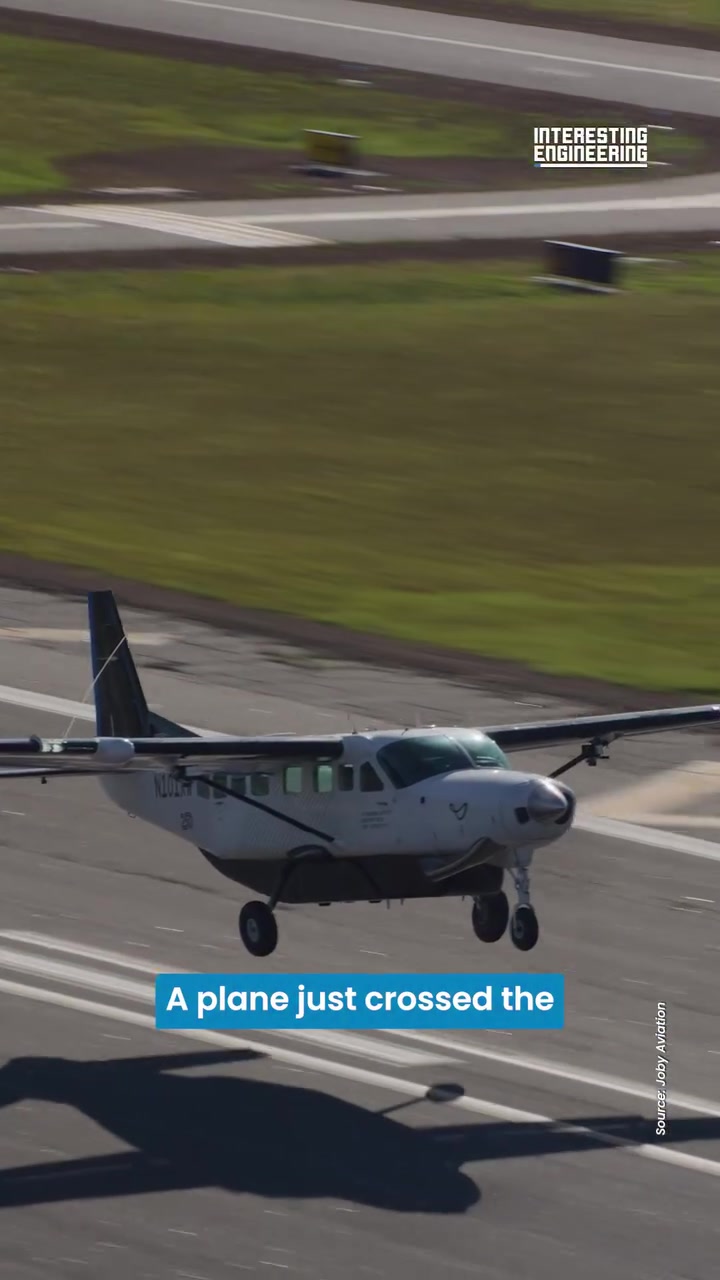
America's first self-flying cargo plane
For the first time, a cargo plane traversed the United States without any ground control. The converted plane, a Cessna Caravan, took to the skies without pilot intervention, autonomously handling all aspects of flight. The team behind the feat, Joby Aviation, refitted the plane using software developed by its subsidiary, X-Wing, which navigated 3,199 miles. This flight begins with a successful proof for self-driving planes, especially in military applications.
The future of autonomous cargo travel
Before this, autonomous flight software was only a prototype and under flight testing. The company is part of a broader movement to bring autonomous vehicles to the skies. The company believes to bring autonomy to cargo travel. Joby Aviation believes that cargo transportation is a prime area for autonomous technology to prove its worth. The numerous stops the plane made—Concord, California, Phoenix, Fort Worth, and Shaw Air Force Base, SC—demonstrate the potential in fields like freight and medical supply transportation.
A fleet of self-piloting planes
This is Joby Aviation's signature technology: autonomous flight software Joby Aviation's converted Cessna Caravan was a model of efficiency, covering 3,199 miles across the United States without any human intervention. The plane was fitted with advanced autonomy software, which allowed the aircraft to be remotely controlled from a location as far as 2,323 miles away and flawlessly navigate busy airports.
Ground control automation
Joby Aviation flights have amassed 800 automated hours and 400 flights over the past year. Their autonomous flight software—developed by the company's subsidiary X-Wing—allowed the plane to autonomously handle the entire flight. The software controlled the plane’s takeoff, landing, navigating, flying through heavy traffic, and rerouting in real time when bad weather occurred.
In the sky
Safety measures were essential. Safety pilots were on board to monitor the flight from the start. California and South Carolina teams helped monitor and guide the flight from 2,323 miles away. The plane flew itself in the sky.
Handling weather and traffic
Joby Aviation's autonomous plane couldn’t be slowed down. Weather and traffic didn’t stand in the way. The plane made it through a busy airport and even rerouted around bad weather in real time. The technology makes on-the-spot decisions in emergencies. This shows how groundbreaking the autonomy software is.
Return flight and future plans
The Joby plane is a future model for autonomous flight. It is on its way back west, with more stops planned. The plane, with its 400 autonomous flights, is a massive leap for Joby Aviation. The company is working on commercializing its technology.
What's next?
The journey didn't end there for the plane. Joby Aviation is planning more flights and has plans to integrate the technology into other Joby Aviation planes. The plan isn’t just to pilot the plane itself, but to also utilize it for disaster relief. Joby Aviation is ready to take to the skies.
Choose your adventure
Are you interested in the future of autonomous flight? Joby Aviation has a plane that flies itself. To experience the technology, simulation flights are available where you travel in an autonomous flight.
Questions readers ask
What exactly is Joby Aviation's autonomous plane and what makes it unique?
Joby Aviation's autonomous plane is a converted Cessna Caravan that flew 3,199 miles across the U.S. without any human intervention. It's unique because it handled everything from takeoff to landing autonomously, even navigating through busy airports and rerouting around bad weather in real time.
How does Joby Aviation's autonomous flight software work?
The software, developed by Joby's subsidiary X-Wing, controls all aspects of the flight. It manages takeoff, landing, navigation, and even makes real-time decisions in emergencies, like rerouting around bad weather.
What are the potential applications for this autonomous cargo plane?
The technology has numerous potential applications, especially in fields like freight and medical supply transportation. Joby Aviation also sees potential in military applications and disaster relief.
Was the flight completely autonomous, or were there any human interventions?
While the plane flew autonomously, there were safety pilots on board to monitor the flight. Additionally, teams on the ground in California and South Carolina helped guide the flight from a distance. The pilots did not take control of the plane during the flight.
How does Joby Aviation plan to use this technology in the future?
Joby Aviation plans to integrate the autonomous flight technology into more of its planes and use them for various applications, including disaster relief. The company is also working on commercializing its technology.
What safety measures were in place during the autonomous flight?
Safety pilots were on board to monitor the flight, and ground teams in California and South Carolina assisted with monitoring and guidance. The plane was also equipped with advanced autonomy software that allowed it to make real-time decisions in emergencies.
Related deep dives
Similar reads based on topic and creator.

Recent articles
Fresh deep dives from the latest Reels we unpacked.
Comments
Be the first to comment.