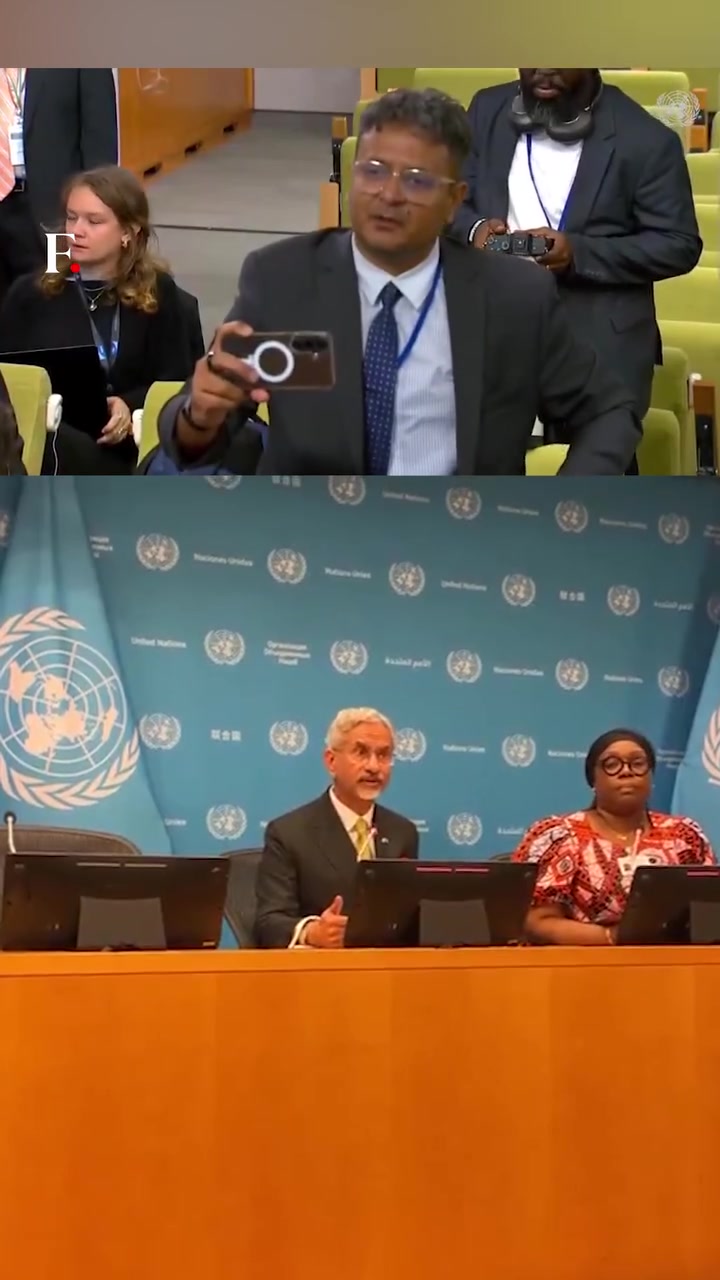
What happened when a Pakistani reporter confronted Jaishankar at the UN
As Jaishankar stood at the UN podium, a heated exchange unfolded when a reporter from Pakistan confronted the diplomat with claims of terrorism. In the face of a question painted as more of an accusation, Jaishankar's response was the moment that took the stage.
The Intersection of Politics, Diplomacy, and the Press
The tense confrontation between Jaishankar and the Pakistani reporter is a reminder of the complex role that press conferences play in international diplomacy. These events are not mere news gatherings; they are the forums where countries often rely on their diplomacy strategy, where policies and statements are dissected. The exchange underscores the relevance of these press conferences in shaping international diplomacy’s public perception. The significance of such events lies in their ability to sway public opinion and their role as the focal point for international diplomatic discourse.
Testy exchange
An unexpected question
The press conference was anything but ordinary. A Pakistani reporter accused India of sponsoring terrorism. To many, this question appeared to be more of an accusation than an inquiry. The reporter’s question, which was really a challenge: "When will your government stop sponsoring Taliban terrorism in Afghanistan?" has ample historical context. The tussle between India and Pakistan over sponsorship of terrorism in the region has roots that stretch back decades.
The response
Jaishankar replied, "A terrorist country is asking me that question." This phrase is a direct response delivered with precision. The words of Jaishankar are a harsh reality check for Pakistani people and media, as well as a tacit reminder that the diplomatic landscape is far from stable. In the interpretation of the statement, the reporter's aggression was not well received.
The impact
Jaishankar's response had three immediate consequences. First, it brought attention to the ongoing tensions between India and Pakistan. Second, it highlighted the complex role of journalists in international diplomacy. Third, it underscored the power of words in shaping international relations. The implications of Jaishankar's stance were clear — Pakistan is on the hot seat when it comes to sponsoring terrorism. His response wasn't just about deflecting the question. It implied a deeper criticism of Pakistani actions, thereby also deflecting the allegations of supporting terrorism.
The need for credibility
Jaishankar’s words and the reporter’s question can collectively be considered high stakes. At the heart of the debate is the credibility of each country’s foreign policies, domestic strategies, and claims. In a world where news spreads instantaneously, credibility is the one thing that can make or break a nation. The importance of credibility in international diplomacy cannot be understated. It is the bedrock upon which alliances are built, and trust is fostered. In a nutshell, credibility in international diplomacy has become the new bar for the measurement of a country’s reliability. The reliability of any government is measured by analyzing its actions and policies. The example can range from how they handle internal conflicts to international relations.
A thoughtful last word
Jaishankar’s response was a masterclass in diplomacy — cutting to the point and showing the reporter the irony of their own country’s actions. This approach of responding to a question with another question has been a standard in international diplomacy. Jaishankar didn’t just reply to the point, but the response was a lesson for their country in how to behave in international forums, This single response is symbolic of Jaishankar’s astute diplomatic skills and handle the sensitive issue. It underscores the importance of sharp, well-crafted responses in international diplomacy.
Questions readers ask
What exactly did the Pakistani reporter say to Jaishankar at the UN?
The Pakistani reporter asked Jaishankar, 'When will your government stop sponsoring Taliban terrorism in Afghanistan?' This question was seen as more of an accusation than a genuine inquiry, given the historical context of tensions between India and Pakistan over terrorism.
Why was Jaishankar's response so controversial?
Jaishankar's response, 'A terrorist country is asking me that question,' was controversial because it was a direct and harsh retort. It drew immediate attention to the volatile relations between India and Pakistan, and it highlighted the complex role of journalists in international diplomacy.
What was the significance of this exchange in the broader context of international diplomacy?
This exchange was significant because it underscored the power of words in shaping international relations. It also brought attention to the ongoing tensions between India and Pakistan, and it highlighted the complex role of journalists in international diplomacy. It showed how press conferences can be pivotal in shaping public perception and international discourse.
Can press conferences at the UN really influence public opinion and international relations?
Yes, press conferences at the UN can greatly influence public opinion and international relations. As seen in Jaishankar's exchange, these events are forums where countries present their diplomacy strategies, and policies and statements are scrutinized. They can sway public opinion and serve as focal points for international diplomatic discourse.
How did Jaishankar's response impact the public perception of Pakistan?
Jaishankar's response put Pakistan on the hot seat, implying a deeper criticism of Pakistani actions. It suggested that Pakistan is on the receiving end of accusations of sponsoring terrorism, thereby deflecting the allegations of supporting terrorism.
What role does credibility play in international diplomacy, as highlighted by this exchange?
Credibility is crucial in international diplomacy. It is the foundation upon which alliances are built and trust is fostered. In the context of this exchange, Jaishankar's words and the reporter's question both underscored the importance of credibility in shaping a nation's reliability and trustworthiness on the global stage.
What would have been a more diplomatic response from Jaishankar?
A more diplomatic response from Jaishankar might have involved addressing the accusation more directly, perhaps by refuting the claim and providing evidence, or by redirecting the conversation to Pakistan's own history of terrorism. It would have helped avoid the controversy that arose from his harsh retort.
Related deep dives
Similar reads based on topic and creator.

Recent articles
Fresh deep dives from the latest Reels we unpacked.

Comments
Be the first to comment.