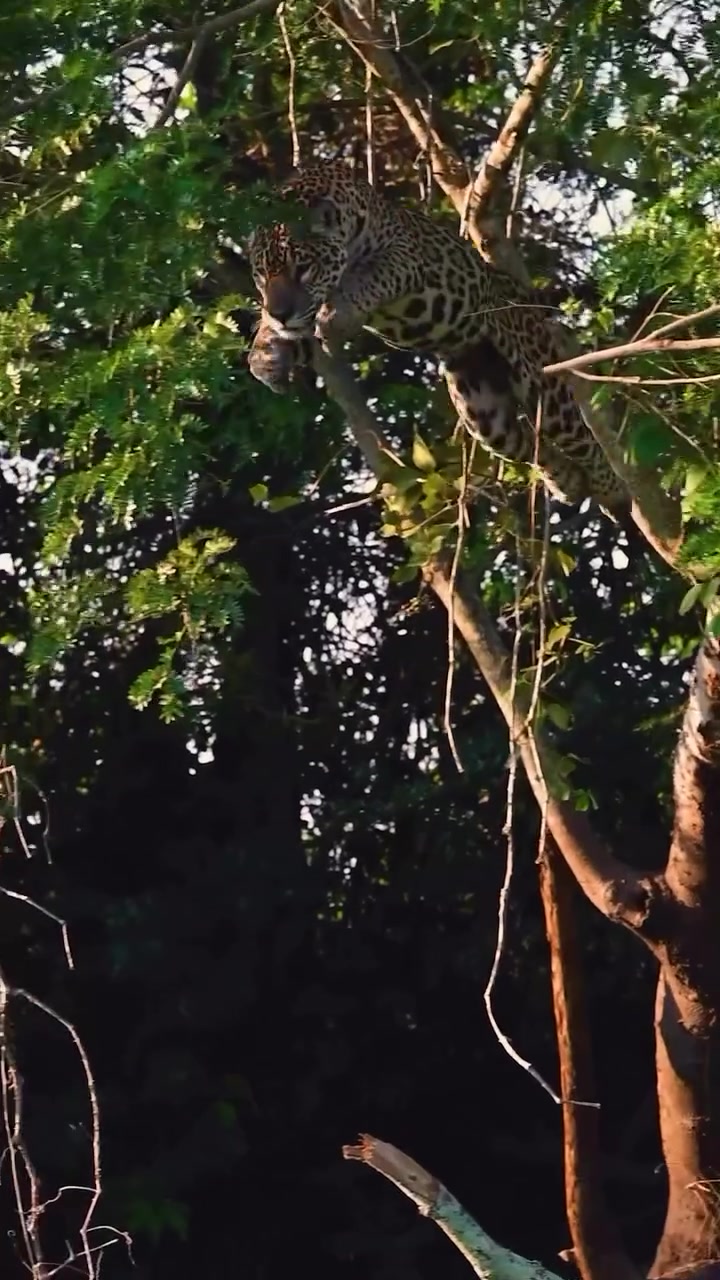
The Pantanal wetlands of Brazil are home to one of the most awe-inspiring sights in the wild — a jaguar leaping from a tree. This big cat is unapologetically fearless; only some cameras capture this majesty. Ecotourism uses local knowledge for a good purpose. Henrique Olson, a Brazilian wildlife expert, is not just a tourist guide. He has dedicated himself to preserving the endangered species and their habitat in Pantanal.
Apex predator in a tree
Jaguars are the apex predator of the Americas. Larger than leopards, they are powerful swimmers and climbers, but their distinctive spotted coats don’t always show, since they often dwell in dense jungle foliage. An impressive skill of the jaguars is their ability to leap from trees and stalks to capture prey. They are the most adaptable big cats, perfectly suited for the range of habitats they live in. Pantanal is a vast tropical wetland that serves as a sanctuary for jaguars, allowing them to thrash and thrive at the top of the food chain. This unspoiled habitat is more than just a place for survival—it’s a playground for these powerful felines to leap, stalk, swim, and climb.
An unexpected value of ecotourism
Ecotourism might smell of a buzzword but it is real work for select guides. It is a growing trend in the Pantanal. Henrique Olsen is a practical example of how ecotourism can help endangered species. His tours are less about traditional tourism and more about education and experience. As a tool of conservation, ecotourism generates crucial revenue and awareness for preserving the jaguar’s natural habitat. This biodiversity can only live and thrive within the right ecosystem. Either ecotourism steps up, or these forests will be gone in decades.
The habitats and hidden life of these trees
These trees are not just a backdrop for the leaping jaguar—they are a vital part of the ecosystem. The dense canopy provides shelter and hiding spots for the jaguars to rest and observe their prey. Foliage also plays a significant role in camouflaging the jaguar from potential threats. The Pantanal is home to the world’s largest tropical wetland, which provides essential habitat and food sources for the jaguar. This is particularly evident when observing the jaguar in action. The dense foliage of the trees in the Pantanal provides ample cover for the jaguar to stalk its prey or surprise its enemies. The jaguar’s ability to climb trees sets it apart from other big cats. Climbing is a skill that allows the jaguar to evade threats while hunting. This is a distinctive characteristic of the jaguar's behaviour.
The process of tracking and photographing
Trackers like Henrique follow the jaguars by monitoring their distinct patterns. These patterns are as unique as a human fingerprint, making individual identification possible. Tracking jaguars involves an understanding of their movements, prey patterns, and preferred habitats. As photographers, Henrique and others respect the jaguar’s space, keeping a safe and non-invasive distance. They observe the animals in their natural habitat. Observing these magnificent creatures in their natural habitat is an exceptional privilege. Through ecotourism, guides like Henrique offer immersive experiences. This approach is sustainable and educational, ensuring that future generations might still see their jaguar exhibit.
How to visit Pantanal jam-packed with wildlife
Visiting Pantanal to immerse in the jaguar habitat can be a life-long experience. Here’s how to do it:
- Choosing the Right Season: The best time to visit the Pantanal for jaguar sightings is during the dry season which runs from May to September. This is when the fauna gathers around the remaining water sources, making it easier to spot the jaguars.
- Hiring a Certified Guide: Working with a certified guide like Henrique Olsen, ensures that you get a responsible and educational experience. Guides like him are well-versed in the region’s wildlife and can provide valuable insights and safety tips.
- Stay in Accommodations Near Wildlife Sanctuaries: Opt for eco-lodges or camps that are located near wildlife reserves and sanctuaries. These accommodations provide a higher chance of observing jaguars in their natural habitat.
Panoramic view of the jaguar at rest and work
The jaguar is more than a beautiful creature. It is a symbol of resilience, adaptability, and the untamed spirit of the wild. The Pantanal, with its vast wetlands and lush forests, provides a sanctuary for these majestic animals. By supporting ecotourism and responsible wildlife observation, we can help ensure that future generations will have the opportunity to witness the jaguar’s beauty and power. Ponder over their immense leaps—no wonder these jaguars are kings in dense foliage.
Questions readers ask
How do jaguars use trees for hunting and survival in the Pantanal?
Jaguars in the Pantanal use trees to stalk and surprise their prey. They can leap from the trees to capture their prey. Additionally, the dense canopy provides shelter and camouflage, helping jaguars to rest and hide from potential threats. The foliage allows them to avoid detection. This is crucial to their survival in the wild.
What makes the Pantanal a unique habitat for jaguars?
The Pantanal is unique because it is the world’s largest tropical wetland. The dense foliage of the trees provides ample cover for jaguars to stalk their prey or avoid enemies. This habitat is essential for the survival and thriving of jaguars, allowing them to be at the top of the food chain.
How does ecotourism contribute to the conservation of jaguars in the Pantanal?
Ecotourism in the Pantanal generates crucial revenue and awareness for preserving the jaguar’s natural habitat. Guides like Henrique Olson use their local knowledge to educate tourists and promote conservation. This helps to protect the biodiversity of the region and ensures that the jaguars have a healthy ecosystem to thrive in.
What techniques do trackers like Henrique use to follow jaguars?
Trackers monitor the jaguars by observing their unique coat patterns, which are as distinctive as human fingerprints. They also study the jaguars' movements, prey patterns, and preferred habitats. Photographers like Henrique respect the jaguars' space, keeping a safe and non-invasive distance to observe the animals in their natural habitat.
Why is the jaguar considered an apex predator, and how does this status affect its behavior?
The jaguar is considered an apex predator because it is at the top of the food chain in the Americas. This status allows them to thrive in a variety of habitats, including the Pantanal. Their powerful swimming and climbing skills, along with their adaptability, make them well-suited for hunting and surviving in dense jungle foliage.
Related deep dives
Similar reads based on topic and creator.



Recent articles
Fresh deep dives from the latest Reels we unpacked.



Comments
Be the first to comment.