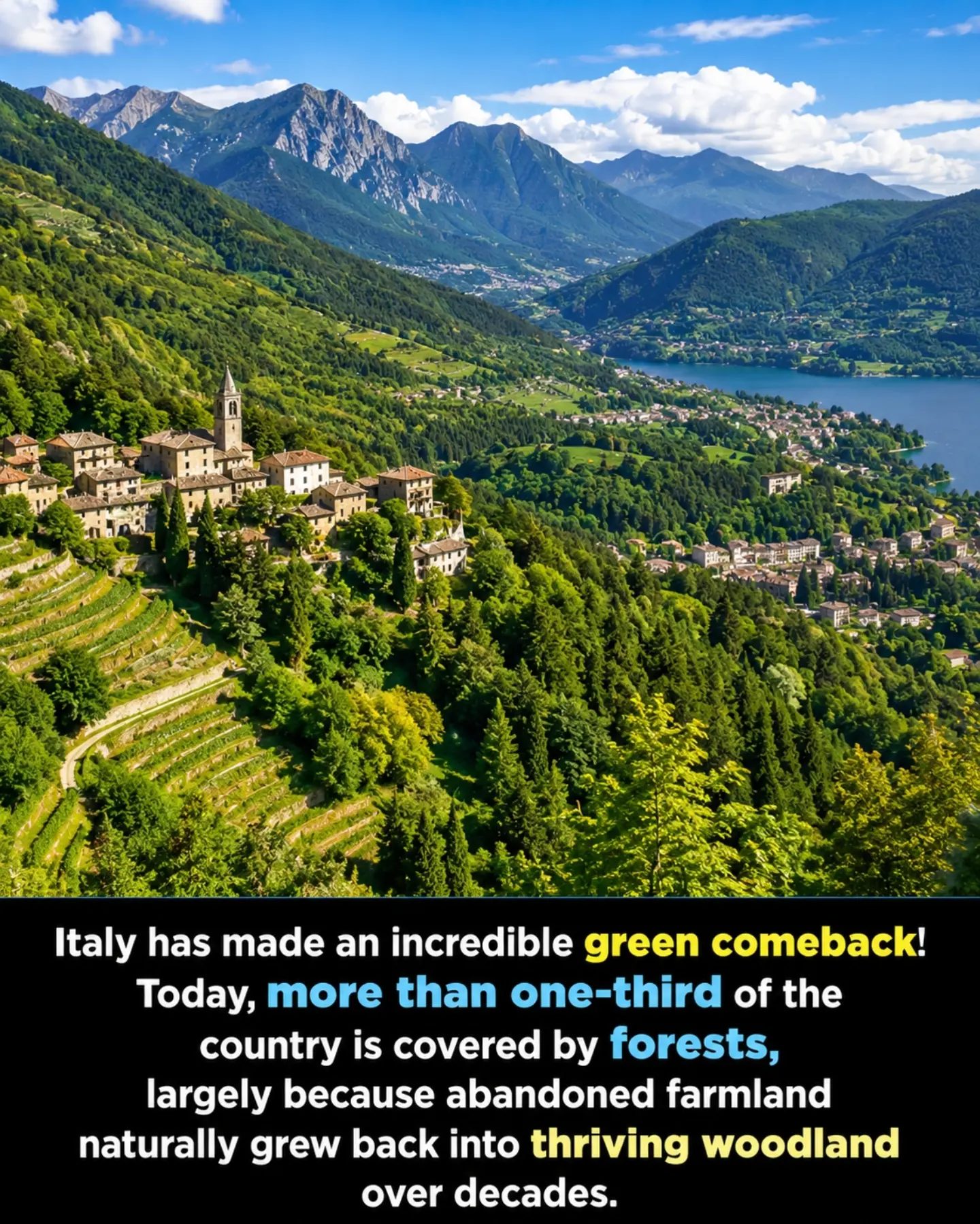
Italian Forest Comeback
Italy's landscapes have undergone a remarkable transformation, with forests now covering more than one-third of the country. This significant green comeback is a result of abandoned farmland naturally reverting to thriving woodland, a phenomenon that has shaped the Italian landscape over decades.
Context
The rejuvenation of Italy's forests is not just a story of ecological recovery; it's a testament to how environmental processes can reshape landscapes when left undisturbed. This transformation has profound implications for biodiversity, climate change mitigation, and even the cultural heritage of rural Italy. Understanding this phenomenon provides valuable insights into the potential for natural reforestation in other regions facing similar challenges.
The Green Comeback
The Role of Abandoned Farmland
Over the past few decades, Italy has seen a significant decrease in agricultural activity, particularly in rural areas. This abandonment of farmland has allowed nature to reclaim these spaces, leading to the remarkable reforestation of the area. The process of farmland reverting to forest is not unique to Italy; it's a phenomenon observed in various parts of the world, but Italy's case is particularly striking due to the scale and speed of the transformation.
Ecological Impact
The return of forests to these areas has had a profound impact on local ecosystems. Forests provide critical habitats for numerous plant and animal species, many of which were previously threatened by agricultural activities. The reforestation has also helped to restore natural water cycles, improve soil quality, and enhance biodiversity. The lush green landscapes, as seen in the valley with terraced hillsides and a large lake, are a visual testament to this ecological revival.
Climate Change Mitigation
Forests are essential for mitigating climate change due to their ability to absorb and store carbon dioxide. The reforestation of Italy's abandoned farmland has significantly increased the country's carbon sequestration capacity. This natural process of reforestation is a sustainable solution to combat climate change, reducing the reliance on technological interventions and showcasing the power of nature in addressing environmental challenges.
Cultural and Economic Implications
The transformation of farmland into forests also has cultural and economic implications. Many rural communities in Italy have historically depended on agriculture, but the shift towards natural reforestation has led to a decline in this sector. This has forced communities to adapt, often by transitioning to ecotourism or other sustainable practices. For instance, the scenic views of the terraced hillsides and the lush landscapes attract tourists, providing a new source of income for local residents. The abandoned farmland has been transformed into a thriving woodland, significantly contributing to Italy's natural beauty and attracting visitors from around the world. This shift highlights the importance of embracing change and finding innovative ways to support local economies in the face of environmental transformations.
Practical Tips
Supporting Natural Reforestation
For anyone looking to support natural reforestation, there are several practical steps to consider:
-
Abandonment of Farmland: Allowing farmland to revert to its natural state can be a practical step towards reforestation. This approach, however, requires careful planning to ensure that it does not negatively impact local communities or food security.
-
Planting Native Species: Introducing native tree species to areas undergoing reforestation can accelerate the process and ensure the sustainability of the ecosystem.
-
Conservation Efforts: Support conservation efforts and organizations that work towards protecting and restoring natural habitats.
Important Takeaways
The transformation of Italy's landscape highlights several key points:
- Natural Reforestation: Abandoned farmland can naturally revert to thriving woodland, contributing to ecological recovery and climate change mitigation.
- Ecosystem Restoration: Forests provide critical habitats for numerous species and help restore natural water cycles and soil quality.
- Economic Adaptation: Communities can adapt to these changes by transitioning to ecotourism or other sustainable practices, providing new sources of income.
- Global Applicability: The lessons from Italy's green comeback can be applied to other regions facing similar challenges, offering a model for natural reforestation and ecological restoration.
Conclusion
Italy's green comeback is a compelling example of how nature can reclaim and restore landscapes when given the chance. The transformation of abandoned farmland into thriving woodland has not only enhanced biodiversity and mitigated climate change but also offered new economic opportunities for rural communities. This phenomenon underscores the importance of embracing natural processes and finding innovative ways to support environmental recovery. By understanding and supporting these processes, we can contribute to a greener, more sustainable future.
Questions readers ask
What are the primary drivers behind Italy's reforestation?
The primary drivers behind Italy's reforestation include the abandonment of farmlands due to urban migration and economic shifts. This has allowed natural processes to take over, enabling forests to reclaim and thrive on these formerly cultivated lands.
How has the increase in forest cover impacted Italy's biodiversity?
The increase in forest cover has significantly boosted Italy's biodiversity. Forests provide habitats for a wide range of plant and animal species, many of which were previously threatened by agricultural activities. This ecological recovery supports a richer and more diverse ecosystem.
What role do terraced hillsides play in Italy's reforestation story?
Terraced hillsides, once meticulously maintained for farming, have become integral to Italy's reforestation. As these terrains are abandoned, they gradually revert to woodland, contributing to the overall forest cover and reshaping the rural landscape.
How does natural reforestation in Italy combat climate change?
Natural reforestation in Italy helps combat climate change by absorbing carbon dioxide from the atmosphere. Forests act as carbon sinks, mitigating the impacts of greenhouse gases and contributing to a healthier global environment.
What are the cultural implications of Italy's green comeback?
Italy's green comeback has significant cultural implications, particularly in rural areas. The transformation of landscapes from farmland to forest alters the traditional practices and ways of life, influencing local identities and heritage.
What can other regions learn from Italy's reforestation experience?
Other regions facing similar challenges of abandoned farmland can learn from Italy's experience that natural reforestation is a viable solution. By allowing ecological processes to unfold, these regions can achieve significant forest growth and environmental benefits.
How have reforested valleys contributed to Italy's ecological transformation?
Reforested valleys in Italy have played a pivotal role in the country's ecological transformation. These valleys, once barren or cultivated, are now lush with vegetation, supporting diverse ecosystems and enhancing the overall environmental health of the region.
Related deep dives
Similar reads based on topic and creator.




Recent articles
Fresh deep dives from the latest Reels we unpacked.




Comments
Be the first to comment.