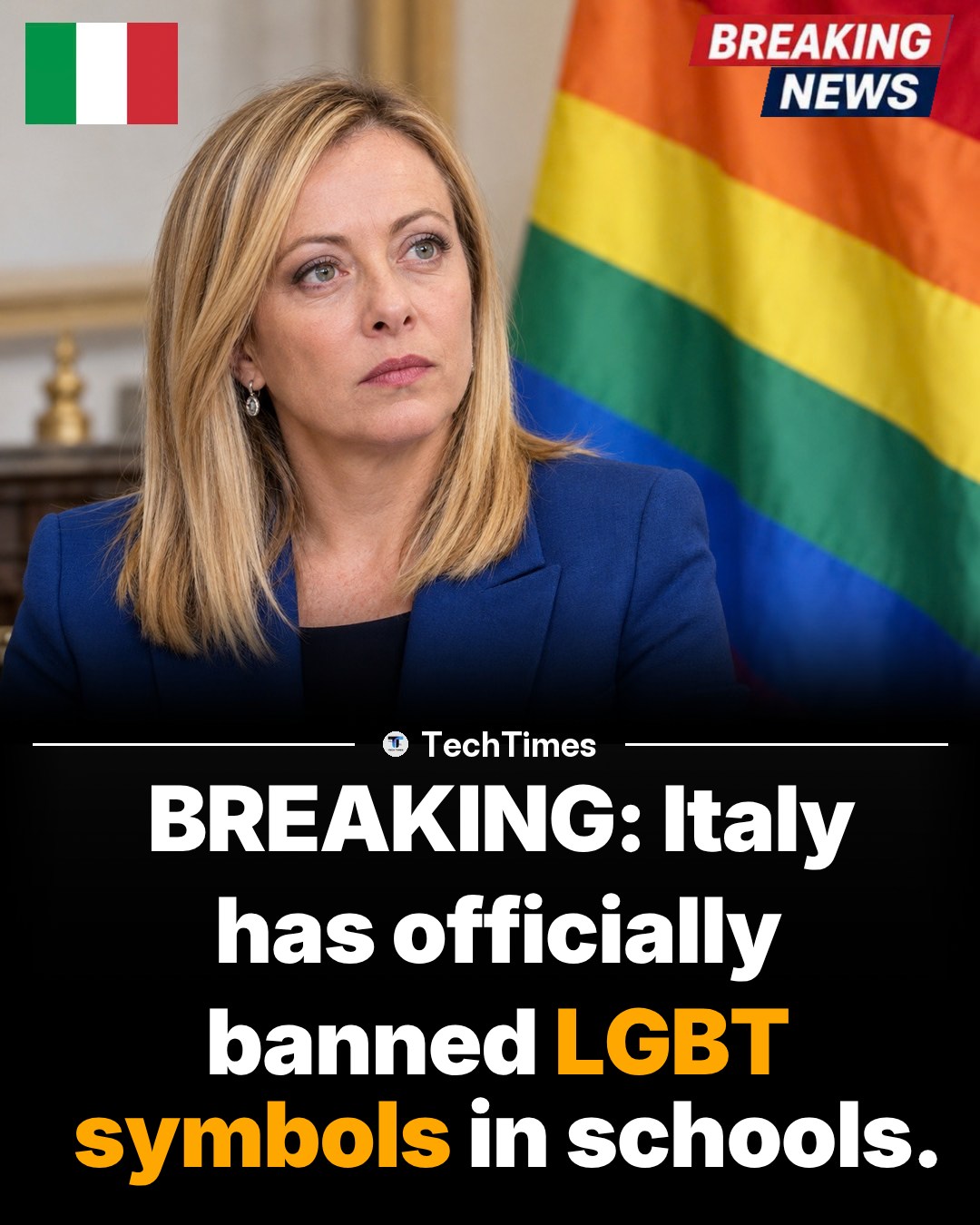
Italy's newest political controversy — a ban on LGBT symbols in schools — has stirred the country as the government, led by Giorgia Meloni, enforces a policy some say hampers students' openness.
What are Italy's new education policies?
Italy's new policy ban LGBT symbols — specifically flags, stickers, and posters that express pride or transgender identity in schools. The ban includes the rainbow flag, a symbol of LGBT pride, as the text displayed on the screen emphasizes. The government of Prime Minister Giorgia Meloni has imposed this measure, arguing it aligns with Italian values and cultural traditions. The Communist Party and other political parties, however, condemn the policy. A protest was organized by the Italian Communist Party on 28 April P.G. in Rome on St. John's Lateran Square. The policy is designed to keep the public discourse in schools free from external influences.
Italy's political violence and backlash as a global darkening trend
The ban on LGBT symbols in Italy is part of a larger global trend toward restrictive policies and political violence. In recent years, many countries have seen a rise in conservative governments implementing policies that restrict LGBTQ+ rights, women's reproductive rights, and other progressive causes. This backlash follows years of advances in civil rights and social acceptance. The banning of LGBT symbols in Italian schools is a clear statement from the Meloni government and part of a broader shift in Italian opinion. But other conservative policies include the implementation of a national curriculum designed to promote "traditional" values and "family-centered" teaching. The government has also implemented restrictions on free public assembly. Italy's political rhetoric and policy have furthered the rise in hate speech and violence against minority groups. Organizations, like ISTAT and OS present alarming data. According to the reports, there has been an increase in verbal and physical attacks against members of the LGBTQ+ community, immigrants, and other marginalized groups. There have been publicized instances of outright violence against LGBTQ+ individuals. The ban on LGBT symbols in schools has drawn significant criticism from international organizations and human rights groups. Amnesty International, other international organizations, and the United Nations have condemned. The European Union (EU), which Italy is a part of, has expressed disapproval of many policies including this one due to their controversial nature. A recent poll by the International Labour Organization (ILO) showed Italy is the only EU country to show support for these kinds of restrictions. Many Italians are worried these policies will have a major impact on Italy's global image.
Public protest: competing values
The ban has sparked widespread protests and counter-protests across Italy. Proponents of the ban, often wearing the tricolor flag of Italy, argue that the policy preserves Italian tradition and protects children from what they see as harmful influences. However, these groups often march only a single block from protests with opposing views. Opponents, adorned with rainbow flags and diverse symbols, advocate for inclusivity, gender equality, and the protection of minority rights. Pro-LGBTQ+ protests have taken place in Rome, Paleromo, and Naples. Italy's capital city, Rome, has seen the most protests on both sides. The protests have sometimes spilled into violence and clash, but the vast majority have remained peaceful. The police have had to intervene to prevent escalations. Police lines are often seen separating the opposing sides of the debate. One notable figure, Italian Representative Aleanzi, has been the voice for the LGBTQ+ community in opposition to the ban, as well as others, like Catholic priests, who stand against the measure. Surveys of social media have shown that Italians are deeply divided over the issue, with strong opinions on both sides. The public is split, with supporters of the ban feeling the policy is an effort to return to traditional values. The opposition is equally passionate and feels that the ban constitutes an attempt to silence an important minority population.
History of LGBTQ+ rights in Italy
Italy has a complex history regarding LGBTQ+ rights. The country legalized same-sex civil unions in 2016, but same-sex marriage remains illegal. LGBTQ+ individuals have faced significant discrimination and violence over the years. However, Italy has also seen progress in recent years, with increased visibility and acceptance of the LGBTQ+ community. The current government's policies represent a dramatic shift away from the progress that the nation has made in recent years.
The ban’s impact on education and student identity
The ban on LGBT symbols in schools has had a profound impact on students, teachers, and the broader educational environment. Many students who identify as LGBTQ+ or support LGBTQ+ rights feel marginalized and unsafe in a hostile atmosphere where their very visibility is now regulated. Some teachers have reported feeling silenced and unable to create inclusive learning environments due to fear of repercussions. In this climate, educators are wary about discussing LGBTQ+ topics and many have reported censorship. School administrators have been tasked with enforcing the ban, which has led to disputes and misunderstandings.
Support to LGBTQ+ students
Parents, teachers, and organizations are advocating for more inclusive policies to support LGBTQ+ students. Students have a right to feel safe in school. Some advocates are pushing for the inclusion of LGBTQ+ history in the curriculum, something that is currently lacking. Other efforts include the creation of safe spaces within schools where students can express themselves freely. In this climate, more students need a safe space. Parents and students alike have voiced concerns about the lack of support that students have for their own identities. This trend of political violence and division in Italy has left students needing more support.
Details on supporting LGBTQ+ students' identity
Students often look to their schools for guidance and support in understanding their identity and the world around them. Schools should support students in their journey. Supportive initiatives are crucial to foster a sense of belonging and normalcy for students. Students want to feel supported and empowered in schools. Some practical guidelines for supporting LGBTQ+ students include:
- Inclusive curricula: Incorporate LGBTQ+ history and literature into the curriculum to make students feel acknowledged and validated.
- Safe spaces: Establish designated safe spaces where students can openly discuss their experiences and feelings.
- Teacher training: Provide training for teachers on how to create an inclusive classroom environment and support LGBTQ+ students.
- Counseling services: Offer counseling services for students who may be struggling with their identity or facing discrimination.
- Parent and community engagement: Engage parents and community members in discussions about LGBTQ+ issues to foster a more supportive environment outside of school.
Questions readers ask
What exactly is considered an LGBT symbol under Italy's new policy?
The policy specifically targets symbols like the rainbow flag, as well as stickers and posters that represent pride or transgender identity. It's important to note that the ban extends to any symbols that may be perceived as promoting LGBTQ+ causes or identities.
What is the official reasoning behind the ban on LGBT symbols in Italian schools?
The government, led by Giorgia Meloni, claims that the ban is necessary to protect 'Italian values' and cultural traditions. They argue that it keeps the public discourse in schools free from external influences, but critics see it as a form of censorship that hinders students' ability to express themselves openly.
How has the international community responded to Italy's ban on LGBT symbols in schools?
The response has been overwhelmingly negative. Organizations like Amnesty International, the United Nations, and the European Union have all condemned the policy. The ban has also raised concerns about Italy's global image, with many worried about the impact on the country's reputation.
What other restrictive policies has Italy's government implemented alongside the ban on LGBT symbols?
In addition to the ban on LGBT symbols, the government has introduced a national curriculum that promotes 'traditional' values and 'family-centered' teaching. They have also implemented restrictions on free public assembly, which has further fueled concerns about the erosion of civil rights in Italy.
How have Italian citizens reacted to the ban on LGBT symbols in schools?
The reaction has been deeply divided. There have been widespread protests and counter-protests. Proponents of the ban often argue that it preserves Italian tradition and protects children, while opponents see it as a threat to freedom of expression and a sign of intolerance towards the LGBTQ+ community.
Is there a connection between the ban on LGBT symbols and the rise in hate speech and violence against minority groups in Italy?
Yes, there is a concerning link. Organizations like ISTAT and OS have reported an increase in verbal and physical attacks against members of the LGBTQ+ community, immigrants, and other marginalized groups. The government's policies and rhetoric have been cited as contributing factors to this alarming trend.
Who is Giorgia Meloni, and how does her leadership factor into Italy's new education policies?
Giorgia Meloni is the current Prime Minister of Italy and the leader of the Brothers of Italy party. Her leadership has been marked by conservative policies, including the ban on LGBT symbols in schools. Her government's stance on these issues has sparked significant controversy both within Italy and internationally.
Related deep dives
Similar reads based on topic and creator.



Recent articles
Fresh deep dives from the latest Reels we unpacked.



Comments
Be the first to comment.