
Israel is building a groundbreaking new stealth jet — unmanned, equipped with F-35 capabilities, and none of the parts come from the United States. The 5th generation jet fighters have long been regarded as the cutting edge of military air power, yet the U.S. is not the only nation striving to master the technology. The emergence of the F-35 Lightning II is the first fifth-generation fighter to be developed and produced in large numbers for export. In the Middle East, countries like Israel — ostensibly a U.S. ally — are exploring their own advanced fighter capabilities to secure air superiority.
The Blueprint: Faster, Smarter, Quieter
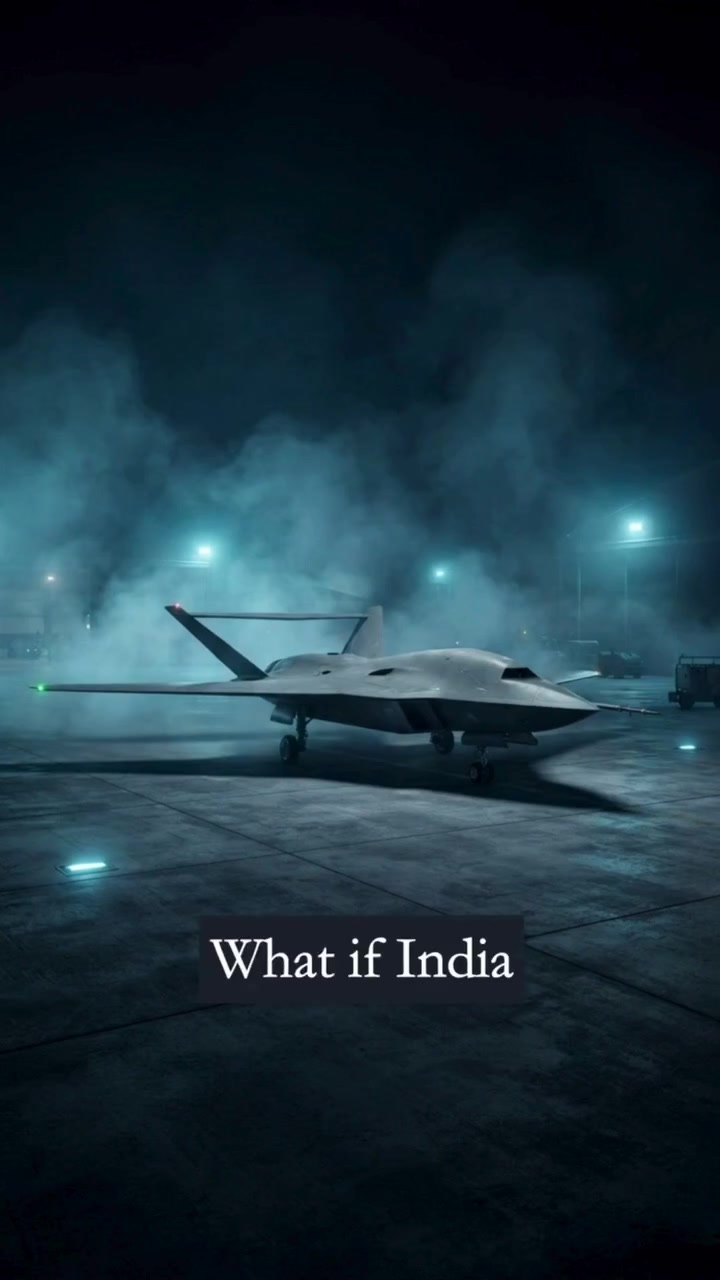
An unmanned pilotless stealth jet with 5th-generation capabilities can revolutionize for the air forces of the world. The military aircraft — developed by Israel — can perform multiple tasks simultaneously without endangering a human pilot. Given the strategic stakes in the Middle East, such air superiority is particularly important. The F-35's advanced sensors can detect and identify targets at long ranges, its stealth capabilities allow it to penetrate heavily defended airspaces, and its networking capabilities enable it to share information with other aircraft and ground forces in real-time. However, unlike the F-35, Israel's own jet will be autonomous and lack any American parts. In a 2019 interview, Benny Gantz, Defense Minister and Israel's former Chief of Staff, noted that Israel works closely with the U.S. on the F-35 program, “Now we have an opportunity to take one step forward and integrate this system with our own defense industry.” Thus, Israeli defense industry is working to develop autonomous systems that could enhance the performance of its F-35 fleet. The jet represents a significant leap forward in Israel's defense capabilities, demonstrating the country's ability to develop advanced military technology. By building a pilotless stealth jet with F-35 capabilities and no U.S. parts, Israel aims to ensure its air superiority and reduce its dependence on foreign technology. This development also highlights the growing trend of countries relying less on imported military technology and instead investing in domestic defense industries.
A Shifting Military Landscape
Israel’s ambitions show a trend where indigenous military capabilities are increasingly valued. Historically, defense programs have been a source of pride for nations, but this new chapter goes farther: Countries are intent on retaining their technological edge, and the ability to maintain and upgrade military technology independently. Defense programs like these are not only about military might but also about economic and technological independence. Countries are investing in advanced military capabilities to ensure their security and to foster innovation in the defense sector. Israel’s development of a pilotless stealth jet with F-35 capabilities and zero U.S. parts is a testament to this trend. It is a move, akin to developing a cutting-edge chip, that will allow it to maintain technological superiority in the region. The deployment of advanced military technology is expected to be a game-changer in military strategies. This kind of aerial surveillance significantly boosts a country's intelligence and defense capabilities. The unmanned aircraft also allows states to deploy military forces in high-risk areas without putting human lives at risk. While the capabilities of Israel's new stealth jet remain uncertain, its development sends a clear message about the country's strategic goals and technological prowess.
The Military Equivalence Principle
To date, the Israeli Air Force operates F-35Is, a variant of and variant of the F-35 Joint Strike Fighter, the fifth-generation stealth aircraft developed by the United States.Read more about the F-35’s sophisticated components, like its avionics, sensors, and stealth capabilities. However, the Israeli variant is built to be more lethal than its American counterparts. The F-35I variant, launched by Lockheed Martin in 2016, was more suited to Israel's defense needs. For this reason, Israel purchased the F-35I variant of the F-35 Joint Strike Fighter. The jet is designed to operate in the Middle East and has several advanced capabilities, including the ability to carry a larger weapons payload and integrate with Israeli defense systems. In addition to air superiority, Israel's new military aircraft will feature other significant capabilities, including a precise targeting system and autonomous countermeasures. Autonomous capabilities mean the jet can operate without human intervention, making it ideal for high-risk missions. This would also enhance its operational capabilities, reducing the need for human intervention in critical missions and minimizing risks. Its maneuverability and advanced avionics could be beneficial in both offensive and defensive strategies. Stealth capabilities make the jet invisible to radar systems, reducing the risk of detection and interception.
The U.S. Influence
By building a jet with no American parts, Israel would reduce its dependence on the United States. This stealth jet would be far more advanced, with a more sophisticated avionics system and the ability to carry a broader range of weapons. The move emphasizes Israel's strategic goals and technological prowess. Israel’s decision to develop a jet with zero U.S. parts highlights its efforts to reduce its dependence on foreign technology, providing more autonomy and control over its defense capabilities, and ensuring the United States will be unable to remotely control it. The jet's advanced avionics will allow for more precise targeting and enhanced situational awareness, which will give Israel air superiority and situational awareness over its enemies.
Stealth Jets vs. Unmanned Combat Aerial Vehicles
The unmanned jet represents a significant shift in military technology from unmanned aerial vehicles. “We're talking about something that can hover low, transmit data, and come back safely” said a military expert, referring to Israel's new stealth jet. The jet has advanced capabilities—including maneuverability, which would provide a strategic advantage over rivals. While Israel's new stealth jet does not have a specific name yet, it can carry a larger weapons payload and integrate with Israeli defense systems. Unlike the F-35, the stealth jet will have autonomous capabilities, allowing it to perform multiple tasks simultaneously without putting a human pilot at risk. The jet's advanced avionics and stealth capabilities make it a formidable addition to Israel's military strategy. It is expected to be deployed in high-risk areas, where its autonomous capabilities will be particularly valuable. The new jet’s stealth capabilities make it ideal for covert operations, especially in hostile environments. Its advanced avionics will allow for more precise targeting and enhanced situational awareness, which will give Israel air superiority and situational awareness over its enemies. Additionally, its maneuverability and advanced avionics could be beneficial in both offensive and defensive strategies. Stealth capabilities make the jet invisible to radar systems, reducing the risk of detection and interception.
Israel’s Military Arsenal
“One of the notable things about this development is that it allows Israel to integrate new capabilities and improve existing systems,” said a military expert, who requested anonymity. The stealth jet will have several advanced capabilities, including a precise targeting system and autonomous countermeasures. While Israel has not yet tested its pilotless stealth jet, it will be a welcome addition to the country’s military arsenal. The stealth jet’s precise targeting system and autonomous countermeasures will make it a valuable asset in high-risk missions. The jet is intended to be built with zero U.S. parts, giving Israel more control over its defense capabilities and ensuring that the United States will not have the ability to remotely control the jet. The unmanned nature of the jet makes it ideal for missions in hostile environments, where human intervention may be impossible or dangerous.
The Jet: Israel’s Technological Future
Israel's pilotless stealth jet represents a significant leap forward in military technology, with its advanced avionics, precise targeting system, and autonomous countermeasures. The jet's stealth capabilities and autonomous capabilities make it a formidable addition to Israel's military arsenal. Its maneuverability and advanced avionics could be beneficial in both offensive and defensive strategies and make it ideal for high-risk missions in hostile environments, where human intervention is impossible or dangerous.
Technological Independence
The stealth jet’s maneuverability and advanced avionics could be beneficial in both offensive and defensive strategies. This would provide a significant boost to Israel's air superiority and situational awareness over its enemies. The jet’s stealth capabilities make it ideal for covert operations, especially in hostile environments, where its autonomous capabilities will be particularly valuable, making it a formidable addition to Israel's military arsenal. Investing in domestic defense industries also recognizes that technological independence is crucial for national security. This means that Israel can maintain and upgrade its military technology independently.
What the world might see in Israeli skies
There are many significant advantages to considering this unmanned aircraft. They are more accurate, and they might be less expensive. This makes the aircraft useful for a variety of applications. The pilotless stealth jet also enhances Israel's ability to deploy military forces in high-risk areas without putting human lives at risk.
- Military Capacity: Israel’s new stealth jet will equip the country to ensure its air superiority in the Middle East. Its advanced avionics and stealth capabilities will reduce the risk of detection and interception.
- Enhanced Air Superiority: The jet’s autonomous capabilities make it ideal for missions in hostile environments, where human intervention is impossible. The stealth jet’s precise targeting system and autonomous countermeasures will be a significant boost to Israel's military strategy.
- Reduced Dependence: Its maneuverability, advanced avionics, and stealth capabilities make it a formidable addition to Israel's military arsenal and provide a significant boost to Israel's air superiority and situational awareness. The stealth jet's development and deployment will significantly enhance Israel's military capabilities and technological independence. The jet's autonomous capabilities, precise targeting system, and advanced avionics make it a valuable asset in high-risk missions.
A clear path to the skies
The production of this stealth jet will have implications beyond the immediate military advantages. By building a pilotless stealth jet with F-35 capabilities and no U.S. parts, Israel is poised to become a regional military powerhouse. The jet's advanced capabilities, including its stealth, autonomous capabilities, and maneuverability, will make it a formidable addition to Israel's military arsenal, and ensure Israel will have the cutting edge in defense technology. Development of Israel’s pilotless stealth jet is poised to be a significant milestone in military technology, demonstrating the country's ability to develop advanced military capabilities.
Questions readers ask
What specific capabilities does Israel's new pilotless stealth jet aim to match from the F-35?
Israel's new pilotless stealth jet is designed to replicate several key capabilities of the F-35, including advanced sensors for long-range target detection and identification, stealth features for penetrating heavily defended airspaces, and real-time networking to share information with other aircraft and ground forces. This means it can operate in contested environments and provide critical data to other military assets.
Can Israel's new jet really operate without any American components?
Yes, Israel's new stealth jet is being developed with the explicit goal of not including any American parts. This is a strategic move to reduce dependence on foreign technology and to ensure that the jet can be maintained and upgraded independently. Benny Gantz, Israel's former Defense Minister, emphasized this point, highlighting the importance of integrating the technology with Israel's own defense industry.
Why is Israel developing this jet independently from the U.S.?
Israel is developing this jet to ensure its air superiority and reduce its reliance on foreign technology, particularly from the U.S. This move is part of a broader trend where countries are investing in their own defense industries to maintain technological independence and security. By building the jet without U.S. components, Israel aims to have full control over its maintenance and upgrades.
How does a pilotless stealth jet change the dynamics of military operations?
A pilotless stealth jet can perform multiple tasks simultaneously without putting human pilots at risk, which is crucial in high-stakes military operations. Its stealth capabilities allow it to infiltrate heavily defended areas undetected, and its advanced sensors can provide real-time intelligence. This autonomy and stealth make it a versatile asset in modern warfare, enhancing both offensive and defensive capabilities.
What does this development mean for the future of military technology in the Middle East?
Israel's development of a pilotless stealth jet with F-35 capabilities and no U.S. parts sets a precedent for other countries in the region. It signals a shift towards indigenous military capabilities and reduced dependence on imported technology. This trend is likely to accelerate as more nations seek to maintain their technological edge and ensure their security through domestic defense innovations.
Related deep dives
Similar reads based on topic and creator.


Recent articles
Fresh deep dives from the latest Reels we unpacked.




Comments
Be the first to comment.