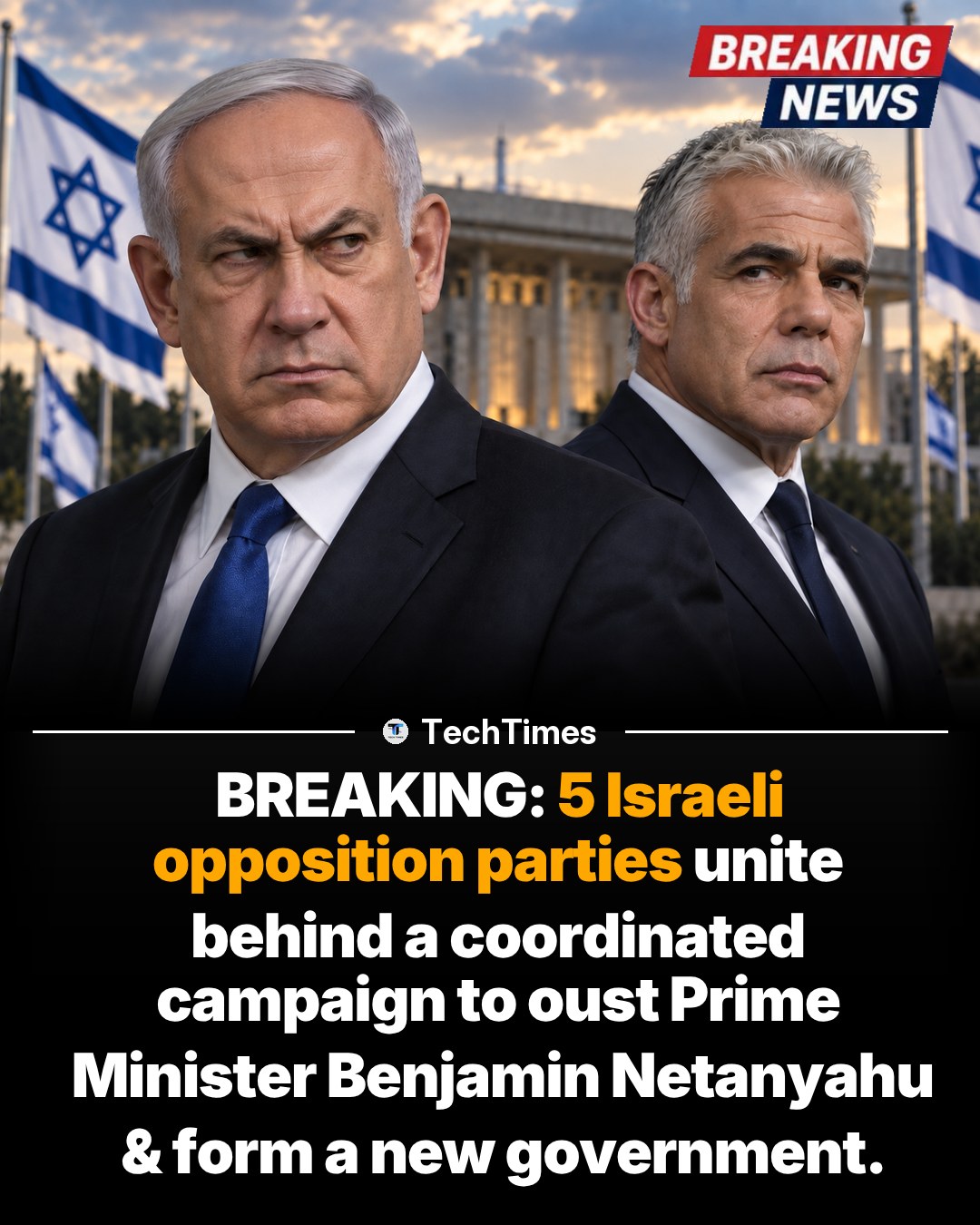
Israeli Politics News The breaking news graphic is undeniated: Five Israeli opposition parties are uniting. Their single-minded goal is to oust Prime Minister Benjamin Netanyahu, and they aren't wasting time aiming to immediately pool their resources and form a new government. This is the first time multiple opposition parties move systematically to challenge Netanyahu and attempt to form a new government. They're publicly stating this isn't a mere political maneuver. The declaration of unity is unambiguous.
The Five-Part Alliance
What does it mean, exactly, for five opposition parties to unite in Israel? It's an unprecedented coalition of opposition parties. The parties involved range from the center to the far right of the political spectrum, with the combined goal — and now strategy — to oust Netanyahu. This is a strategic decision, not a casual coalition. They have a shared vision of urgency, coordinating on a platform to unseat the long-standing prime minister and take control of the government. They are aligning not only on their opposition to Netanyahu but also on their vision of a new government. The alliance is a response to Netanyahu's long tenure. When viewed through the lens of Israeli politics, forming a new government means that these parties must unify to win a majority of seats in the Knesset (Israel's parliament). Netanyahu's ruling coalition is currently at 61 out of 120 seats, which means the opposition parties need a commanding lead in block-form votes. The united opposition parties seek to win 61 seats which can form a new government.
The Political Surge
Why is this political surge in Israel even happening? The growing frustration is because Netanyahu has been in power for a cumulative 13 years. He has faced multiple corruption charges for his alleged involvement in two corruption cases: Case 1000 and Case 2000, as well as in Case 4000, although he denies any wrongdoing. He has been forced to delay these trials since he’s been in power, and now the opposition is seeking a fast resolution or dismissal. This opposition surge is likely to lead to reshaping the future of Israel's government. The united parties aren’t just standing in opposition. They are actively strategizing for the future of the country. There are lessons to learn from this alliance, the first being that it could be a pattern adopted in other competitive democracies. The second is how parties that are politically polar opposites can unite into a coalition. Of course, the future of Israeli politics remains unpredictable.
The Opposition Playbook
Preparing for a Swap
Next comes the question of how this campaign unfolds. The first step is to prepare for a snap election. The second is to coordinate their formal stance on various policies. Third, the alliance will need public support in exacting terms. They will need to form a formal coalition that can weather the pressures of a government. Finally, they will need to prove their readiness to form a government to the nation. While the alliance is just getting started, they will need to compile their individual policies and put them into an election program that the public can understand. As per voter patterns in Israel, the 5 political parties will need to appeal to the national public, not just their respective voter bases. To win the people’s votes in the snap election, the primary goal would be to demonstrate their united front and how it enhances the Israeli voters’ interests. Opposition parties will have to show these voters that they are worth the sacrifice of voting against more traditional preferences. They will also need to socialize and coordinate backroom politics to look attractive in the nation's eyes.
Strategizing the Coalition
The goal of strategizing the coalition is to form a new government. The unified front is necessary to overpower Netanyahu. The parties are strategizing by forming a hybrid program that will appeal to the classic parties’ voters. They will also need to present a clear message to the public: the alliance of the parties will result in a stronger government. They will also need to make convincing arguments for a new government. Finally, they will need to convince voters that there will be no backtracking once in power.
Launching a Unified Front
Once the coalition is formed, they immediately will need to launch a unified front in the elections. They will need to coordinate their communication to ensure that the public sees a united front. They will also need to synchronize their social media pages to support their campaign. Perhaps most importantly, they need to make sure that the media catches the power of their coordination. Lastly, they should have a clear plan for forming the new government once the election results are announced.
The Potential Risks
Netanyahu's tenacity is a real danger. Netanyahu can mobilize his base, his support is still present and powerful, and he can draw out the political campaign. The opposition parties will need to stay united. Lastly, they need to make sure the political campaign is successful. Both leave room for the potential for the leftist bloc to fall apart or to lose public support.
Raising the Stakes
If these five opposition parties win the elections, they will need to fulfill their promise. They will need to prove that they have the skills and competence to run a government. They need to prove that they will have the ability to deliver on their promises. They need to prove they can unify the nation. They need to address cases of corruption unilaterally, which is the most significant threat to the opposition parties. Lastly, they need to ensure that their coalition government, unlike Netanyahu's fragile coalition, to hold together for a significant period.
Next Steps: The Campaign Trail
- **A live Twitter account: * * The parties involved should maintain a Twitter account where they can provide updates. This will keep the people informed, engage with them, and share behind-the-scenes glimpses of the campaign. This could also be a medium to field questions and endorse candidates. The latter will be useful for raising public awareness.
- Keep a solid audience engagement level. The parties and leaders should engage with the audience and the public frequently, whether in the form of debates and interviews. They need to respond respectfully to their audiences, whether they are allies or opponents.
- **Conduct frequent surveys. * The parties should continuously survey citizen sentiment to understand what issues are most important to voters. This will ensure that the final policy platform aligns with the public interest and the parties’ platforms.
- A clear ageable hashtag This hashtag will be a campaign rallying point for the voters to make the campaign more accessible. .* Coordinated interviews with local media. Ensure each party leader presents a coherent platform ensuring that they all follow the same message.
After Netanyahu
With the united front taking on the challenge, a new chapter in Israeli politics has undoubtedly begun. This alliance is a testament to the power of a coordinated effort in a shifting political landscape. As voters head to the polls, they will be drawn to the message of unity and a vision for a new government. Keep an eye on the developments as they unfold, and be sure to check in for updates.
Questions readers ask
What specific parties are part of this alliance to oust Netanyahu?
The article doesn't name the specific parties, but it mentions that they range from the center to the far right of the political spectrum. This is an unusual alliance because these parties typically have different ideologies and goals, but they've united under a common goal to oust Netanyahu.
How will the opposition parties challenge Netanyahu's ruling coalition of 61 seats in the Knesset?
The opposition parties need to win a majority of seats in the Knesset to form a new government. This means they need to secure at least 61 seats, which is the same number as Netanyahu's current coalition. The united opposition parties are strategizing to win a commanding lead in block-form votes.
What are the corruption charges Netanyahu is facing?
Netanyahu is facing multiple corruption charges, including Case 1000, Case 2000, and Case 4000. These cases involve allegations of bribery, fraud, and breach of trust, although he has denied any wrongdoing. The opposition parties are seeking a fast resolution or dismissal of these trials, which have been delayed while Netanyahu has been in power.
What steps will the opposition parties take to prepare for a snap election?
The opposition parties will first need to prepare for a snap election, which means they will need to coordinate their formal stance on various policies and compile their individual policies into an election program that the public can understand. They will also need to form a formal coalition that can weather the pressures of a government and prove their readiness to form a government to the nation.
What kind of public support will the opposition parties need to form a new government?
The opposition parties will need significant public support to form a new government. This means they will need to gain the trust and votes of the Israeli public, who may be frustrated with Netanyahu's long tenure and the delay of his corruption trials. However, they will also need to address the concerns and interests of the diverse groups that make up their coalition.
Recent articles
Fresh deep dives from the latest Reels we unpacked.




Comments
Be the first to comment.