The Ambiguous Victory in the Iran War
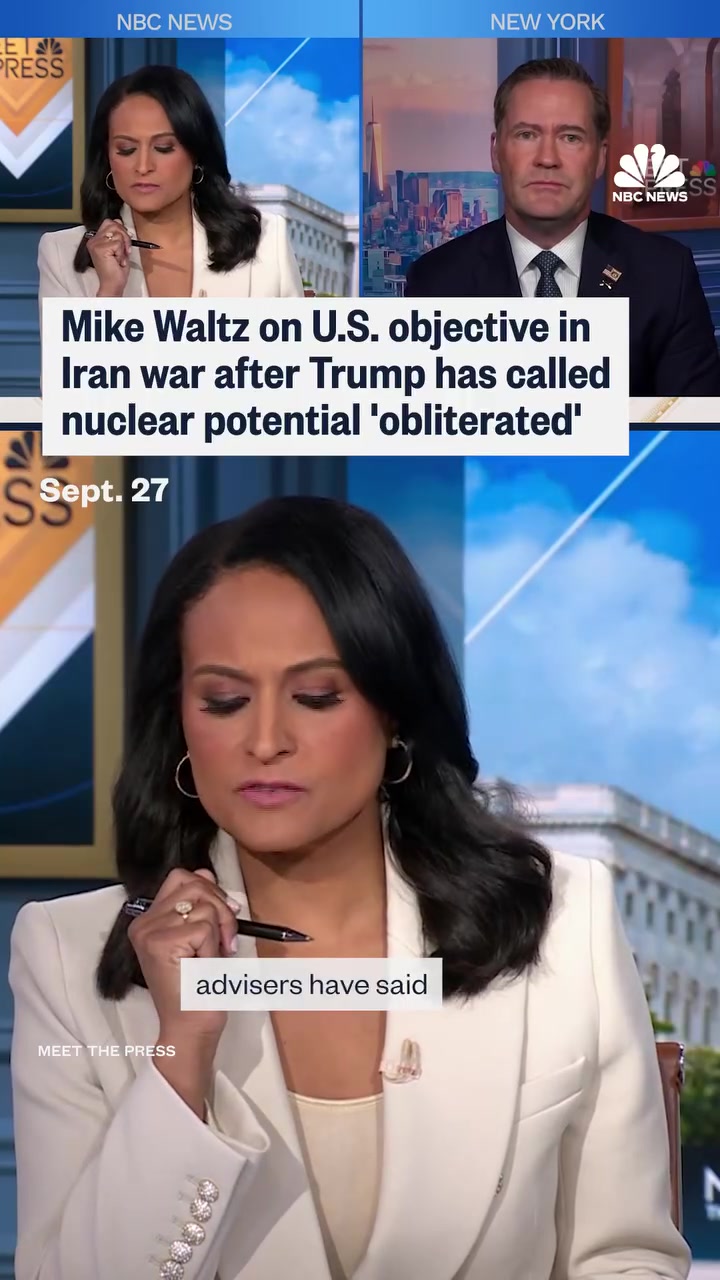
As stated on NBC News, the objective of the war is that Iran cannot have a nuclear weapon. Ambassador Mike Waltz stated, "The president has said multiple times that Iran's nuclear potential is destroyed". Eight months ago the USA attacked Iran nuclear sites and they were obliterated. Ten months ago, Donald Trump stated, "I wiped out the military of a very dangerous country."
Objectives and Possible Outcomes
The U.S. objective in the war on Iran is preventing them from developing a nuclear weapon. It is true that the U.S. obliterated Iran's nuclear enrichment facilities, but as we've seen Iran still has highly enriched uranium and, therefore, the ability to reconstitute a nuclear program. This is the crux of the problem. Is there any way around Iran's nuclear potential? Waltz explained, "Again, Kristen, there is no reason no country on Earth with a peaceful civilian program has a need to enrich to weapons grade or just short of weapons grade. So they still have that hidden and dispersed." That means there is a risk Iran will reconstitute a nuclear program. Waltz offered, "No, well, look, I mean, the regime can come to the table and in accordance with international law, in accordance with their obligations in the nonproliferation treaty." But if Iran refuses to comply then what is left to accomplish? Waltz says there are a number of ways to get there, and President Trump is open to that.
The Trump Narrative: Strategic Ambiguity
The president has said multiple times that Iran's nuclear potential is destroyed, but Waltz's explanation is more complex. Trump said, "We blew up their nuclear potential. It was obliterated. We attacked" but the increased risk of Iran reconstituting their nuclear program does not support this. Trump's ambiguous statements create an illusion of progress, when in reality Iran still has the ability to reconstitute a nuclear program. Waltz says, "There is no reason no country on Earth with a peaceful civilian program has a need to enrich to weapons grade or just short of weapons grade."
The Dispersion Problem
Iran's ability to reconstitute its nuclear program is largely due to its highly enriched uranium, which has been dispersed across the country. This means it is extremely difficult to track and destroy. Waltz says that even if the U.S. succeeds in eliminating all of Iran's remaining facilities, the threat of dispersion remains. This dispersion defeats the purpose of the original attack. Waltz states, "But we also know they moved and dispersed highly enriched uranium. So they still have that hidden and dispersed." The enrichment of the uranium is the problem, so the U.S. needs to find a way to deal with the uranium itself.
United Arab Emirates' Example
The United Arab Emirates has a peaceful civilian nuclear program, just like what the UN is asking for from Iran. The UAE has a peaceful program and President Trump has even offered to sell uranium to Iran in exchange for compliance with international law. But Waltz warns that Iran's regime has not shown willingness to cooperate. If Iran complies, then the solution to eliminating the threat of Iran's nuclear potential is within reach. Waltz explains, "And again, the United Arab Emirates have a peaceful program right there in their neighborhood, and they abide by international. And if you’re not being accountable for it, so is regime change what's necessary to accomplish."
A Role for Changing the Regime
The only way to effectively get rid of Iran's nuclear potential is to change the regime. The current regime is not willing to comply with international law. Waltz explains "This is a regime that is not being accountable for it. So is regime change what's necessary to accomplish what you're going for, what is there left to accomplish? And is regime change necessary to do it? Well, I think it's a question that, again, that our diplomats deal with it, and I can't speak to that." If Iran's regime collapses, the atomic clean-up might be easier.
Reaching Out to the Iranian People
The next step in the U.S. objective for Iran is to reach out to the Iranian people who have been oppressed by their government. Waltz says, "This is a regime that has repressed their own people. Ultimately, we can deal with this threat with the people of Iran," suggesting that the U.S. establish a relationship with the Iranian people, providing them with needed aid and support. We can provide them with the political and material support they need to overthrow their government. Waltz says, "The people of Iran want and deserve a peaceful nuclear program. And we want to help them achieve that and to build a peaceful, prosperous, and democratic Iran."
Questions readers ask
What exactly does the Trump administration mean when they say Iran's nuclear potential has been 'destroyed'?
When the Trump administration claims that Iran's nuclear potential has been 'destroyed,' they are referring to the destruction of Iran's nuclear enrichment facilities. However, this does not mean that Iran has lost its ability to reconstitute a nuclear program. Iran still possesses highly enriched uranium, which can be used to restart the nuclear program. This discrepancy highlights the ambiguity in the administration's statements.
How does Iran's dispersal of highly enriched uranium complicate efforts to prevent a nuclear program?
The dispersal of highly enriched uranium across Iran makes it extremely difficult to track and destroy. Even if the U.S. manages to eliminate all known facilities, the risk remains that Iran could use the dispersed uranium to restart its nuclear program. This makes the original attack's goal of eradicating Iran's nuclear capabilities much harder to achieve.
What are the possible outcomes if Iran refuses to comply with international nuclear agreements?
If Iran refuses to comply with international agreements, the U.S. still has several options. Ambassador Mike Waltz suggests that the regime could be pressured to come to the table and negotiate in accordance with international law. However, if Iran remains non-compliant, the U.S. may need to consider further military or diplomatic actions to mitigate the threat.
Why does the U.S. believe that Iran still poses a nuclear threat despite the destruction of its enrichment facilities?
The U.S. believes that Iran still poses a nuclear threat because Iran still has highly enriched uranium dispersed across the country. This uranium can be used to quickly restart a nuclear program, making Iran's nuclear capabilities a persistent concern. The dispersion of this material means that even if facilities are destroyed, the threat remains.
What role does the United Arab Emirates' nuclear program play in the discussion about Iran's nuclear capabilities?
The United Arab Emirates' peaceful civilian nuclear program serves as a model for what the U.N. and the U.S. would like to see from Iran. By showing that a civilian program can exist without the need for weapons-grade enrichment, it highlights the contrast with Iran's actions. However, Iran's regime has not shown a willingness to cooperate, making it difficult to achieve a similar peaceful outcome.
Related deep dives
Similar reads based on topic and creator.

Recent articles
Fresh deep dives from the latest Reels we unpacked.




Comments
Be the first to comment.