Inside the Unseen War: Questions Surround Iran's Supreme Leader
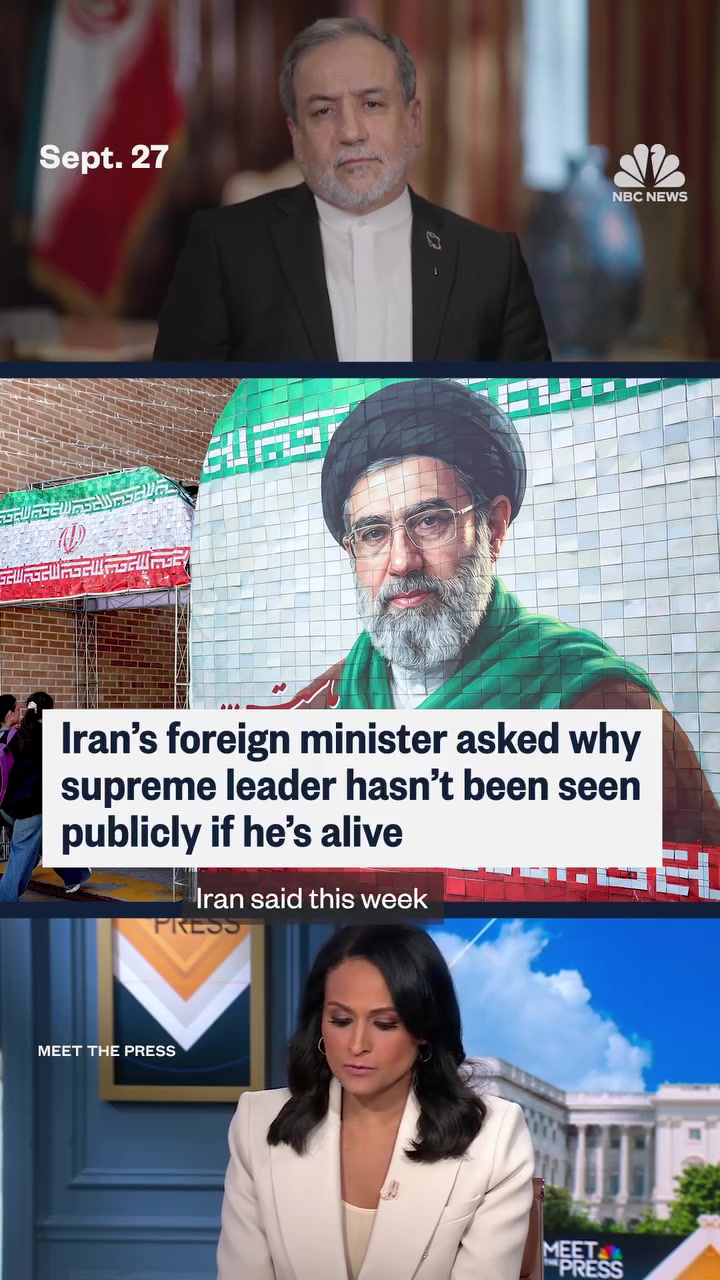
A clock ticks down in Iran. Several high-profile Iranian officials have spoken about the vulnerability and security concerns for the supreme leader Ayatollah Ali Khamenei. Most notably, Abbas Araghchi — foreign minister of Iran — has noted that the supreme leader is under siege, threatened not only by the Iranian people but also by the United States. However, the nation that is known to have a highly visible leader remains silent on this issue. In the months following the leader's last public speech, "Ayatollah Ali has been nowhere to be seen," according to Araghchi. Media has remained quiet about this issue that cuts to the heart of Iran’s political fabric. Foreign Minister Abbas Araghchi has given indications as late as September 27, 2023 that threats against Iran’s supreme leader have left his actions hidden from public attention. Even owing to international sanctions and threats, the lack of visibility around the Ayatollah’s public presence has given some pause.
The Politics Behind Iran’s Closed Door
The lack of visibility of Ayatollah Ali Khamenei has raised eyebrows, but it is not surprising to those familiar with the politics of Iran. The supreme leader’s mysterious absence has increased the focus on Iran’s domestic political dynamics — particularly the coordination between various power centers. During his September 2023 interview, Araghchi pointed out the national consensus in decision-making, mentioning close coordination between the Foreign Ministry, the government, the Islamic Revolutionary Guard Corps (IRGC), the Supreme National Security Council, and Parliament. This coordination suggests a united front in the face of external challenges, which may extend to controlling public information about the supreme leader. This is not an isolated incident, but one that signifies the nation's ability to rally against sanctions or military operations. The order and orderliness seen as evident in Iranian leadership are in contrast to the more open political systems. The lack of a clear hierarchy may appear to some as a weakness. However, the potential for internal conflict within Iran remains geopolitically relevant, with the country’s foreign minister implicitly suggesting that there are no alternative power centers. The IRGC has been the power within the country — and remains an undeniable source of Iranian power.
The Security Argument in Iran’s Media
Security concerns have been the focal point of recent news coverage in Iran. The government has moved to protect the supreme leader by limiting his public appearances. The country's foreign minister has buttressed this claim by stating "There are lots of indications that he is in full control." The lack of visibility for Khamenei is linked to the supreme leader’s assassination attempt, which occurred during the 1980s Iran-Iraq war. Security concerns have been paramount, and the Ayatollah has been under perceived threat from the United States. The Iran Foreign Minister has also been asked about the public showing of the Ayatollah's presence — including the possibility of public videos. In his September interview, Abbas Araghchi said, "Well, uh... There are security concerns... For security reasons, there are lots of indications that he is under threat by Americans." The security concerns have led to a lack of video footage or public appearances from the leader.
How the Absence of a Leader Affects Iranian Leadership
The lack of a public face for Iran’s undoubted leader is only the latest development in the nation’s leadership. Security concerns and the potential for conflict have led to more internal coordination and a unified public front. The public has received his comments, orders, and opinions and there is a national consensus on decision making. The absence has not been explained by a lack of ability to govern, but by the family dynamics within Iran's leadership.
What Are the Signs of Stability in Iran’s Leadership?
The absence of this key leader has been something of a national intrigue. What are the signs of orderliness for this nation? The foreign minister has pointed to his opinions and comments as a sign of the leader's control. In fact Araghchi has asserted that, "There are other indications that he is in full control, he is in full order." This seems to reassure the populace that the nation is in control, but not answer as to how.
Are rumor and hoopla distracting from Iran’s internal problems?
There is the possibility that the nation’s focus on this key leader and his absence is a smokescreen for other internal problems. One rumored issue is the inheritance of power — and how potentially fraught this could be for Iran. The story of the missing leader could be a way to focus international attention on the greater national narrative, rather than on issues of succession or the internal political struggles that would surely follow if power were to be transferred.
Who gave the order to change focus to the Supreme Leader?
That's a good question too. One source of power, Abbas Araghchi, has given a clear answer: the supreme leader. He comments that the supreme leader gives him orders, and is still in full control. The supreme leader has also been in contact with the president of Iran, who has, in turn, commented on the good health of the leader. The height of the leader's power is nowhere more evident than in the nation's ability to give one answer as to the missing leader. No one is challenging the official statement or seeking to clarify whether the leader is in control — everyone is pushing a singular narrative.
Making Sense of Iranian Communications
To those monitoring the Iran situation, it is important to take note of the validated information from the nation. What are the signs of the stability of the supreme leader? There are several practical ways for the public to evaluate the situation:
- Leadership Communication: Pay attention to the communications that come out of Iran. Keep an eye on the supreme leader’s orders, commentary, and opinions, which are still being shared widely.
- National Security Actions: The Iranian government has taken several security actions, including limiting the public appearances of the supreme leader. Keep an eye on further actions that could indicate the leader is still in charge.
- International Relations: Watch how the Iranian Supreme Leader is portraying himself to the international community and watch for any reassurances that he is still in power.
- Influence of Power Centers: Note how the Foreign Ministry, the government, the IRGC, the Supreme National Security Council, and Parliament are being coordinated. A united front may indicate that the power centers are still supporting the supreme leader.
A United Front Against the Unseen
Related deep dives
Similar reads based on topic and creator.
Recent articles
Fresh deep dives from the latest Reels we unpacked.

Comments
Be the first to comment.