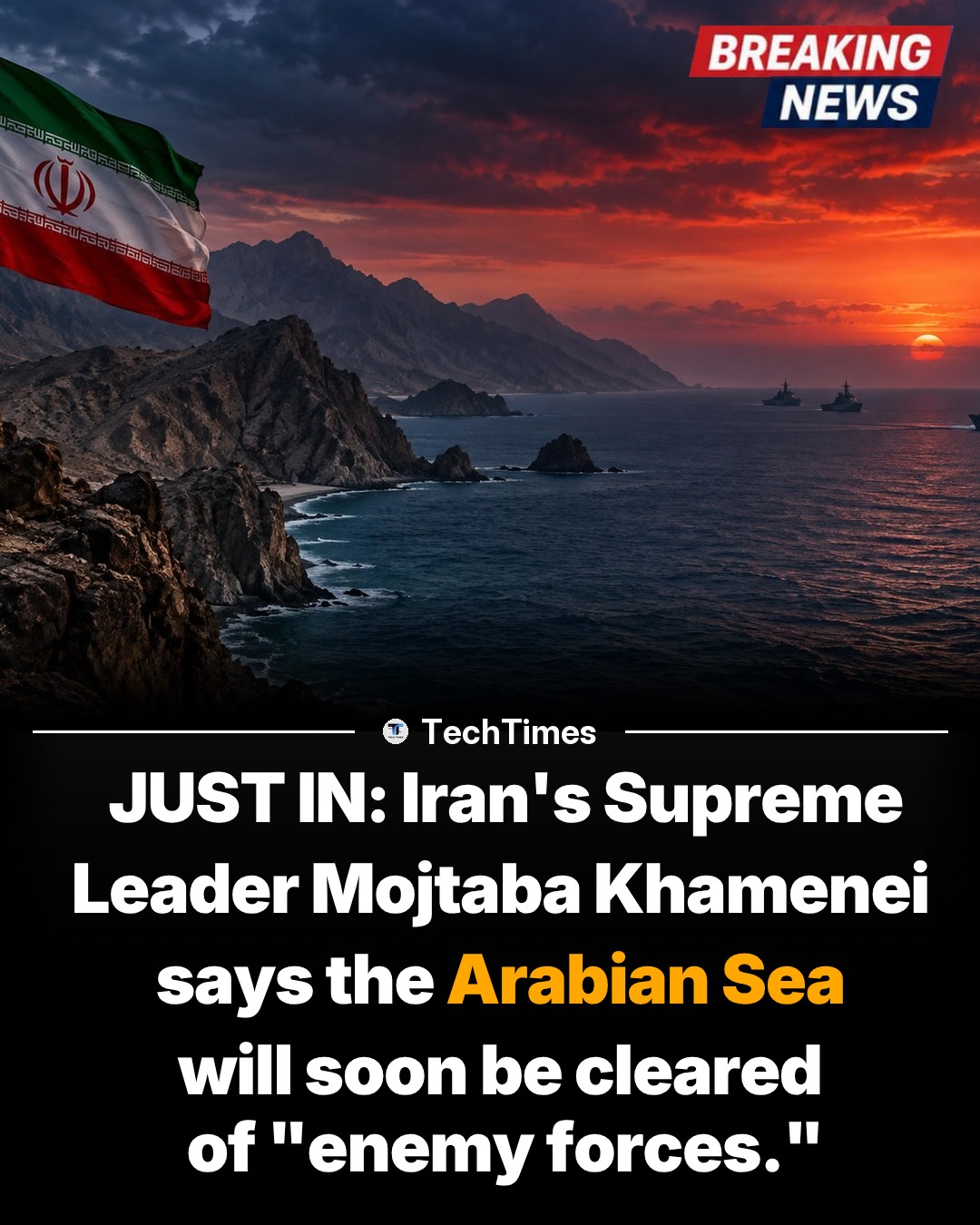
Iran's Supreme Leader, Mojtaba Khamenei, has declared that the Arabian Sea will soon be purged of "enemy forces." The statement, breaking news announced via TechTimes. The phrase "enemy forces" leaves room for interpretation with a range of implications.
The Statements Behind the News
The statement by Khamenei implies a significant geopolitical maneuver. The term "enemy forces" is a first hint that Iran may be wading into a more aggressive stance on a broader threat in the region. At minimum, reports suggest a strategic shift in Iran's foreign policy and a dramatic change in military posture. This move could redefine the balance of power in the Arabian Sea, potentially increasing tensions in the region. However, specifics remain unclear. So far, Khamenei’s declaration seems more about managing perceptions and signaling military readiness than an immediate military action. Some practical repercussions can be felt as this broad announcement is likely to stoke fear and uncertainty in the neighboring nations. Despite the ambiguity in Iran's headline-grabbing statement, one thing is clear: the geopolitical landscape of the Arabian Sea is about to change.
The Broader Oil Dynamics
Iran's declaration comes at a time of significant regional tensions and geopolitical shifts. Alluding to Iran's desire for regional dominance, the statement may also reflect a desire to influence oil prices and assert control over critical waterways. A wide berth of tributaries connects the Arabian Sea with the Arabian Peninsula, the Persian Gulf, the Indian Ocean, and Indian subcontinent. Therefore, strategic control over these waters on the Arabian Sea would forcefully alter the balance of power in numerous regions. Power dynamics would shift among the Persian Gulf, the Arabian Peninsula, and South Asia. This assertion of power by Iran seems directly designed to intimidate the region, and upend the prevailing geopolitical order.
Iran’s Geopolitical Moves
The announcement indicates Iran's enhanced awareness of its strategic position, and a concerted effort to redefine the region. Given its natural resources and strategic location, Iran remains a key player in the region. The country's assertion of control over the Arabian Sea presents a potential gold mine of resources. The Arabian Sea is densely filled with marine life and vital seaports, which means Iran could wield unprecedented influence over marine trade.
The Regional Reaction
The reaction of neighboring countries and international organizations will be critical to understanding the full implications of Khamenei's statement. A key factor is the reaction of the United States, a long-time geopolitical opponent of Iran. Since the clear annoyance from Iran towards the United States and their allies, this statement can be seen as a call for the removal of military presence in the region. Another key player that will be affected by Iran's statement is India. Iran and India are only recently repairing their diplomatic relations, and India's strategic interests in the region are likely undeterred, despite Iranian geopolitical aims. The Indian government does not have a historic hostility to Iran, and will try to pay lip service to the statement, while pragmatically pursuing other "enemy forces" of their own.
Practical guidance: Navigating the News
If you’re interested in staying updated on geopolitical developments:
- Track Statements: Monitor statements from world leaders and key regional actors for hints about shifts in policy and potential military action.
- Consider the Context: Look at historical data and repeated patterns in geopolitical actions. This means analyzing specific policies that have not undergone dramatic shifts in the region and assessing the credibility of sources.
- Weigh Multiple Sources: Avoid relying solely on one source for information — cross-check news outlets and official statements for a more complete picture.
Closer look at The New Headlines
Iran's declaration has undeniably set the stage for a dramatic shift in the regional status quo. The implications of Khamenei's announcement extend far beyond the Arabian Sea. Look closely at the landscape, as geopolitical currents are about to surge.
Questions readers ask
What exactly does Ayatollah Ali Khamenei mean by 'enemy forces' in the Arabian Sea?
The term 'enemy forces' is quite broad and can refer to various entities, including the U.S. military presence in the region, as well as other foreign forces. The ambiguity allows Iran to signal a range of potential targets and intentions, making it a strategic statement rather than a specific threat.
How might Iran's declaration impact oil prices and regional trade?
Iran's control over the Arabian Sea could disrupt oil trade, leading to potential price fluctuations. The Arabian Sea is a critical waterway for oil transportation, and any instability could have significant economic repercussions. Additionally, Iran's assertive stance could lead to broader geopolitical shifts, altering trade dynamics in the region.
What are the potential implications of Iran's statement for neighboring countries, particularly India?
Iran’s statement could heighten tensions in the region, with neighboring countries like India being particularly affected. India has strategic interests in the Arabian Sea and is currently mending its diplomatic relationship with Iran. While the Indian government does not have a historic hostility to Iran, the geopolitical aims of Iran will inevitably impact Indian foreign policy.
Why is the Arabian Sea significant in this geopolitical maneuver?
The Arabian Sea is a key strategic location due to its dense marine life, vital seaports, and its connection to the Arabian Peninsula, the Persian Gulf, the Indian Ocean, and the Indian subcontinent. Control over this sea could give Iran unprecedented influence over marine trade and regional power dynamics, including those in the Persian Gulf, the Arabian Peninsula, and South Asia.
Can Iran realistically remove all 'enemy forces' from the Arabian Sea?
The feasibility of Iran's declaration is uncertain. While the statement is likely more about signaling military readiness and managing perceptions, it could still lead to increased tensions and potential military posturing. The actual removal of 'enemy forces' would require significant military action, which could escalate into a broader conflict.
What role does the United States play in this geopolitical scenario?
The United States is a long-time geopolitical opponent of Iran and has a significant military presence in the region. Iran's statement can be seen as a call for the removal of U.S. military presence, which could lead to heightened tensions and potential confrontation. The U.S. reaction will be critical in understanding the full implications of Khamenei's statement.
Recent articles
Fresh deep dives from the latest Reels we unpacked.




Comments
Be the first to comment.