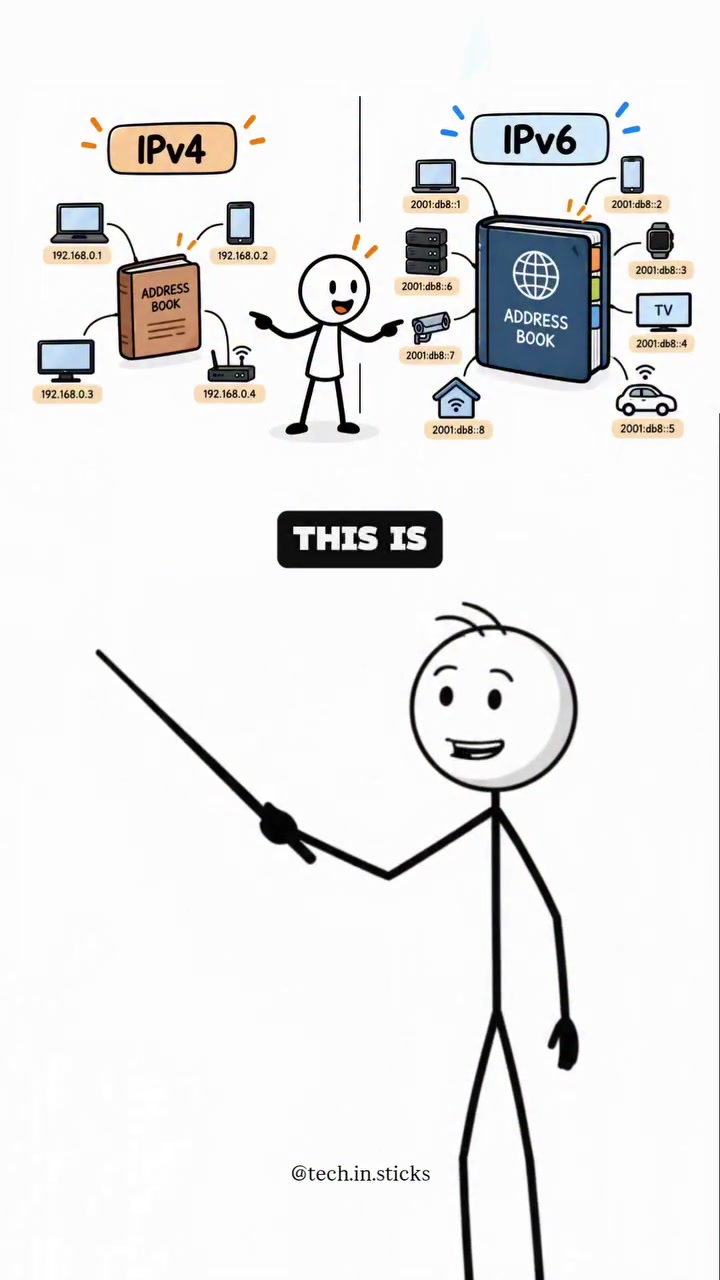
Every device that connects to the internet needs an address, like a house number for a city block. The system that assigns these addresses is running out of room—and that's where IPv6 comes in. IPv6 is a new addressing system designed to solve the looming exhaustion of IPv4 addresses, which are like an old address book with limited entries.
The Transition from IPv4 to IPv6
IPv4, the fourth version of the Internet Protocol, has been the backbone of the internet since 1983. It uses a 32-bit address scheme, which limits the number of unique addresses to about 4.3 billion. While this may seem like a lot, the explosion of internet-connected devices—including smartphones, laptops, servers, TVs and smart devices—has rapidly depleted these addresses. The solution is IPv6, the sixth version of the Internet Protocol, which uses a 128-bit address scheme. This vastly expands the number of possible addresses to roughly 340 undecillion. For context, 340 undecillion is 340 followed by 36 zeros—that's more addresses than there are grains of sand on Earth.
The Address Book Analogy
The transition from IPv4 to IPv6 is often illustrated using the metaphor of an address book. IPv4 is like an old, limited address book with about 4.3 billion entries. Imagine that each of these entries represents an internet address. Each device—be it a smartphone, laptop, server, TV, or smart device—needs its own entry. With billions of new devices connecting to the internet daily, this old address book is quickly running out of room. IPv6, on the other hand, is like a new, much larger address book. It has around 340 undecillion entries. That means there's enough room for an incredible number of devices. The format also looks different. An IPv4 address looks like "192.168.0.1". IPv6 addresses resemble longer hexadecimal strings like "2001:db8:3333:4444:5555:6666:7777:8888." With IPv6, not only are there vastly more addresses available, but the format also allows for more efficient routing and auto-configuration. With the exponential growth of the Internet of Things (IoT), this becomes increasingly important. IPv6 essentially future-proofs the internet by ensuring there will be enough addresses to go around.
An Internet for Everything
IPv6 is the key to an age where absolutely everything is online. IPv4, the previous standard, was limited with around 4.3 billion addresses, short for phones, laptops, servers, TVs and smart devices. IPv4 addresses limited by their 32-bit address space, making it far easier for attackers to guess and overload network services. This is where IPv6's 128-bit address space shines, offering an immense number of addresses. Likewise, IPv6 addresses are simpler to allocate and manage. These security improvements are one of the reasons why IPv6 is considered superior to IPv4. IPv6 also has built-in IPsec, which supports encryption, authentication, and data integrity. In essence, IPv4 is like an overused road map for a city that's outgrown its infrastructure. IPv6 updates that map, ensuring that every new building and street has a place. It's a fundamental change that will allow the internet to grow and evolve in ways we can't yet imagine, ensuring that the internet remains accessible and secure.
The IPv6 Problem
Despite the advantages of IPv6, the transition hasn't been seamless. Many networks and devices still rely on IPv4, and the changeover requires significant updates to hardware, software, and networking infrastructure. A further complication is that both IPv4 and IPv6 need to coexist during the transition period, which can lead to compatibility issues and increased network complexity. IPv6 is a daunting task, and the world is still far from being fully converted. IPv6 adoption varies widely by region and industry. As of now, many devices and services still rely on IPv4, and the transition to IPv6 is a gradual and complex process.
Digging Up Your Internet
While the transition to IPv6 is complex and challenging, it's also a necessary and exciting development. The expansion of the address space will enable the growth of the Internet of Things, where everything from household appliances to industrial equipment can be connected to the internet. By making the internet more secure, efficient, and scalable, IPv6 will pave the way for future innovations and applications that we can't yet imagine.
Mind the Hexadecimal
Finding out your IPv6 configuration can be tricky. It involves checking your device's network settings, varying with operating systems, and even some devices might not show their IPv6 addresses by default. The configuration settings might be hidden under advanced options. If you're on Windows, you can find your IPv6 address by going to the Command Prompt and typing "ipconfig," then looking under the network adapter settings. On MacOS, open System Preferences, go to Network, and select your network connection. For Linux, open the terminal and type "ifconfig" or "ip a." Ultimately, understanding and embracing IPv6 is crucial for the future of connectivity. It's the key to ensuring that the internet can continue to grow and adapt to the ever-increasing number of devices and users, and the pace at which technology evolves is showing no signs of slowing down. So, whether you're a tech enthusiast or just curious about how the internet works, learning more about IPv6 and its role in shaping the future of connectivity is a worthwhile endeavor.
Questions readers ask
What exactly is an IPv6 address and how does it differ from an IPv4 address?
An IPv6 address is a 128-bit string that looks like a longer hexadecimal string, such as '2001:db8:3333:4444:5555:6666:7777:8888'. This is different from an IPv4 address, which is a 32-bit string formatted like '192.168.0.1'. The main difference is the sheer number of addresses available: IPv6 offers 340 undecillion addresses, compared to IPv4's 4.3 billion.
Why is IPv6 necessary when IPv4 seemed to work fine for so long?
IPv4 has been the standard since 1983, but the rapid increase in internet-connected devices has depleted its address space. IPv6 is necessary because it provides a vastly larger number of addresses, ensuring that every device can have a unique IP address. This is crucial for the growth of the Internet of Things (IoT) and future internet expansion.
How does IPv6 improve security compared to IPv4?
IPv6 includes built-in IPsec, which supports encryption, authentication, and data integrity. Additionally, the larger address space of IPv6 makes it much harder for attackers to guess addresses and overload network services, enhancing overall security.
Can I use IPv6 right now, and if so, how do I switch from IPv4?
Yes, you can use IPv6 right now, but the availability depends on your Internet Service Provider (ISP) and device compatibility. Most modern devices and operating systems support IPv6. To switch, you typically need to enable IPv6 in your device's network settings or router configuration. Many ISPs are already transitioning to IPv6, so it might be enabled by default.
What are the potential challenges in transitioning from IPv4 to IPv6?
The primary challenges include compatibility issues with older devices and software that only support IPv4. Additionally, network administrators need to ensure that the transition is seamless and does not disrupt existing services. This often involves dual-stack configurations where both IPv4 and IPv6 are supported simultaneously during the transition period.
Will IPv6 completely replace IPv4, or will they coexist?
IPv6 is designed to eventually replace IPv4, but the transition will take time. During this period, both IPv4 and IPv6 will coexist through dual-stack configurations. This ensures that devices using either protocol can communicate with each other, making the transition smoother and more gradual.
Related deep dives
Similar reads based on topic and creator.

Recent articles
Fresh deep dives from the latest Reels we unpacked.




Comments
Be the first to comment.