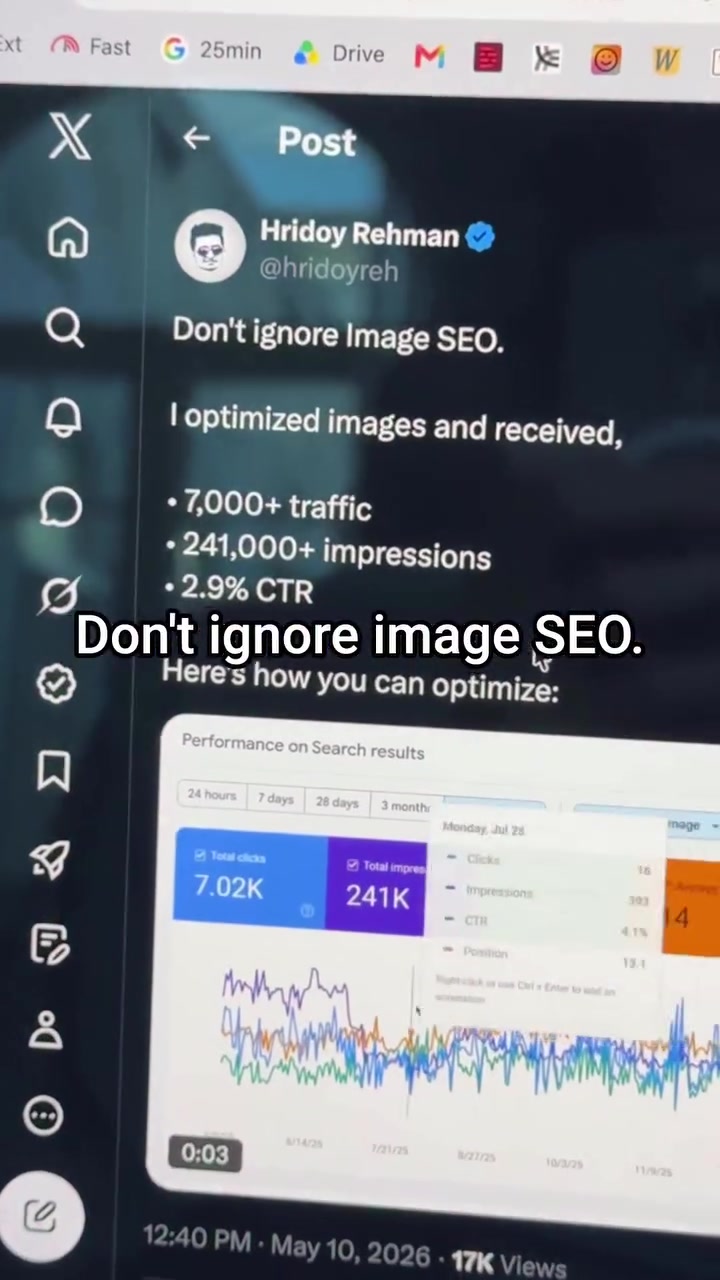
People often overlook the importance of image SEO, but Hridoy Rehman isn’t one of them. Counting his brand’s name in images paid off with an impressive 241,000+ impressions. In addition, his 7,000+ clicks and 2.9% click-through rate (CTR) show how much traffic can be boosted from optimizing media. Image SEO is about refining aspects of images to improve your website’s performance in image searches. This process typically uses keyword-rich file names, descriptive alt text, and faster image formats. By doing so, Rehman achieved what most people fail to do and raked in hundreds of thousands of brand impressions. Most websites lack the skills to enhance images and ignore them, heeding an easy win for marketing.
Image SEO: The Marketing Secret Weapon
Image SEO is a powerful technique that optimizes images for search engines, driving more organic traffic to websites. The process involves a series of steps that increase visibility among search audiences. These are keyword-rich file names, descriptive alt text, and formats such as WebP and are faster than PNG and JPEG. To optimize images for SEO, start by choosing a keyword-rich file name. The keyword should be relevant to the content of the image, as it helps search engines understand the image's context. Follow keyword-rich file names with descriptive alt text that conveys the image's content clearly. Alt text is especially beneficial for users who rely on screen readers, making it easier for them to understand the image's content. Next, consider using WebP, a modern image format. WebP provides better compression than traditional formats like PNG or JPEG, which can improve page load times and boost SEO performance. Finally, compress your images to reduce file sizes and speed up load times. Compression tools like TinyPNG handle all types of images, further maximizing the benefits of image SEO.
The Value of Visual Content in Today’s Online Landscape
From social media posts to blog articles, images dominate online content because they attract viewer’s attention and are naturally more engaging than text. Visitors respond positively to images and are more likely to stay on a page with relevant visual information. It’s a key to developing a strong online presence. Image use is critical for maximizing marketing. This is because using images with branded names allows for hundreds of thousands of people to see the brand. Plus, this allows for being picked up by AI search algorithms.
Enhancing Image SEO with Alt Text and Keywords
Keyword-rich file names and descriptive alt text are essential to image SEO for increasing visibility. Alt text not only improves accessibility by making images accessible to screen readers but also boosts search engine indexing. This means the text within the code of an image provides key search engine ranking factors. Naming images correctly uses keywords that accurately describe the content. This makes it easier for search engines to understand and index the image, improving its chances of showing up in relevant searches. Additionally, descriptive alt text helps search engines provide relevant results in image searches, driving more organic traffic to websites. These methods maximize marketing performance by enhancing visibility and optimizing search results.
The Advantages of Faster Image Formats
Image speed impacts website performance and user experience. Long load times can frustrate users, causing them to leave the site. By choosing faster image formats, website owners can improve loading speeds and keep visitors engaged. WebP is a powerful tool for optimizing image SEO. WebP’s superior compression results in smaller file sizes without sacrificing quality, making it the ideal format for improving page load times. TinyPNG is a free image compression tool that supports a wide range of formats, including JPEG, PNG, and WebP. TinyPNG effectively reduces file sizes without sacrificing quality. This makes it easier for visitors to quickly access and view content.
How Image SEO Boosts Traffic and Brand Visibility
Image SEO is a critical aspect of digital marketing. It involves optimizing images to improve search engine visibility and drive more organic traffic. By doing so, website owners can increase their chances of appearing in image searches, which can lead to more impressions and clicks. This strategy not only boosts website traffic but also enhances brand visibility, as optimized images can attract more users to their site.
Practical Steps to Optimize Your Images
- Optimize Image File Names: Use relevant keywords in your file names to make it easier for search engines to understand the content. Replacing generic names with descriptive, keyword-rich alternatives can boost your image's visibility.
- Descriptive Alt Text: Write alt text that clearly describes the image's content and uses relevant keywords. This helps search engines index the image and improves accessibility for users with visual impairments.
- Use WebP Format: Convert images to WebP format to benefit from better compression and faster load times, improving overall performance and user experience.
- Compression: Utilize tools like TinyPNG to compress images, reducing file sizes without sacrificing quality. This enhances page load times and keeps users engaged.
The future of Image SEO
Image SEO represents a significant shift in how we approach digital marketing in an increasingly visual world. As search algorithms become more sophisticated, the importance of optimizing images will only grow.
Questions readers ask
What exactly are keyword-rich file names, and how do I create them?
Keyword-rich file names are image file names that include relevant keywords describing the image content. To create them, think about what someone might search for when looking for that image. For example, if you have a picture of a 'red apple,' name the file 'red-apple.jpg' instead of something generic like 'IMG1234.jpg.' This helps search engines understand the image's context and improves its visibility in searches.
How does alt text improve image SEO?
Alt text, or alternative text, is a description of an image that appears if the image can't be displayed. It improves image SEO by providing search engines with context and keywords, making it easier to index the image. Additionally, alt text enhances accessibility for users who rely on screen readers, making your content more inclusive. It should be descriptive and concise, ideally under 125 characters.
What makes WebP a better format for image SEO?
WebP is a modern image format that offers superior compression compared to traditional formats like PNG and JPEG. This means WebP images are smaller in file size, which can significantly improve page load times. Faster load times enhance user experience and boost SEO performance, as search engines favor quicker-loading websites. Plus, WebP supports both lossy and lossless compression, giving you flexibility in maintaining image quality.
Can image SEO really make a significant difference in traffic?
Yes, image SEO can make a significant difference. As seen in the article, optimizing images led to 241,000+ impressions and a 2.9% click-through rate. By making images more discoverable in search results, you can attract more organic traffic to your website. This is particularly useful for visually-driven platforms like Instagram, where images are the primary content.
Is it worth compressing images for SEO, and if so, what tools can I use?
Yes, compressing images is worth it for SEO. Compression reduces file sizes, leading to faster load times, which is a crucial ranking factor for search engines. Tools like TinyPNG are user-friendly and can handle various image types, making it easy to compress images without sacrificing too much quality. This step can significantly enhance your website's performance and user experience.
How do I know if my image SEO efforts are working?
To gauge the effectiveness of your image SEO efforts, monitor your website's analytics. Keep an eye on metrics like image search impressions, clicks, and click-through rates. Tools like Google Search Console can provide insights into how your images are performing in search results, helping you understand what's working and what might need improvement. Regularly reviewing these metrics will give you a clear picture of your image SEO success.
Related deep dives
Similar reads based on topic and creator.




Recent articles
Fresh deep dives from the latest Reels we unpacked.


Comments
Be the first to comment.