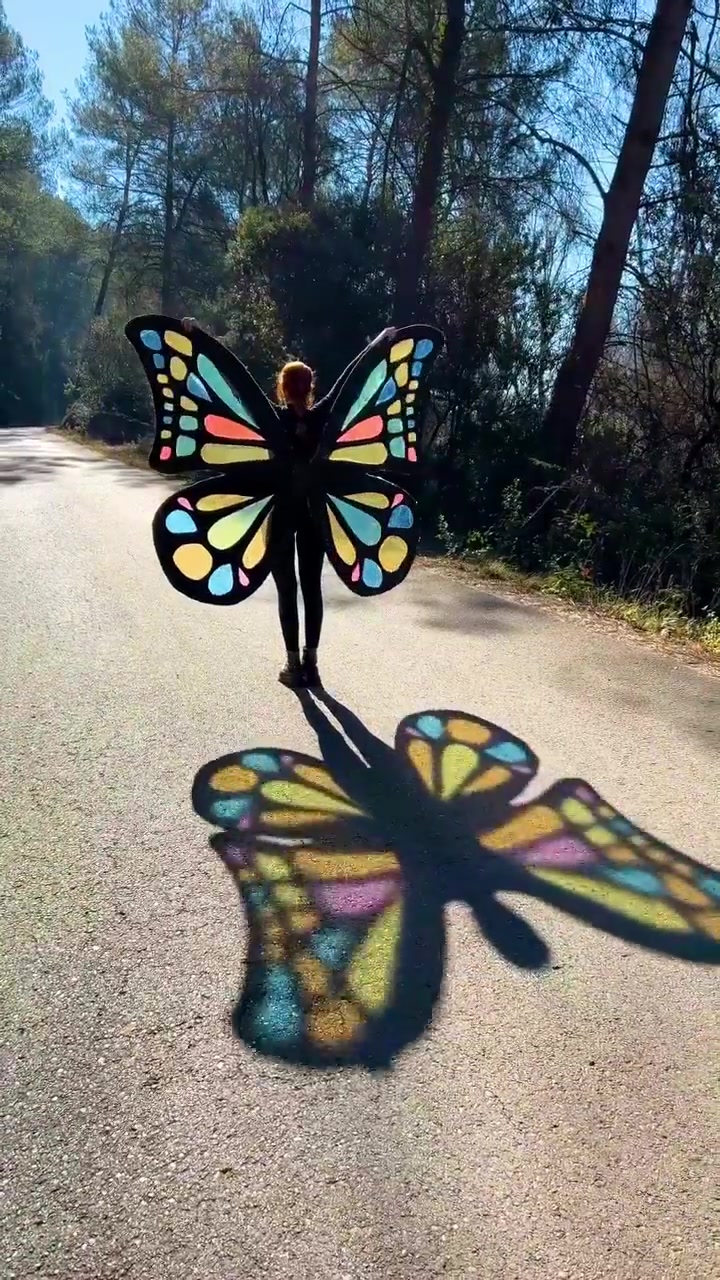
Augmented reality filters have brought magic from the screen into the real world. The butterfly shadow effect does something unusual: projects a vibrant, colorful butterfly silhouette directly behind the subject. This particular filter is so good at creating mirrored shadows that it stirs the imagination.
The Butterfly Shadow Effect
Augmented reality filters use a device's camera and software to overlay digital elements onto the real world. The butterfly shadow effect takes this idea and turns the user into a human kaleidoscope. The filter, activated through a smartphone camera, projects a vivid butterfly shadow behind the user as they stand on a road or walk down a path. It requires active movement and adjusts the shadow's size, color and intensity based on the device's angle and the user's steps. This effect is both playfully immersive and visually striking. The technology itself is a playful tool that can turn mundane spaces into something magical. The filter is designed to create a whimsical and dynamic visual experience. The vibrant colors and the shifting patterns of the butterfly shadow make it a standout feature. Unlike other AR filters that make simple adjustments to appearance or environment, the butterfly shadow effect transforms the user's interaction with their surroundings and also provides an opportunity to create a unique form of digital storytelling. The filter can be seen as a form of digital art, blending the physical world with digital creativity. The butterfly shadow effect sets itself apart from other AR filters with its distinctive focus on creating a continuous shadow. The filter doesn't depend on the color or texture of the physical environment. The filter is used to showcase creative shadows, clouds, or animals moving around and moving with a person. This gives the user a unique sense of visual playfulness.
Augmented Reality and Creative Self-Expression
This filter is part of a wider trend. It's part of the augmented reality (AR) universe, where technology overlaps the user's real-life experiences with digital elements. The creator's unique decision to add a butterfly feature highlights a larger movement in creative self-expression. AR filters are popular among younger users, particularly on social media platforms. The butterfly shadow effect, however, stands apart from the current trend of color shifting or face-morphing filters. This trend allows users to transform their physical environment into a digital playground, creating a new and unique digital art.
A Butterfly's Wings and the Screen’s Magic
The butterfly shadow effect fulfills its purpose when the user stands still. The wings of the butterfly emerge from behind the user. The user doesn't need to do anything except stand still and let the camera do the rest. Stare at your feet and check the shadow. The shadow gets more vibrant and colorful, the user can’t help but feel playful. The colors and the wings project at different angles, all around the environment as you move. Outer edges of the shadow are darker, while the inner edges are lighter. If augmented reality filters are a canvas, then this is a work of art. The butterfly shadow effect doesn't constrain the user to a static frame. The butterfly shadow effect on the user's body is always in motion. The wings keep flapping, breathing life into the digital. The shadow continuously flutters, adding dynamism to the augmented reality experience.
The Physics of a Shadow
The butterfly's wings reflect the user's movement. The shadow grows and shrinks in size, following the user's step. This AR filter illustrates the magic of a butterfly emerging from the shadows. It depends on the user’s motion, the wings of the butterfly fluttering in the breeze and every time the user moves, the shadow of the butterfly flutters, just in perfect sync. The shadow’s fluttering perfectly mirrors the physics behind a real shadow. The user watches the shadow’s movement, just like a real butterfly, it doesn’t move erratically, instead, it follows a smooth and natural path. This filter makes the user want to interact more actively with their environment. All of this makes for a delightful visual experience.
How to Cast a Butterfly Shadow
The butterfly shadow effect relies on the user's perspective. The creation of the shadow depends on how the camera moves in relationship to the user. The device should be moved along a line. The butterflies created with the filter are like wings of imagination. The shadows can only be cast when the user moves linearly. The effect is achieved by moving the device in a line, it can make the shadow shrink or grow. It can also make the shadow take up more space. First, the user should move the device in a steady line. The butterfly shadow effect relies on the user’s hand eye coordination.
How to adjust the appearance
The user can adjust the shadow’s appearance as per their comfort. If the user wants to make the shadow bigger, they should move the device towards their body. This will make the shadow spread widely across the terrain. To see the butterfly shadow effect more clearly, the user should move the device further away. Move it at as far a distance as you can. This will keep the shadow clear and crisp. Holding the device at a certain angle can help users achieve the butterfly shadow effect with clarity. The shadow is better seen when the angle lies between 20-25 degrees. Users can adjust it based on their height, the shadow emerges and great effect comes from the back. This makes the butterfly appear as if it is flying from behind the user.
The Best Spots to Flutter
To get the most out of the butterfly shadow effect, pick a space with a flat surface and plenty of room for movement. Outdoor spaces like parks, pathways, or roads are ideal. For a more dramatic flair, choose a location with a contrast of light and shadows. This could be a tree-lined trail or a shady walkway. The effect balances the colors against the backdrop. This helps create a vibrant contrast. This accentuates the butterfly's vibrant wings and overall appearance. Clear and open spaces work best. The user should stand in the middle of a large, flat surface. This ensures the butterfly shadow can spread out and be fully appreciated. This makes the physical world a backdrop for the shadow's appearance. The butterfly shadow effect doesn't need a lot of space, but it needs some.
Questions readers ask
How does the butterfly shadow effect filter work on Instagram?
The butterfly shadow effect filter uses your smartphone's camera and software to overlay a vibrant, colorful butterfly silhouette behind you. It adjusts the shadow's size, color, and intensity based on your movements and the device's angle, creating a dynamic and immersive experience.
Can I use the butterfly shadow effect filter without moving around?
The filter is designed to be most effective with movement, as it adjusts the shadow based on your steps and the device's angle. However, you can still see the butterfly wings emerge from behind you when you stand still, but the full experience is best enjoyed while moving.
Is the butterfly shadow effect filter available on other social media platforms besides Instagram?
The article doesn't specify if the butterfly shadow effect filter is available on other platforms. It is mentioned as part of the wider AR universe, so it's possible that similar filters exist on other platforms, but the specific butterfly shadow effect might be unique to Instagram.
What makes the butterfly shadow effect different from other AR filters?
Unlike other AR filters that focus on face-morphing or color shifting, the butterfly shadow effect creates a continuous, dynamic shadow that interacts with your movements and the environment. It transforms your surroundings into a digital playground, offering a unique form of digital storytelling and creative self-expression.
Can the butterfly shadow effect filter be used indoors?
The filter doesn't depend on the color or texture of the physical environment, so it can be used indoors. However, the effect might be more visually striking outdoors, where there's more space for the shadow to play and interact with different surfaces.
Related deep dives
Similar reads based on topic and creator.



Recent articles
Fresh deep dives from the latest Reels we unpacked.


Comments
Be the first to comment.