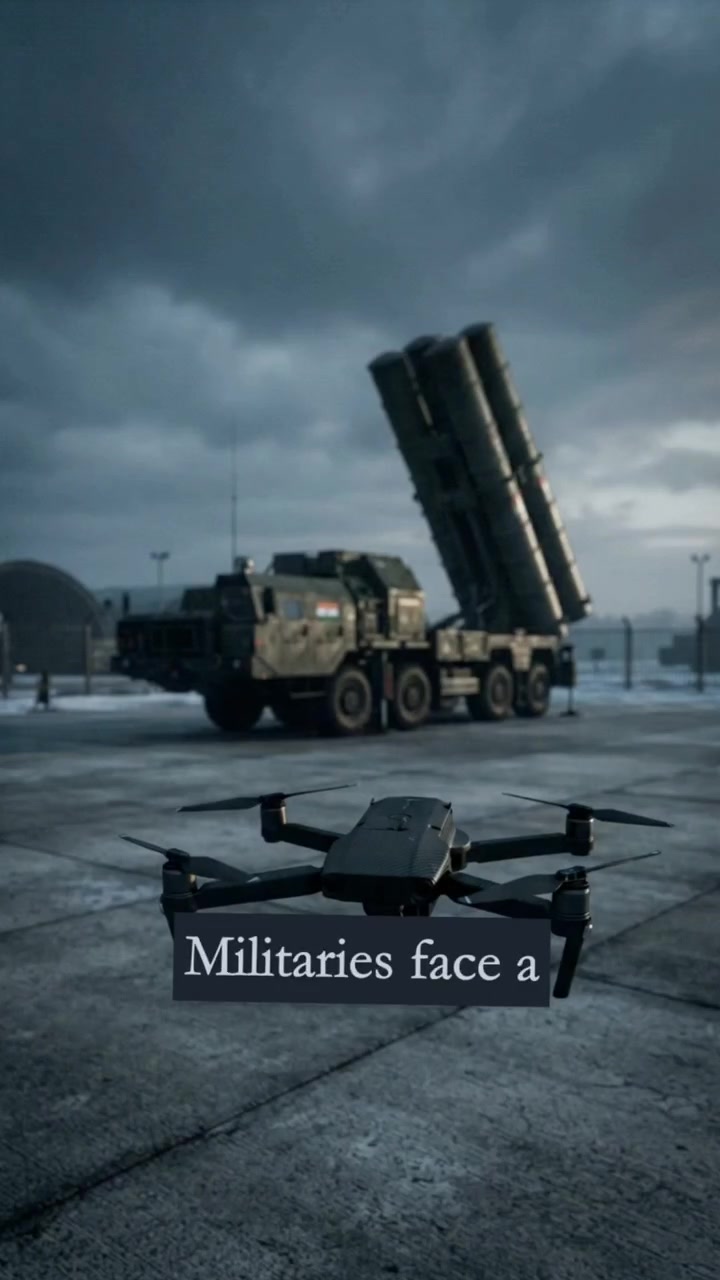
The Hawk: India's Autonomous Drone Interceptor
Militaries around the world are grappling with a stark imbalance: the cost of neutralizing a $10,000 enemy drone often exceeds $1 million. This disparity highlights the need for more economical countermeasures. Bengaluru-based startup Kshatra Labs has stepped into this arena with its innovative solution: the Hawk, an autonomous interceptor drone. Unlike traditional methods that rely on expensive missiles, the Hawk uses physical interception to bring down enemy drones, promising a more cost-effective defense strategy. The Hawk is more than just a low-cost alternative. It's designed to operate independently, processing data locally through onboard computer vision. This means that even if GPS signals are jammed or internet connectivity is cut, the Hawk can still track and intercept its target. The drone can reach speeds of 300+ km/h, making it a formidable opponent in any counter-drone scenario. Backed by the startup India Seed Fund and IIT Hyderabad, Kshatra Labs is pushing the boundaries of what autonomous defense can achieve.
The Economics of Counter-Drone Warfare
The core economic problem is clear: defending against relatively cheap drones using million-dollar missiles is unsustainable. This imbalance has created a massive economic drain on defense budgets. Kshatra Labs aims to address this by redefining the economics of counter-drone warfare. The Hawk's low cost and high effectiveness could significantly reduce the financial burden of defending against drone threats, making it a game-changing solution for militaries. The Hawk isn't just a standalone piece of technology; it's part of a larger vision. Kshatra Labs is developing Apex, a software platform designed to coordinate fleets of these interceptors. This platform could potentially become the intelligence layer behind multiple autonomous defense systems. Apex is built to secure India's borders by countering massive enemy swarms with coordinated, scalable responses.
The Edge AI and Autonomous Decision-Making
The Hawk's success hinges on its advanced technology. It relies on onboard computer vision and edge AI to process data locally. This capability ensures that the drone can operate without relying on external signals, making it resilient against interference. The use of edge AI also allows the Hawk to make autonomous decisions in real-time, a critical feature for its interception capabilities. This blend of hardware and software innovation sets the Hawk apart from traditional defense systems and ensures robust execution in any scenario.
The Interception Mechanics
The Hawk achieves a "hard kill" by physically intercepting enemy drones, ensuring complete neutralization. This method contrasts sharply with missile-based systems, which often incur significant collateral damage. The Hawk's speed and agility allow it to quickly intercept and disable threats, making it a precise and effective interceptor. Unlike larger, more expensive systems, the Hawk can navigate and operate in complex environments, making it suitable for various defense scenarios.
Swarm Defense Capabilities
One of the most intriguing aspects of Kshatra Labs' vision is the potential for swarm defense. Apex, the software platform, is designed to coordinate multiple interceptors in a strategic manner, effectively countering large drone swarms. This capability is crucial given the increasing threat posed by drone swarms in military and border security contexts. By enabling scalable and synchronized responses, Apex ensures that large-scale threats can be managed efficiently and safely, thereby enhancing overall national security.
Kshatra Labs and the Future of Defense
Kshatra Labs, founded by Rishav Dev Mishra and Dagupati Harshil, is a relatively new entrant in the defense technology sector. Their innovative approach to counter-drone warfare has caught the attention of investors and defense experts alike. With the support of the startup India Seed Fund and IIT Hyderabad, Kshatra Labs is focused on pushing the boundaries of what autonomous defense systems can achieve. The company's focus on cost-effectiveness, precision, and scalability makes it a notable player in the evolving landscape of defense technologies. As the technology matures and proves itself through testing and real-world deployment, it could revolutionize the way militaries defend against drone threats.
The Path to Deployment
Kshatra Labs is currently in the testing and qualification phase. The road to real-world deployment involves rigorous testing to ensure the reliability and effectiveness of the Hawk in various defense scenarios. The company aims to demonstrate that its technology can meet the high standards required for military use, thereby paving the way for widespread adoption. As the technology evolves, Kshatra Labs will continue to refine the Hawk and the Apex platform, ensuring that they remain at the forefront of autonomous defense solutions.
The Trust Factor: Human vs. AI
The question of whether to trust an autonomous AI system with critical defense decisions remains a contentious one. While the Hawk's capabilities are undeniable, the decision to rely on autonomous systems for national defense involves complex ethical and strategic considerations. As Kshatra Labs continues to develop and refine its technology, it will also need to address these concerns, ensuring that the public and military personnel trust the Hawk and Apex to make life-or-death decisions in high-stakes situations. Kshatra Labs' innovative approach to counter-drone warfare represents a significant leap forward in defense technology. By combining cost-efficiency, precision, and autonomy, the Hawk and Apex platform offer a compelling solution to the economic and strategic challenges posed by drone threats. As the technology evolves and the company continues to innovate, Kshatra Labs could well become a key player in shaping the future of autonomous defense systems.
Questions readers ask
What makes the Hawk drone interceptor unique compared to traditional anti-drone systems?
The Hawk stands out because it uses physical interception to neutralize enemy drones, making it a low-cost alternative to expensive missile systems. Its ability to operate autonomously, even without GPS or internet connectivity, sets it apart from traditional methods that rely on external signals.
How does the Hawk achieve a 'hard kill' and what advantages does this method offer?
The Hawk achieves a 'hard kill' by physically intercepting and disabling enemy drones. This method ensures complete neutralization of the threat without the collateral damage often associated with missile-based systems. The Hawk's speed and agility allow it to quickly and precisely intercept targets, making it highly effective in various defense scenarios.
What role does edge AI play in the Hawk's operation, and why is it important?
Edge AI enables the Hawk to process data locally and make autonomous decisions in real-time. This capability ensures that the drone can operate effectively even if GPS signals are jammed or internet connectivity is cut. It also allows the Hawk to navigate and intercept targets independently, enhancing its resilience and effectiveness.
Can the Hawk be integrated with other defense systems, and if so, how?
The Hawk is part of a larger vision that includes Apex, a software platform designed to coordinate fleets of interceptors. Apex aims to secure borders by countering enemy swarms with coordinated, scalable responses. This integration allows the Hawk to work as part of a larger, more comprehensive defense network, enhancing its overall effectiveness.
What are the potential economic benefits of using the Hawk for counter-drone warfare?
The Hawk offers a significant economic advantage by providing a low-cost solution to a problem that often involves spending millions to neutralize relatively cheap drones. By redefining the economics of counter-drone warfare, the Hawk could reduce the financial burden on defense budgets, making it a cost-effective and sustainable solution.
How does the Hawk's speed and agility contribute to its effectiveness?
The Hawk's speed of 300+ km/h and agility allow it to quickly intercept and disable threats, making it a formidable opponent in counter-drone scenarios. These attributes enable the Hawk to navigate complex environments and operate effectively in various defense situations, enhancing its overall performance.
Related deep dives
Similar reads based on topic and creator.




Recent articles
Fresh deep dives from the latest Reels we unpacked.




Comments
Be the first to comment.