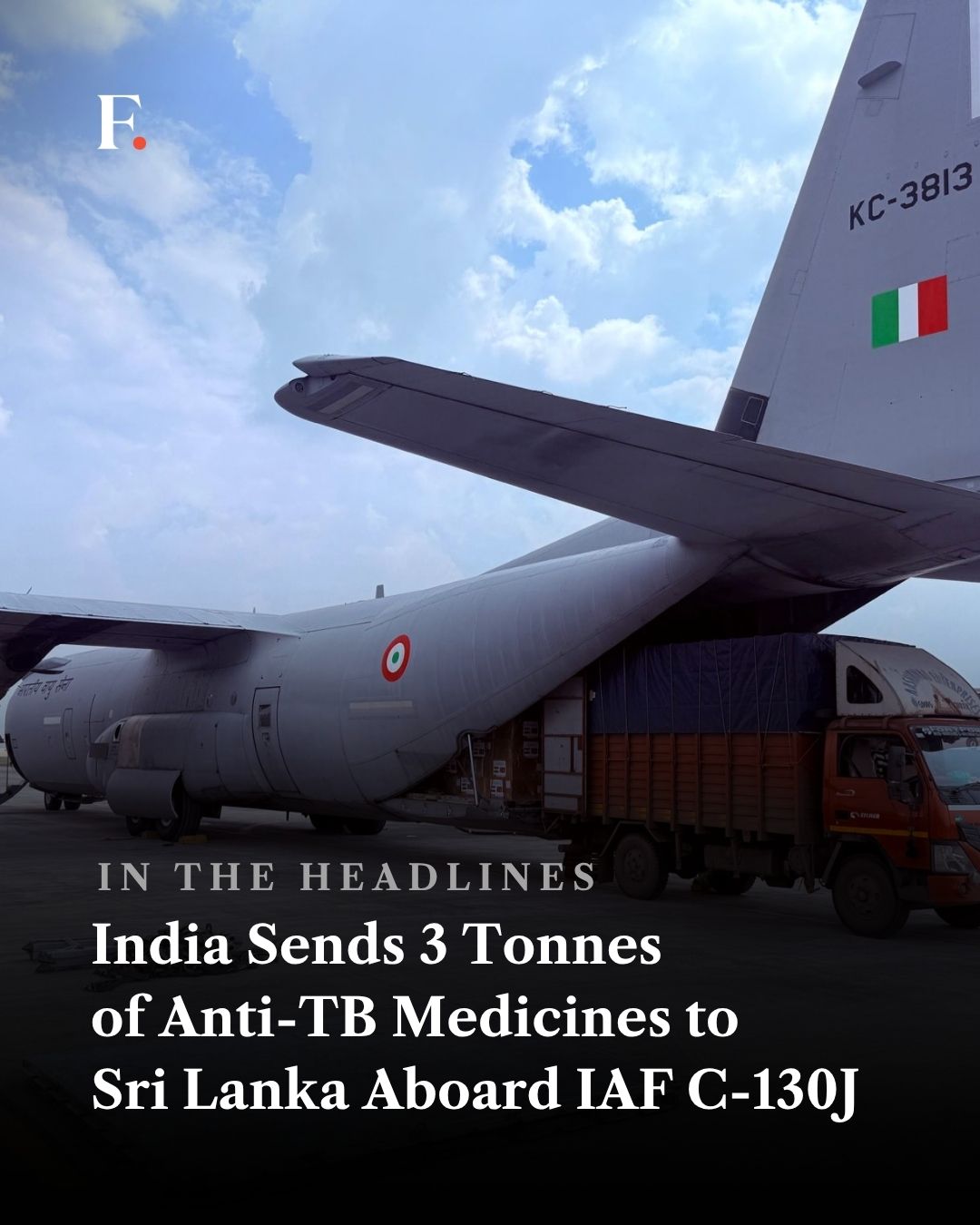
Three tonnes of anti-tuberculosis (TB) medicines were dispatched from India to Sri Lanka on a specific kind of plane called a C-130J, from the Indian Air Force (IAF). The shipment was part of India's ongoing healthcare assistance to Sri Lanka, which includes building a new Accident and Emergency Unit at a Sri Lankan hospital. This delivery is a small piece of a broader narrative about how countries assist one another in matters of public health. It is also a testament to how India has continued to support Sri Lanka’s public health system. "The Cargo Plane: Symbols, Safety, and Features The C-130J cargo plane is more than just a mode of transport in this instance. Its presence on the scene signifies India’s ability to mobilize and send large consignments of medicine to their intended destination. India’s choice to use the C-130J for this mission is indicative of its capabilities in terms of strategic logistics and medical support for nations in need. The C-130J is a versatile plane that can operate on both prepared airfields and makeshift landing strips. The plane is also known for its ruggedness, reliability, and ability to carry heavy loads over long distances. These characteristics make it ideal for delivering medical aid. A C-130J also carries a large tonnage of cargo which includes three tonnes of anti-TB drugs like Rifampicin, Isoniazid, Pyrazinamide, and Ethambutol. Rifampicin is highly light-sensitive; packaging, the plane’s sealed cargo bay, and transportation protocols help to prevent the exposure of the drugs to light. The drugs are loaded with the help of palletizers and are then unloaded via a conveyor system. Its role in this mission highlights how military assets are increasingly being leveraged for humanitarian aid. The C-130J can operate in a variety of environmental conditions, making it a reliable choice for missions like this. This mission shows the few cargo planes that the IAF has and what they are capable to carry.
Cross-Border Aid and Global Health Diplomacy
To support its neighbours in times of need — both in terms of emergency aid and long-term development — is a key instrument of Indian diplomacy. The aid also serves as a resource for the country in times of crisis. The same cargo plane that delivered aid to Sri Lanka could also deliver aid to India as well in the event of any natural disaster. The sending of medicines and even building hospitals overseas have been a significant aspect of India-Sri Lanka relations for years. The dispatch of anti-TB medicines to Sri Lanka underscores how public health has increasingly become a central pillar of international relations. This is not just about charity but about strengthening ties and building goodwill. This is not just about the immediate relief for Sri Lanka; it's about the long-term benefits of helping a neighboring country stabilize its internal problems.
Tuberculosis in Sri Lanka and Global Health
Thousands of patients in Sri Lanka are suffering from TB, and India's anti-TB aid is a lifeline for struggling patients. The drugs being delivered will bolster Sri Lanka’s efforts to combat the disease, which continues to afflict thousands of patients each year. India has been battling TB itself, and its efforts to support Sri Lanka also reflect a broader global strategy to combat the disease. Strains of TB are becoming resistant to traditional medicines, and new treatments need to be developed and shared. This medicine is part of the three tonnes of medicines being supplied. The dispatches of medicines have been bite-sized interventions, but cumulative effects can be seen in the form of reduced tuberculosis cases. The aid also features building hospitals in Sri Lanka — the Mannar District General Hospital in Sri Lanka received a substantial grant of SLR 600 million.
How Mechanism of shipment support the locals**
Drugs are the primary cargo that the C-130J carries in this instance. The cargo plane can operate in remote areas and deliver supplies to the most inaccessible parts of the country. The robustness of a cargo plane ensures that even the drugs like the ones carried by a C-130J can be delivered safely and on time. A lot of drugs have to be kept at a certain temperature to prevent decay. Mechanical systems on board can help keep the drugs at a required temperature and prevent it from contaminating other drugs. The planes also have special high-altitude delivery systems that can deliver supplies to the required destination. A vaccine for TB has also been developed in India and the country is looking to export this vaccine to other countries. In this instance of medicine delivery, 3 tonnes of anti-TB medicine have been shipped to Sri Lanka for patients who cannot afford this medicine for themselves.
The Construction of Medical Infrastructure**
India’s aid extends beyond immediate relief efforts. The country has committed to supporting the construction of new medical infrastructure in Sri Lanka. This commitment involves building a two-story Accident and Emergency Unit at the District General Hospital in Mannar, Sri Lanka. This initiative further bolsters the healthcare infrastructure of Sri Lanka. The construction project is valued at SLR 600 million, which is a sizable investment. This project shows that India's commitment to Sri Lanka goes beyond immediate relief efforts and is focused on building long-term healthcare capabilities.
Medical Aid as a Bilateral Tool
This aid delivery serves as a lens through which to examine the larger complexion of India-Sri Lanka relations. This is a small but significant example of India’s broader strategy of leveraging healthcare assistance as a tool for diplomatic engagement, underscoring the country’s commitment to strengthening ties with neighboring nations. India has been supporting Sri Lanka’s public health system for a long time now.
Exploring the Practicalities of Airlifting Aid
There are several practical considerations when airlifting medical supplies:
- Packaging and Handling: Medical supplies must be carefully packaged to withstand the rigors of air transport. This includes using temperature-controlled containers and ensuring that fragile items are well-protected.
- Logistics and Planning: The success of missions like this one depends on meticulous planning and coordination. This includes everything from route planning to ensuring that the right personnel are on hand to unload the supplies upon arrival.
- Emergency Protocols: In the event of an emergency, having the right protocols in place is crucial. This includes having access to alternative landing sites and being prepared to respond to any unforeseen issues that may arise. The scope of the operation involves a lot of planning and preparation. The medicine has to be packed and then unloaded without damaging any of the supplies that have been packed on the plane. The pilot has to be trained for this kind of operation and the pilots have to be taken through the plan of what they are going to do with the supplies.
Questions readers ask
What kind of plane was used to transport the anti-TB medicines to Sri Lanka?
A C-130J cargo plane from the Indian Air Force (IAF) was used. This plane is known for its versatility, reliability, and ability to carry heavy loads over long distances, making it ideal for delivering medical aid.
Why did India choose to use the C-130J for this mission?
The C-130J is chosen for its strategic logistics capabilities and medical support features. It can operate on both prepared airfields and makeshift landing strips, and it is reliable in various environmental conditions.
How were the drugs loaded and transported to ensure their safety?
The drugs, including Rifampicin, Isoniazid, Pyrazinamide, and Ethambutol, were loaded using palletizers and transported in the plane's sealed cargo bay to prevent exposure to light, especially for light-sensitive drugs like Rifampicin. They were then unloaded via a conveyor system.
What other forms of healthcare assistance has India provided to Sri Lanka besides the anti-TB medicines?
India has been assisting Sri Lanka with building a new Accident and Emergency Unit at a Sri Lankan hospital, which is part of its ongoing healthcare support to the country.
How does this aid reflect on India's global health diplomacy?
The aid serves as a key instrument of Indian diplomacy, helping to build goodwill and strengthen ties with neighboring countries. It's not just about immediate relief but also about long-term benefits and stabilizing internal issues in recipient countries.
What is the significance of this aid in the context of TB in Sri Lanka?
Thousands of patients in Sri Lanka are suffering from TB, and India's anti-TB aid is crucial for these patients. The drugs delivered will help Sri Lanka combat the disease more effectively, providing a lifeline for those in need.
Related deep dives
Similar reads based on topic and creator.


Recent articles
Fresh deep dives from the latest Reels we unpacked.




Comments
Be the first to comment.