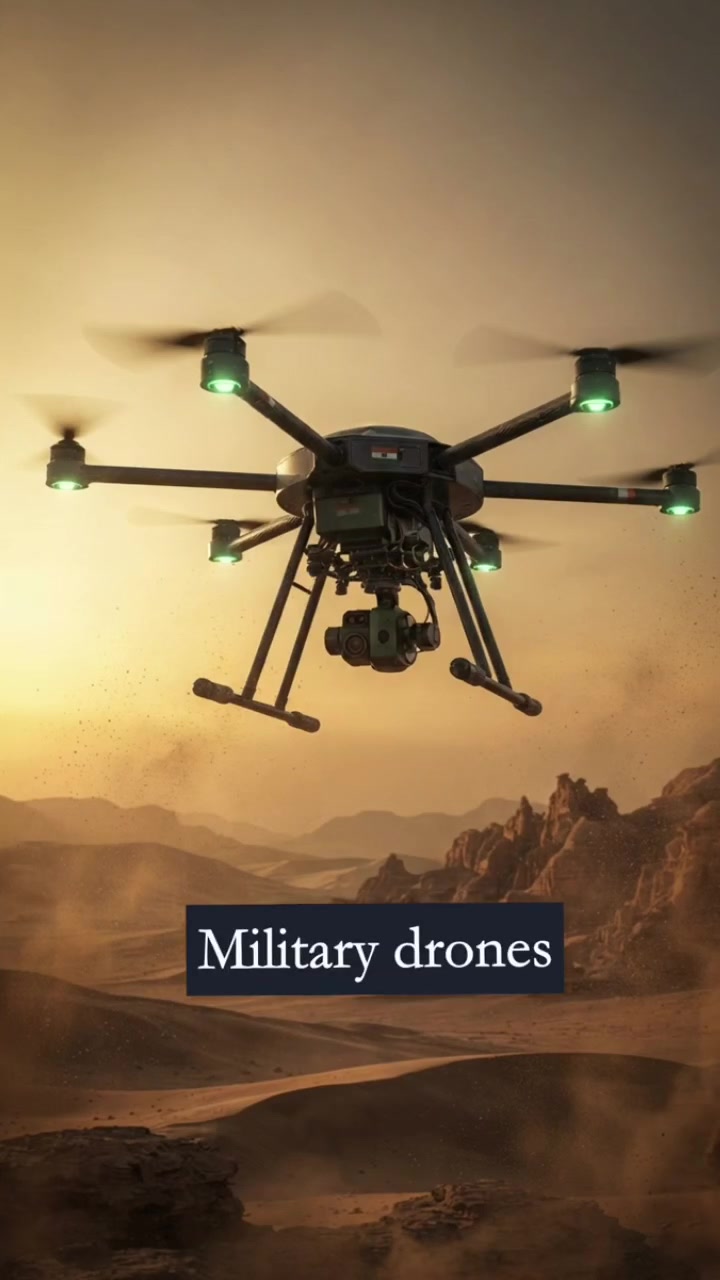
The 8Q180's Hybrid Breakthrough — Balancing drone trade-offs
India has unveiled the AQ180, a military drone that breaks a stubborn trade-off in drone design. The compromise? Given the choice between multirotors that can launch from almost anywhere but are slow, or fixed-wing jets that need miles of runway yet are fast. The AQ180 combines the best of both worlds. The AQ180 uses a hybrid flight architecture. It launches vertically using electric motors built into the wings, mimicking the ease of a quadcopter. Once airborne, a rear-mounted turbojet engine propels it forward. The motorised wings act like a quadcopter’s propulsion. Once airborne, the jet transition makes it sleek. There's no doubt about the agility and speed of the AQ180. This is a game-changer.
The next generation of engine development
India is positioning itself as a leader in jet-powered autonomous aircraft. The AQ180's engine is built by Barat Forge, a heavyweight industrial company that is also actively developing the drone's engine. This is not an ordinary drone assembly: it is a deep tech collaboration for high altitude missions.
The End of Turbulence
A platform that can transition between vertical takeoff and fixed-wing flight is a boon. It can launch quickly from a small space and then cruise at high speed, covering long distances efficiently. The ability to transition between these modes makes the AQ180 versatile for a wide range of missions.
How It Works
The key to the AQ180's versatility is its hybrid flight architecture. Electric motors in the wings provide the vertical lift-off and landing capability. This allows the drone to operate from confined spaces. At the same time, it can perform complex movements during flight. Once airborne, the drone transitions to a rear-mounted turbojet engine for high-speed, fixed-wing forward flight. This jet engine powers the drone to cover long distances quickly. The transition between vertical and horizontal flight mode is seamless. It significantly boosts the drone's operational versatility.
The Critical Role of Electricity
The hybrid architecture of the AQ180 has intriguing benefits. First, the vertical takeoff and landing (VTOL) capability allows the drone to operate from a wide range of locations. In urban settings, military operations, or disaster relief situations, it can easily take off and land in confined spaces.
Gas Turbines
The turbojet engine used in the AQ180 is a small gas turbine engine developed by Barat Forge. This engine provides the high thrust needed for high-speed forward flight. It also contributes to the drone's long-range capability, making it suitable for extended missions.
The Difference of Cadet Defense Systems
Cadet Defense Systems — a Bengaluru-based startup — played a crucial role in developing the AQ180. Founder Avdash Khaitan has a proven track record in developing jet-powered aerial targets. The company is unlisted and debt-free, relying on internal resources and expertise to innovate. This approach has allowed them to build advanced defense technologies without major VC funding.
Practical Considerations
Interested in the AQ-180? It's important to consider how it could be used as a practical tool. The drone's hybrid flight architecture makes it versatile for various missions. These include:
- Inspecting Oil and Gas — Its ability to transition between vertical and horizontal flight allows it to navigate complex environments, making it ideal for inspecting oil and gas pipelines, power lines, and other critical infrastructure.
- Military Operations — Its VTOL capability and high-speed flight make it a valuable asset for military operations, including reconnaissance, surveillance, and target acquisition.
- Disaster Relief — After natural disasters, the AQ180 can quickly and efficiently assess damage, deliver supplies, and provide communication support to affected areas.
The Sombrero of Drone Precision
The AQ-180 drone is an important milestone in the development of modern military drones. It showcases how combining a startup's agility with heavy industrial engineering can lead to innovative solutions. India is on the cusp of a new era in drone technology. The AQ180 is just the beginning, and a clear signal of what's to come: the next generation of jet-powered autonomous aircraft that can handle a wide range of missions with precision and efficiency.
Questions readers ask
How does the AQ180 achieve both vertical takeoff and high-speed flight?
The AQ180 uses electric motors in its wings for vertical takeoff and landing, allowing it to operate from confined spaces. Once airborne, it switches to a rear-mounted turbojet engine for high-speed, long-distance flight. This hybrid design combines the best of both multirotor and fixed-wing drones.
What makes the AQ180's engine unique, and who developed it?
The AQ180's engine is a small gas turbine developed by Barat Forge, a major industrial company. This engine provides the high thrust needed for fast, long-range flight, making the AQ180 suitable for extended missions.
Who are the key players behind the development of the AQ180, and how did they contribute?
Cadet Defense Systems, a Bengaluru-based startup, played a crucial role in developing the AQ180. Founder Avdash Khaitan has a proven track record in developing jet-powered aerial targets. The company's approach, relying on internal resources and expertise, has allowed them to innovate without major VC funding.
What are the practical benefits of the AQ180's hybrid flight architecture?
The AQ180's hybrid design allows it to launch vertically from tight spaces and then transition to high-speed forward flight. This makes it versatile for a wide range of missions, from urban operations to disaster relief, and extended military missions.
How does the AQ180's design compare to traditional drone designs?
Traditional drones often have to choose between vertical takeoff capabilities and high-speed flight. The AQ180's hybrid design allows it to do both, making it more versatile and efficient for a wider range of missions.
What kind of missions is the AQ180 best suited for?
The AQ180's ability to take off and land vertically, combined with its high-speed flight capability, makes it ideal for missions that require quick deployment from confined spaces, such as urban operations or disaster relief. Its long-range capability also makes it suitable for extended military missions.
How does the AQ180's transition between vertical and horizontal flight modes work?
The AQ180's transition between vertical and horizontal flight modes is seamless. It uses electric motors in the wings for vertical takeoff and landing, and then switches to a rear-mounted turbojet engine for high-speed, long-distance flight. This transition allows the drone to operate efficiently in a variety of scenarios.
Related deep dives
Similar reads based on topic and creator.




Recent articles
Fresh deep dives from the latest Reels we unpacked.




Comments
Be the first to comment.