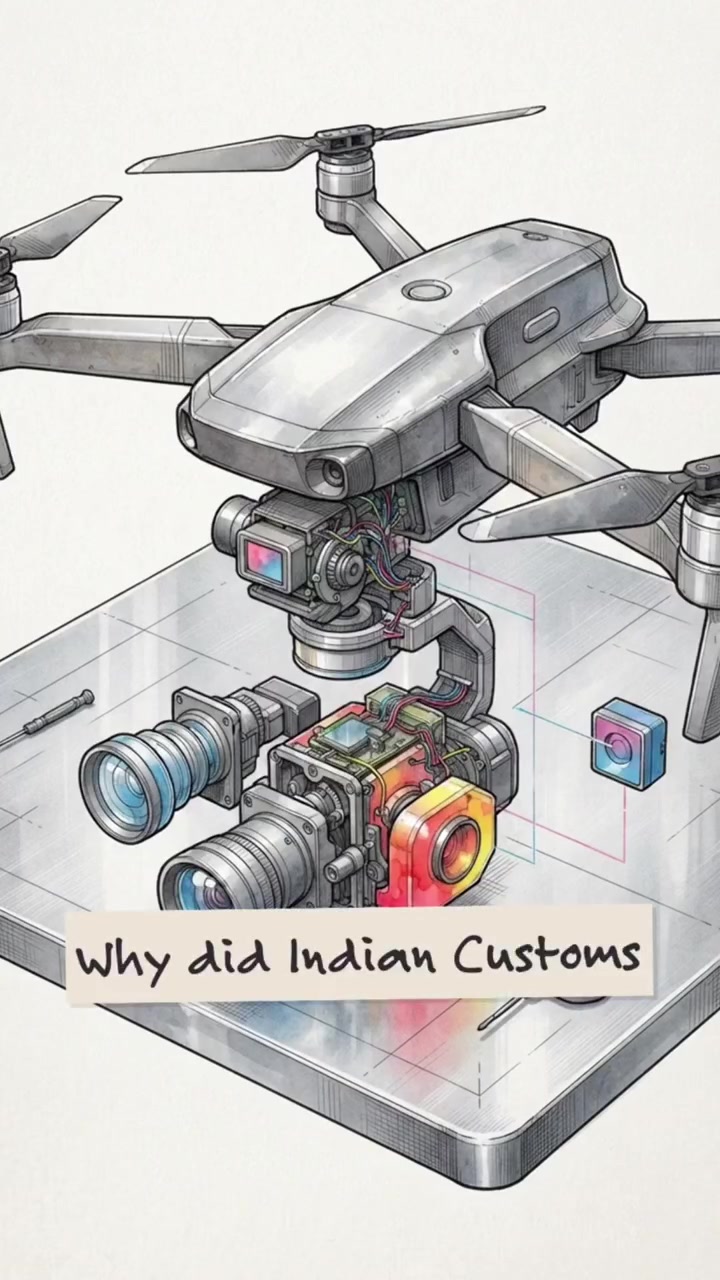
Customs officers in Delhi seized a stash of drones worth cro-rupees — but this wasn’t about duty evasion. The true issue was that these drones, “the smuggled OTEL MDX-1 drones”, were engineered for a darker purpose. Two specific sensors — a thermal camera and a laser rangefinder — transformed these devices from ordinary into tactical-grade systems, banned in India. So, what was the larger security concern, and who was behind this smuggling?
What makes tactical drones like the OTEL MDX-1 different?
The OTEL MDX-1 drones combine a thermal radiant sensor and a laser rangefinder, which transform a standard drone into a tactical system. The two sensors marry thermal sensing and the location mapping to create tactical data. This data can be used to spot a hidden target in total nighttime and map the exact physical coordinates. Here’s how it works. Standard drones come with cameras that rely on ambient light, which means they can’t see behind objects or in the dark. The thermal infrared sensor detects heat signatures, enabling operators to spot hidden people or machinery, even in pitch-black conditions. A laser rangefinder bounces an invisible beam off the detected target. It calculates the exact distance and maps the precise location. The combination of these sensors turns a straightforward drone into a restricted defense-grade system. It stands out because its design makes it a dual-use technology: one that has both a civilian and a military application. There were two sensors on the drones: thermal infrared and laser rangefinders. The combination of two sensors brings unmatched capabilities and makes the drone transform into a restricted defense-grade system. The thermal infrared sensor detects infrared heat radiation. It allows for spotting a hidden person or running machinery in total darkness. The laser rangefinder then calculates its exact distance and pinpointing its precise physical coordinates. The drone’s ability to pinpoint and target through an invisible beam makes the machine highly effective.
Targeting dual-use drones
In India, drones are classified as dual-use items. This means they have both civilian and potentially military applications. This duality complicates enforcement, as both individuals and corporations can order components for civilian purposes while potentially misusing them for military or illicit purposes. The dual-use classification is why the drones seized in Delhi were restricted in India. Customs officers are tasked with discerning whether drones are used for legitimate or illicit purposes. For example, the Indian government strictly prohibits importing fully built defense-grade systems without specific authorization. This is because these devices can be repurposed for military applications, requiring strict regulatory oversight. The seizure of the OTEL MDX-1 drones reflects this tension. It underscores how the import and use of dual-use technologies must be carefully monitored to prevent misappropriation.
The OTEL MDX-1 drone
The OTEL MDX-1 drone in Delhi Airport was seized because of the its dual sensors which make it a highly restricted defense-grade unit. The OTEL MDX-1 drone stands out because its design makes it a dual-use technology: one that has both a civilian and a military application. The OTEL MDX-1 drone exemplifies why tracking dual-use technologies is hard. Its dual-use capability makes the drone a highly sought-after piece of tech. One reason was that the drone’s sensors upgraded the drone to a military grade. The other reason was that its dual-use capability makes tracking and stopping it from being misused very challenging.
Grading drones
Regulations in India classify drones into different categories. On one end are standard, low-risk drones, which can be easily purchased for hobbyist or basic commercial use. On the other end are restricted defense-grade systems, which require stringent oversight and are banned for import without government approval. The seized OTEL MDX-1 drones fall into the latter category. It’s worth noting how a drone might transition from one grade to another. In the case of the OTEL MDX-1, adding specialized thermal and laser sensors transformed it from an ordinary quadcopter into a restricted defense-grade system. Such upgrades are illegal if not authorized, because they affect the drone’s capabilities and categorization.
Comparing tech specs
Drone specifications can vary drastically depending on their intended use. Basic drones typically feature standard cameras that record visual data but lack specialized sensors for more complex operations. In contrast, military-grade drones like those interdiction in Delhi come equipped with thermal infrared and laser rangefinders. These components enable precise data tracking and pinpoint targeting, making them invaluable for surveillance and tactical operations. Military-grade drones are also distinguished by their durability, often featuring enhanced weather-resistant materials and longer operational ranges. The combination of thermal vision and laser targeting creates actionable tactical data. This distinction is crucial for regulatory purposes, as it highlights the potential risks associated with dual-use technologies.
The pursuit of startup suspects
The drones were seized, but the mystery deepens. Customs officials are now investigating which startup ordered this tactical drone fleet and their true intentions. The Customs department is investigating how the OTEL MDX-1 drones ended up in Delhi. The search is on for which startup secretly ordered this fleet and what their true purpose was for acquiring the tactical gear. The investigation aims to expose the true intent behind the drone acquisition. The question is why the drones were ordered in the first place. By tracking the journey of the drones from the manufacturer to the customs warehouse, officials hope to uncover the network behind the smuggling operation. The goal is to identify the startup, determine whether the drones were intended for legitimate commercial use or for more nefarious activities, and trace the supply chain that enabled their entry into India. The investigation is ongoing.
What does this seizure mean for drone regulation in India?
The drone seizure at Delhi Airport is more than a customs inquiry. It highlights the challenges of regulating dual-use technologies. Tracking dual-use payloads is challenging. This is where the actionable tactical data from these drones comes in. The seizure underscores the need for vigilance. The need for vigilance is evident through the interception of such drones. The OTEL MDX-1 drone and its seized counterparts illustrate the urgent need for tighter regimes. It’s clear that the regulations in place are not enough to stop smuggling of such drones. The interception of the drone fleet demonstrates the increasing threat posed by dual-use technologies. It represents a pivotal moment for India’s regulatory framework. It necessitates enhanced oversight to curtail the misuse of such technologies.
Questions readers ask
What exactly are thermal cameras and laser rangefinders, and how do they enhance drone capabilities?
Thermal cameras detect heat signatures, allowing them to see in the dark or through obstacles. Laser rangefinders, on the other hand, calculate the exact distance to a target by bouncing an invisible beam off it. When combined, these sensors transform a standard drone into a tactical system capable of pinpointing and targeting with high precision, even in complete darkness.
Why are the OTEL MDX-1 drones considered restricted in India?
The OTEL MDX-1 drones are restricted because they fall under the category of dual-use technologies, which means they have both civilian and military applications. India's regulations prohibit importing fully built defense-grade systems without specific authorization, as these can be misused for military or illicit purposes. The dual-use classification complicates enforcement, making it crucial for customs officers to discern the intended use.
How do customs officers determine if a drone is being used for legitimate or illicit purposes?
Customs officers look for specific features and capabilities that indicate a drone's potential for military or illicit use. For instance, the presence of thermal cameras and laser rangefinders on the OTEL MDX-1 drones raised red flags. These sensors are not typically found in civilian drones and suggest that the device could be repurposed for surveillance or targeting. The officers must carefully examine the components and intended use of the drone to make this determination.
What are the potential consequences for individuals or organizations caught smuggling restricted drones like the OTEL MDX-1?
The consequences can be severe, as the smuggling of restricted drones is a violation of national security regulations. Individuals or organizations caught smuggling such devices could face legal penalties, including fines and imprisonment. Additionally, their reputations and future business operations could be significantly impacted, as they would be seen as involved in illicit activities.
Are there any legitimate uses for drones with thermal cameras and laser rangefinders in India?
Yes, there are legitimate uses for such advanced drones, but they require specific authorization. For example, they can be used in search and rescue operations, infrastructure inspections, or environmental monitoring. However, these uses must be approved and regulated to ensure that the drones are not misused for military or illicit purposes. The key is obtaining the necessary permits and adhering to strict guidelines.
Related deep dives
Similar reads based on topic and creator.




Recent articles
Fresh deep dives from the latest Reels we unpacked.




Comments
Be the first to comment.