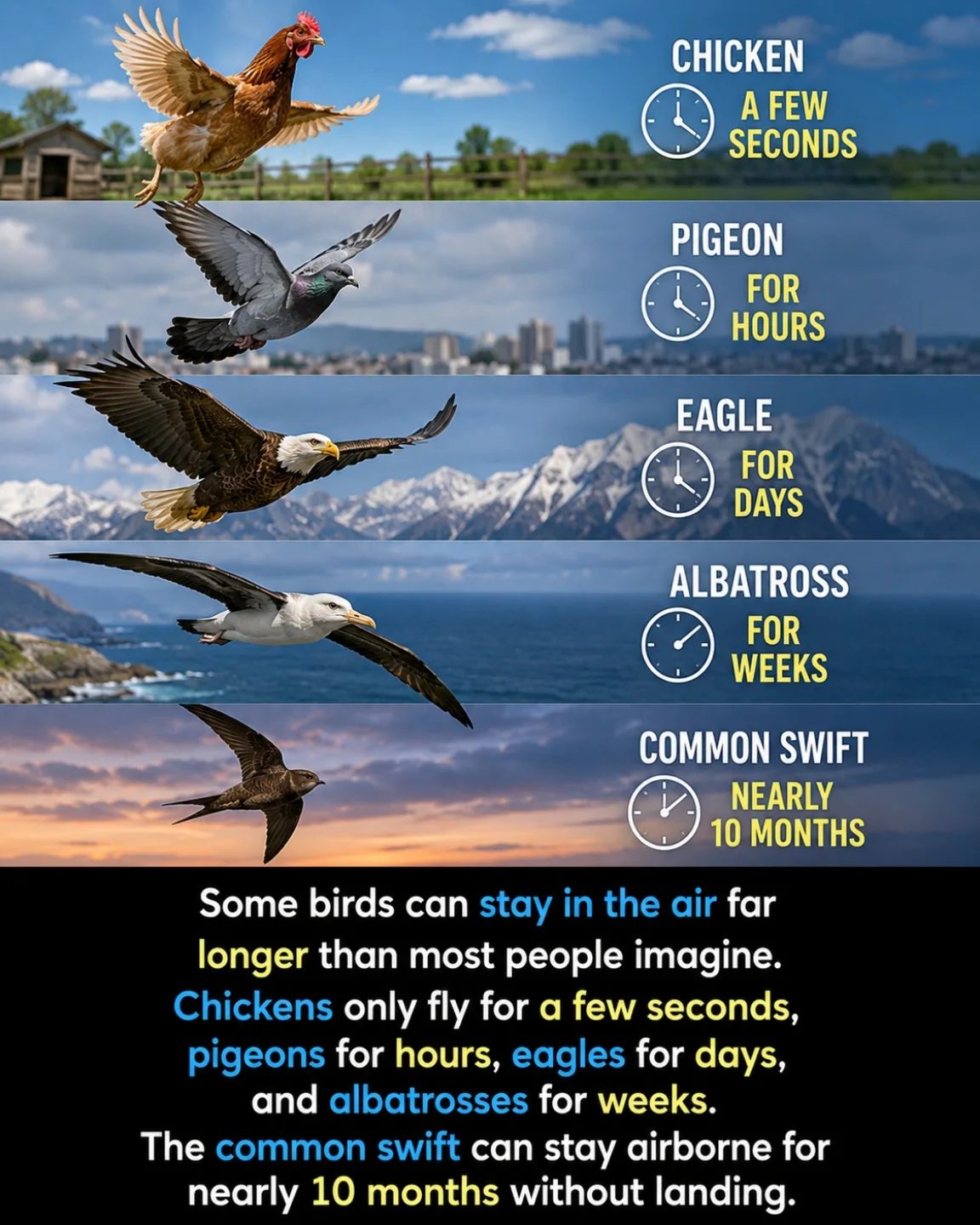
Bird Flight Durations
Birds exhibit a remarkable range of flight durations, from mere seconds to nearly a year. Understanding these durations offers insights into the diverse adaptations and lifestyles of different avian species.
Why This Matters
Flight duration is a critical aspect of a bird's biology and ecology. It influences hunting strategies, migration patterns, and overall survival. By examining how long different bird species can stay airborne, we gain a deeper appreciation for their unique capabilities and the challenges they face in their natural habitats.
Main Discussion
Chickens: Brief, Explosive Flight
Chickens are notoriously poor fliers, capable of staying airborne for only a few seconds. Their flight is typically short and explosive, used for brief escapes from predators or to reach higher perches. Unlike many other birds, chickens rely more on their strong legs for running and scratching the ground for food. Their wings are relatively small and not well-suited for sustained flight, highlighting their terrestrial lifestyle.
Pigeons: Efficient and Enduring Flyers
Pigeons, on the other hand, are known for their endurance. They can fly for several hours, making them efficient and persistent fliers. This capability is crucial for their foraging and migration habits. By flying long distances, pigeons can access a wider range of food sources and habitats. Their strong wings and aerodynamic bodies allow them to navigate various environments with ease, making them adaptable to both urban and natural settings.
Eagles: Masters of the Skies
Eagles are among the most formidable fliers in the avian world. They can stay airborne for days, using their powerful wings and keen eyesight to scout for prey from great heights. This ability to remain in the air for extended periods allows eagles to conserve energy while patrolling vast territories. Their flight is characterized by soaring on thermal currents, which enable them to hunt efficiently with minimal effort. Eagles' endurance in flight is a testament to their exceptional hunting strategies and adaptability.
Albatrosses: The Long-Distance Champions
Albatrosses are renowned for their incredible endurance and can fly for weeks without stopping. These seabirds are particularly adapted for long-distance travel, often flying hundreds of miles over the open ocean. Their long, narrow wings and light body structure help them glide effortlessly on wind currents. This ability allows albatrosses to efficiently cover vast distances in search of food, making them highly successful marine predators. By staying airborne for extended periods, they can conserve energy and reduce the need for frequent rest.
Common Swifts: Unparalleled Flight Endurance
The common swift is truly a marvel in the avian world. It can stay airborne for nearly 10 months without landing. This incredible feat is made possible by the swift's lightweight body and aerodynamic shape, which enable it to fly effortlessly through the air. Swifts spend most of their lives in flight, feeding, sleeping, and even mating while airborne. Their wings are specifically adapted for rapid, continuous flight, allowing them to catch insects mid-air and rest on the wind currents. This ability to stay airborne for prolonged periods makes the common swift one of the most fascinating examples of avian flight endurance.
Practical Tips
Observing bird flight durations can be both enjoyable and informative. Here are some practical tips for appreciating and understanding this fascinating aspect of avian behavior:
- Binoculars and a Watch: Equip yourself with a pair of binoculars and a watch to observe birds in flight. Timing their flights can provide insights into their endurance and behavior.
- Field Guides: Use field guides to identify different bird species and learn about their flight capabilities. Understanding the specific adaptations of each species can enhance your appreciation for their flight durations.
- Local Bird Watching Groups: Join local bird watching groups to share observations and insights with fellow enthusiasts. These groups often provide opportunities to see a variety of bird species in their natural habitats.
- Record Observations: Keep a journal to record your observations of bird flight durations. Over time, you'll build a comprehensive record of how different species fly and the conditions that affect their flight patterns.
- Ecological Context: Consider the ecological context of bird flight. Understanding the environmental factors that influence flight durations can provide deeper insights into the challenges and adaptations of different bird species.
Important Takeaways
Bird flight durations offer a window into the diverse ways birds have adapted to their environments. From the brief, explosive flights of chickens to the nearly year-long flights of common swifts, each species has unique flight capabilities that reflect their lifestyles and survival strategies. By observing and understanding these flight patterns, we can gain a deeper appreciation for the rich tapestry of avian life and the incredible adaptations that enable birds to thrive in various habitats.
Conclusion
The world of bird flight is a testament to the remarkable diversity and adaptability of avian species. From the brief flights of chickens to the unparalleled endurance of common swifts, each species demonstrates unique adaptations that allow them to thrive in their respective environments. By understanding and appreciating these flight durations, we can gain a deeper respect for the natural world and the incredible abilities of birds.
Questions readers ask
Which bird species has the shortest flight duration?
Chickens are among the birds with the shortest flight durations. Their flights are brief, lasting only a few seconds, and are typically used for quick escapes or short-distance movements.
How long can eagles stay airborne?
Eagles are known for their remarkable endurance and can stay airborne for extended periods. Some species of eagles can soar for several days at a time, using their keen eyesight to survey their surroundings while conserving energy.
Which bird can fly the longest without stopping?
The albatross holds the record for the longest flight duration without stopping. These seabirds can stay airborne for months at a time, often covering vast distances over the ocean without landing.
What factors influence a bird's flight duration?
Several factors influence a bird's flight duration, including its physiology, wingspan, body size, and lifestyle. Migration patterns, hunting strategies, and survival needs also play significant roles in determining how long a bird can stay in the air.
How do birds like swifts manage to stay airborne for extended periods?
Swifts are known for their exceptional flight capabilities, often staying airborne for extended periods, sometimes up to 10 months. Their lightweight bodies, long wings, and efficient flying techniques allow them to catch insects on the wing and rest while gliding.
How does flight duration vary among different bird species?
Flight duration varies widely among bird species, from mere seconds for chickens to nearly a year for certain albatrosses. This variation reflects each species' unique adaptations, such as wing shape, body size, and dietary habits, which are tailored to their specific environments and lifestyles.
Related deep dives
Similar reads based on topic and creator.




Recent articles
Fresh deep dives from the latest Reels we unpacked.


Comments
Be the first to comment.