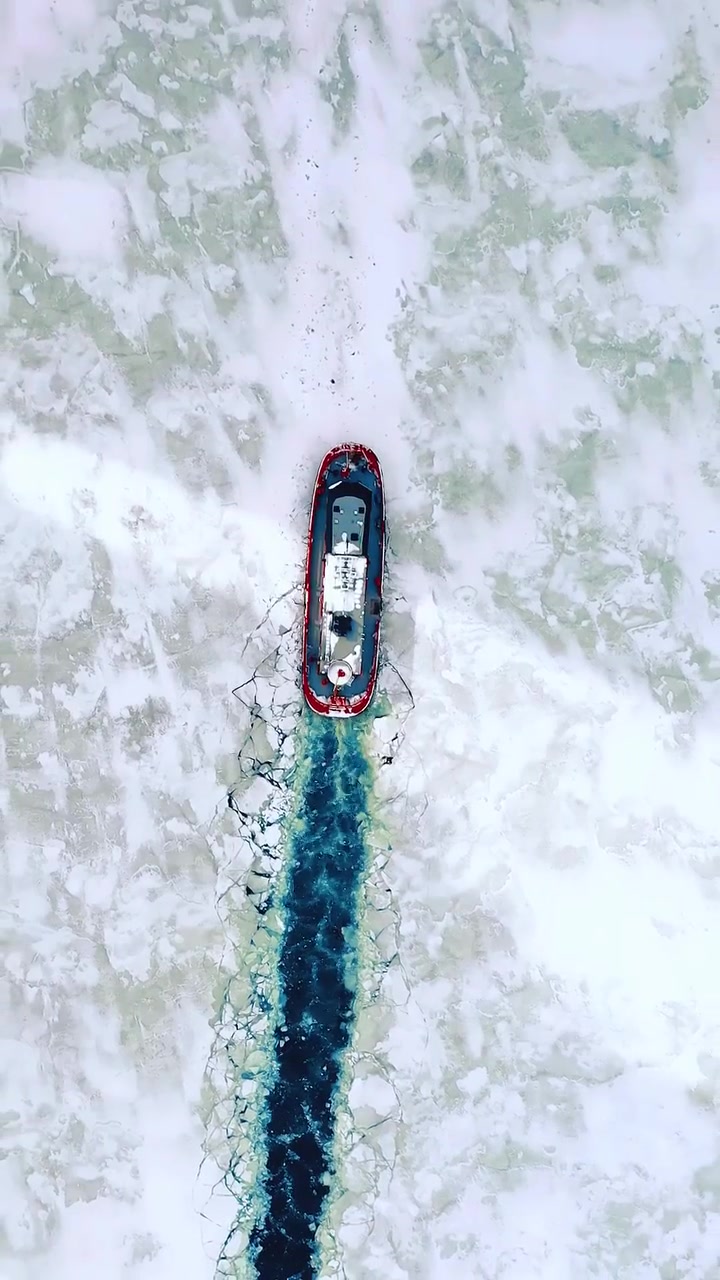
Icebreaker ships are the unsung heroes of polar navigation, pushing through frozen seas to keep supply lines open. On a recent reef, one of these beasts plowed through an ice field, churning a path in its wake. The process reveals how icebreakers operate and their critical role in maintaining access to remote regions.
Cutting Through the Cold
Icebreakers are specialized vessels designed to traverse and clear ice-covered waters. Their distinctive shape—bowed and reinforced—allows them to ride up onto the ice, breaking it under the weight of the ship. This process, which can involve multiple icebreakers, creates a navigable channel for other ships. Most icebreakers use a combination of sheer force and maneuvering techniques to break ice. Some push their bow into the ice and break it directly, while others use their weight to ride up and crush the ice beneath. The distinctive shape of icebreakers includes a reinforced bow, which is stronger and more resistant to the forces during ice-breaking operations. Icebreakers are also equipped with powerful engines and propellers to generate the necessary force and maneuverability. The ability of icebreakers to provide continuous and consistent channel size in the open water trail enables safer passage for other vessels, which would otherwise struggle with the ice. The Icebreakers seen in the footage also demonstrate the importance of coordination and timing. The ships work in tandem to create the widest and most navigable channel possible. Coordinated efforts across these vessels help maintain a continuous flow of supplies in harsh polar conditions, highlighting the critical role of icebreakers in polar research and maritime operations.
The Unsung Mariners of the Arctic
Icebreakers fill a crucial role in keeping Arctic and Antarctic waters open for navigation and maritime communication. Their work supports crucial missions, including scientific research, cargo transport, and oil exploration. These vessels facilitate the safe navigation of ships in icy waters, but they also carry out a host of functions, such as anti-ice operations, monitoring ice conditions, and providing support for ships in distress. With global warming, icebreakers take on even more significance as the icy terrain changes, and new routes are opened for shipping lanes. One commenter summed up the operational challenges. Icebreakers face diverse challenges in polar regions, including extreme cold, rough seas, and the constant threat of getting stuck in thin ice. Icebreakers themselves need a support system to handle maritime and logistical demands. The overwhelming presence of ice means these vessels must be equipped with a variety of resources to function safely and effectively. Polar regions regularly face the threat of climate change and human-made pollution. The demand for more icebreakers is also increasing due to the rising interest in Arctic oil and natural gas exploration, yet limited resources across the entire global fleet means icebreakers need to be sturdy. Icebreakers also help researchers study the polar ecosystems, including tracking wildlife, monitoring climate fluctuations, and assessing the impacts of global warming. The ships provide a platform for scientists, allowing them to conduct research in some of the harshest and most inaccessible regions on Earth. By maintaining access to these critical areas, icebreakers enable ongoing study of the Arctic, Antarctica, and other polar regions, including the formation and movements of ice.
Channel Creation and the Science of Icebreakers
Icebreakers manipulate the ice, which acts as a lubricant for the icebreaker to ride over, turning solid ice into soft slush. Smaller icebreakers navigate through the ice by accelerating forward momentum and braking quickly. This process creates a groove in the ice, allowing the ship to gain extra grip. Icebreakers also "paste" ice to the surrounding ocean by sliding faster. The water left behind the icebreaker has a lower freezing point (which comes from the saltwater hypothesis), allowing subsequent vessels to utilize the channel for a longer period. These maneuvers are critical to maintain a channel for other ships and continue the supply of goods and services.
The Nature of the Vessels
Icebreaking ships have an arched design at the bow. This design helps to push the ship onto the ice, allowing it to break the ice by its weight. The icebreaker's hull is designed to slide up onto the ice, allowing the ship to break through using its weight and momentum. The shape of an icebreaker also helps the vessel to maneuver through the ice more efficiently. Therefore, the ships require a combination of strength, weight, and maneuverability to break and navigate through the ice. Icebreakers can maneuver in tight spaces, making the ships more efficient in icy environments. The steerage and maneuverability of the vessels make them valuable in the Arctic, where they can change course quickly and break through ice with precision. Icebreakers leverage different techniques and systems to navigate through icy waters. Many icebreakers employ double-hulled hulls, in order to let auxiliary engines and propellers to keep the icebreaker running in case of a shutdown. Their powerful engines require constant refueling, which is a huge challenge for these ships. Despite requiring massive amounts of fuel to run, icebreakers remain a crucial vessel in polar regions—many icebreakers do not rely on solar power or other renewable power sources. Most icebreakers use fossil fuels to power their vessels due to the need for a reliable, efficient, and sustainable energy source.
The Wider Arctic Fleet
Icebreakers around the world have unique attributes tailored to their respective nations. Icebreakers are used by several countries, each with its own icebreaking fleet. Countries with larger icebreaking fleets include the United States, Canada, and Russia. The Russian fleet leads in icebreaking capabilities, with several massive nuclear-powered icebreakers capable of navigating the harsh conditions of the Arctic. Since the melting of the Arctic sea ice accelerated, Arctic shipping lanes have become more attractive options for commercial transport. Icebreakers are required to maintain Arctic shipping routes, yet there are only limited options in the market; the global fleet mostly consists of a few old vessels.
What To Watch For
Interested in the science and operations of icebreakers? First, explore different types of icebreakers and their capabilities. There are different classes of icebreakers, each designed for different ice conditions. The basic types of icebreakers are based on their design, propulsion, and size, but the most important factors are the icebreaking capability and icebreaking speed. Most icebreakers are powered by diesel engines, while some use nuclear power. The ships also have different modes of operation, including forward and astern icebreaking. Once you've done your research, consider visiting a shipyard where icebreakers are built. This provides an opportunity to see the ships being constructed and understand the different parts of the vessel. You might even get a close-up view of the engine room or the control bridge, offering a unique perspective on how icebreakers are designed and built. Visiting an icebreaker in person might be one of the only ways to get a sense of the scale and power of these vessels. In the right ports, these ships might welcome visitors.
Questions readers ask
How exactly do icebreakers create a path through ice?
Icebreakers use a combination of their reinforced bow shape and powerful engines to break through ice. They either plow into the ice or ride up onto it, using their weight to crush it, creating a navigable channel for other vessels. This process can involve multiple icebreakers working together to widen the path.
What makes icebreakers different from regular ships?
Icebreakers are specially designed with a reinforced bow and powerful engines to withstand and break through ice. Their unique shape and strength allow them to push through frozen seas, unlike regular ships which would struggle or get stuck.
Can icebreakers operate independently, or do they need support?
Icebreakers often operate in coordination with other vessels to create the widest and safest channel possible. They also require a support system to handle the logistical and maritime demands of their missions, especially in harsh polar conditions.
Why are icebreakers important for polar research?
Icebreakers are crucial for polar research because they facilitate safe navigation in icy waters, allowing scientists to access remote regions. They support missions that study polar ecosystems, climate changes, and the impacts of global warming, and also monitor ice conditions and provide support for ships in distress.
How does climate change affect the role of icebreakers?
With global warming, icebreakers are becoming even more important as they help navigate new routes opened by melting ice. They also play a critical role in studying the effects of climate change on polar regions, including monitoring ice conditions and supporting research missions.
What challenges do icebreakers face in polar regions?
Icebreakers face numerous challenges, including extreme cold, rough seas, and the constant risk of getting stuck in thin ice. They must be equipped with various resources to function safely and effectively in these harsh conditions, and often need to work in tandem with other vessels to maintain a continuous flow of supplies.
Related deep dives
Similar reads based on topic and creator.




Recent articles
Fresh deep dives from the latest Reels we unpacked.




Comments
Be the first to comment.