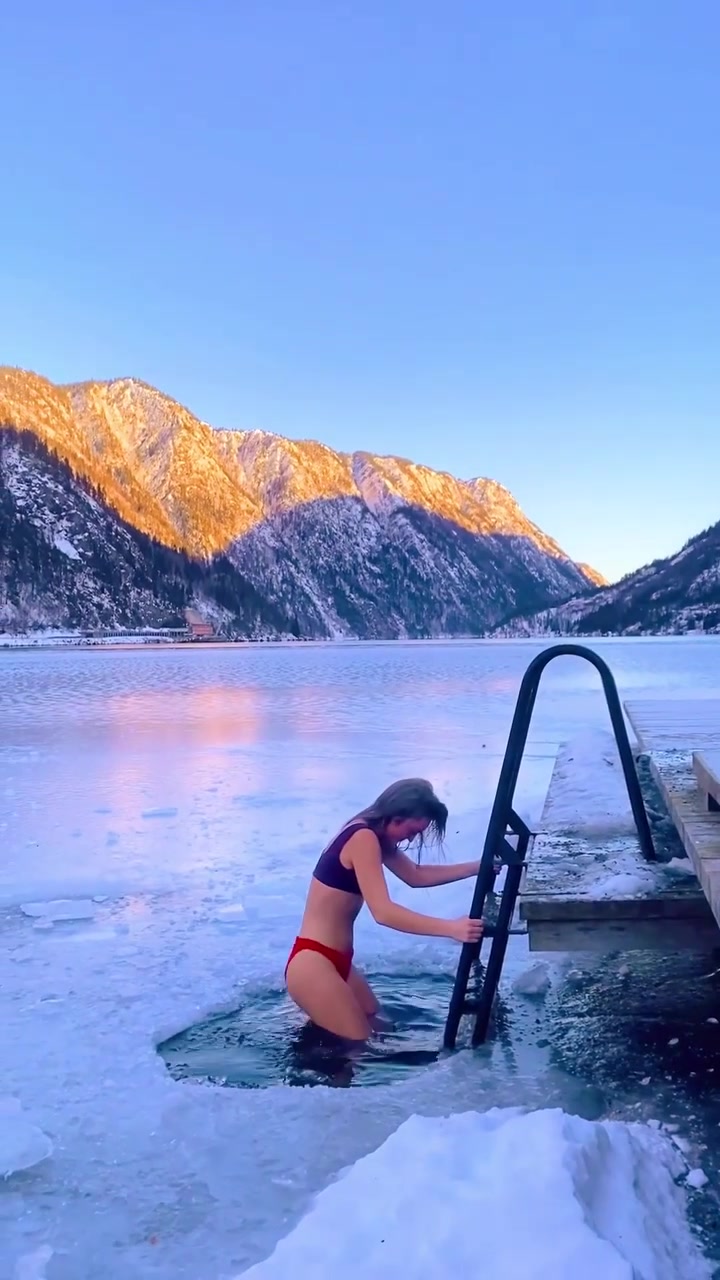
Ice swimming is less a winter sport than a frozen tundra ritual. As shown in the visuals of the video, user helenemoo immerses themselves in a hole in a Norwegian lake. There's a sharp glow and flash of blue, pulled by gravity toward the crispness. The swimmer glides past ice chunks. The cold never bothered her anyway. What is ice swimming Ice swimming is exactly what it sounds like: swimming in icy waters. It's more than a freezing dip, though — aficionados emphasize the mental calm the activity brings. There are different types: In some cases, swimmers stay stationary and the body heats itself up. In others, the swimmer moves through the ice. Each type aims to harness the power of the polar plunge. The sport emphasizes the changing seasons, layering deep blue water with winter's stark white. Ice swimming carries an elemental force, from the thin line between the frozen and liquid. There's nothing else like the sensation of ice water, a cold shock that feels like a thousand needles. This kind of winter bathing has made a big splash in recent years. More people are experimenting with cold exposure, seeking benefits like the improved mental health from a hobby linked to the icy outdoors. However, many people would recoil from the very idea. How can a body handle the temperature? What if someone gets hurt? Is it worth the risk?
Full immersion: health benefits of an ice plunge
The cold never bothered helenemoo because getting in the water is its own reward. Ice swimming offers a range of health benefits. It enhances blood circulation, boosts immunity, and aids in muscle recovery. The mind-body connection is another crystalline advantage. One Arabic saying goes: "Cold water, hot spirit."
Ice swimming's Viking origins
Ice swimming is not new, though the modern form evolved in Norway. People have been swimming in icy waters for hundreds of years for a reason. The Norwegians gaze out on their lakes and see a vast playground. In the 1950s, groups of people began gathering for swimming in icy waters. It was then that the modern sport emerged as a phenomenon.
Mental benefits — the cold is an elemental force
The stripped-down experience of ice swimming allows the experience of a pure, elemental feeling of coldness. It also brings a particular edge of anxiety — an alertness to the freezing conditions.
Physical rewards
In a study of cold-water swimmers, swimmers experienced improved psychological well-being. The study's lead author suggested that this was explained by the cold's impact on the body and its effects on neurotransmitters that impact mood regulation. The bitter cold also magnifies the sense of achievement. When done safely, the feeling of accomplishment is invigorating. The primal technique takes the swimmer back to basics, with the blood, lungs, and brain all working together.
Practical advice for the cold curious
Do not jump into the lake headfirst, though. Anyone curious about the possibilities of ice swimming should know that the activity requires caution.
- Wear a Wetsuit: Wearing a wetsuit is the best way to stay warm. Make sure to wear gloves and booties, too. When you're not wearing a wetsuit, it's best to wear wool or synthetic clothing instead of cotton. Wool and synthetic fibers are good insulators and dry quickly.
- Find a buddy: Always go with someone else (or if you swim alone, let all your friends know both when and where you entered. If you're swimming in a remote area, alone, swim in a wet or dry suit with an extra layer, or two. Always have your cell phone in a watertight case.
- Acclimating to the temperature: Before diving in, walk along the beach and let your body adjust to the wind and cold temperatures. Then, ease yourself into the water
- Start slow: Start with shallow water and test the environment. Do not jump immediately into deep water.
- Ease out: Don't stay too long in the water. Take breaks to warm yourself. If you feel tired or too cold, get out immediately.
Take the plunge
I'm not a fan of the cold. Trickling water reminds me of those icy pangs while wading through cold stream water. I have no desire to stay in the water long, and it takes some time to get acclimated to the elements around me. Yet, swimming in icy waters provides a chance to breathe fresh air. Cold water keeps the body's stress hormones in check. Some studies have shown that the cold helps with muscle recovery and circulation.
Questions readers ask
What exactly is ice swimming and how is it different from just jumping into cold water?
Ice swimming involves immersing yourself in icy waters, often in natural bodies of water like lakes, rather than just briefly jumping in. It's not just about the shock; it's a deliberate practice that can involve staying stationary or moving through the ice, and it's known for the mental calm and elemental experience it brings.
How does ice swimming differ from other forms of cold exposure, like cold showers or ice baths?
Ice swimming is more immersive and dynamic than cold showers or ice baths. While those practices offer localized cold exposure, ice swimming engages the whole body in a natural, often moving environment, which can provide a unique sensory experience and different health benefits.
What are the specific health benefits of ice swimming, and how do they compare to those of regular swimming?
Ice swimming boosts blood circulation, immunity, and muscle recovery. It also offers mental health benefits, such as improved psychological well-being and a sense of achievement. Regular swimming provides many of these benefits, but ice swimming's extreme conditions can amplify these effects, particularly on mood regulation through the release of neurotransmitters.
How did ice swimming become a popular activity, and is it still practiced widely today?
Ice swimming has its roots in Norway and has been practiced for hundreds of years. It gained popularity in the 1950s and continues to attract people seeking the unique experience and health benefits. Today, it's gaining traction in various parts of the world, with enthusiasts braving icy waters for both the physical and mental rewards.
What are some of the risks associated with ice swimming, and how can they be mitigated?
Ice swimming poses risks like hypothermia and injury from ice chunks. To mitigate these, always wear appropriate gear like a wetsuit, gloves, and booties. Never jump in headfirst and always have someone nearby in case of emergencies. Gradually acclimate your body to the cold and listen to your body’s signals.
Can anyone try ice swimming, or are there specific conditions that make it unsafe for some individuals?
While anyone can try ice swimming, it's not recommended for those with certain health conditions, such as heart problems or poor circulation. Always consult a healthcare professional before starting, and never attempt it alone. Gradual exposure and proper safety measures are essential for a safe experience.
Related deep dives
Similar reads based on topic and creator.




Recent articles
Fresh deep dives from the latest Reels we unpacked.




Comments
Be the first to comment.