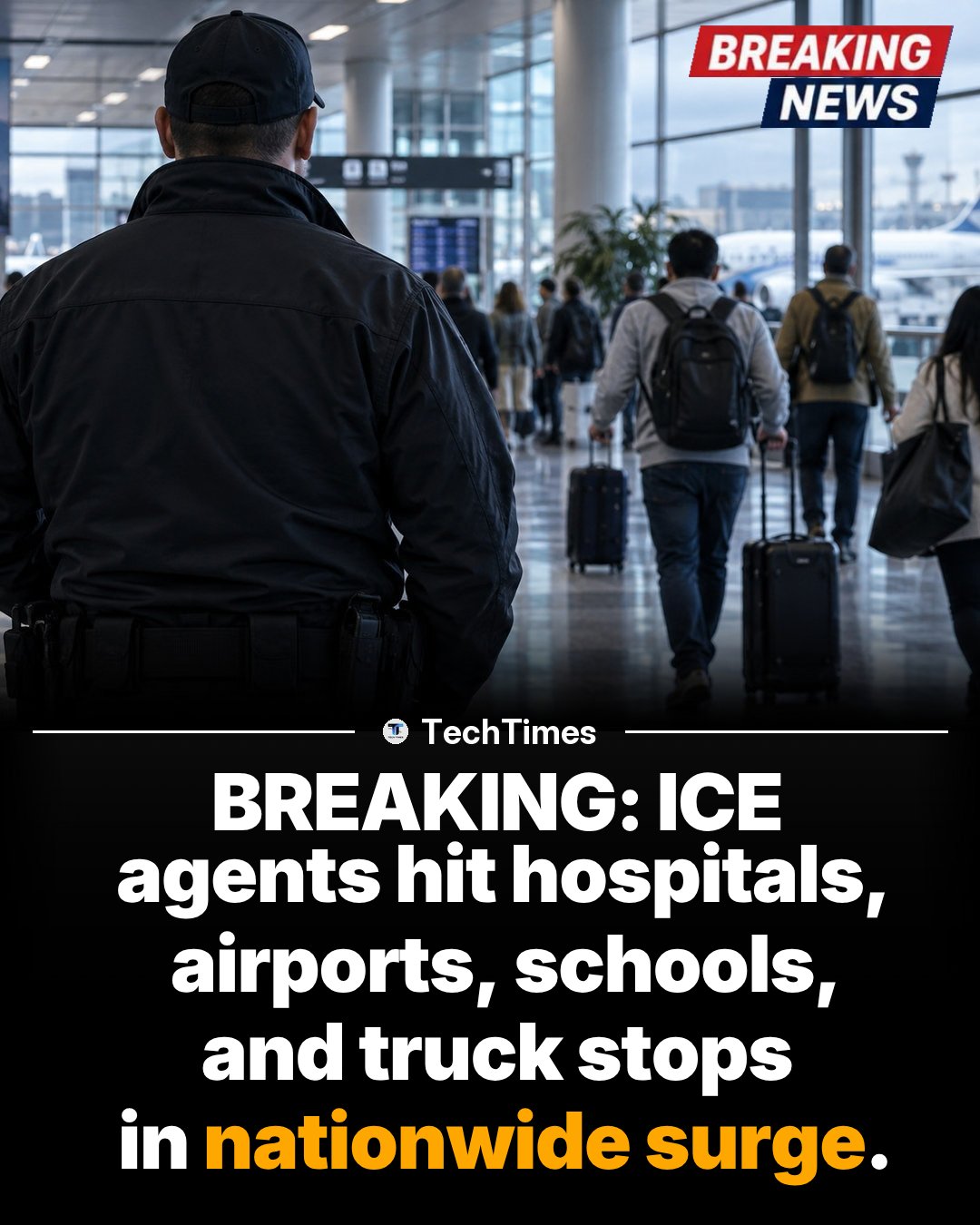
A nationwide surge of ICE agents targeting hospitals, airports, schools, and truck stops was the news on everyone's radar. An airport traveler, completely unaware of the unfolding situation, was oblivious to the breaking news alerts updating the public. The headline came from TechTimes: “Breaking News Alert: ICE Agents Hit Multiple Locations Across the Country.”
A Coordinated Surge of Immigration Enforcement
More than 100 ICE agents are involved in a coordinated effort across the country. The locations are highly sensitive, including hospitals, airports, schools, and truck stops. The hospital visits are targeting undocumented immigrants. The vulnerable population could be receiving treatment for various health conditions, including terminal illnesses. These are non-custodial encounters, meaning individuals are not arrested while in a medical setting, but their identities are recorded. ICE agents are also at airports. The increased presence has been attributed to Trump Administration efforts. Contact between ICE and undocumented immigrants can significantly impact the lives and safety of non-citizens and their families. The ICE agents in schools could be disrupting the learning environment. Undocumented students may live with the fear of being caught. Truck stops are also on the list of places being targeted by ICE agents. They are hotspots for ICE Agent activity as they are frequently used as stops for transporting undocumented immigrants. This has led to a decrease in immigrants using truck stops as a means of transportation.
The Impact of Targeting Essential Places
Immigration policy is a hot-button topic, but this surge underscores a disturbing trend. Many see the move a major escalation of immigration enforcement. The consequences of the ICE surge will be far reaching. The majority of Latinos believe that ICE enforcement violates their civil rights. The surge, critics argue, has a chilling effect on the immigrant community, which could make crime reporting less likely. It increases the chance of children suffering from separation anxiety. Immigration policies must be humane and compassionate, as opposed to divisive and isolating.
Who Targeted And Why
Focus on Hospitals
Hospitals are chosen as locations for their vulnerability. This is because undocumented immigrants have access to medical facilities, and are often unaware of their presence. To add to the worry, hospitals are expected to disclose patient information and share it with ICE. This movement was authorized by a late 2022 Washington lawsuit ruling that ICE had to access undocumented immigrants. Hospitals are responding to the surge by hiring immigration lawyers.
Focus on Schools
A highly targeted location is schools. The fear of ICE agents has driven an increase in absenteeism in schools, parents being discouraged and children dropping out of school is not uncommon. This means that students, especially those whose parents depend on the undocumented immigration system, are losing out on their right to education. This already ailing group of individuals may be pushed away from access to education. Boys and girls who want to reach their full potential are being pushed into more vulnerable positions. Children are particularly afraid of ICE. The threat of ICE arrests causes a great deal of fear and anxiety. For instance, ICE agents may look like teachers and the students have experienced a nightmare. These children are forced to live in fear with this uncertainty.
Focus on Truck Stops
Truck stops are ideal for ICE agents. Truck stops present a strategic opportunity for ICE because they provide direct access to transportation hubs. The arrival of ICE agents feels like an arbitrary dress-down for truckers. Truckers are caught off guard by the sudden appearance of ICE agents. They feel the ICE agents are present to intimidate the drivers. The truck stops are sites of struggle. Stimulates fear in transportation workers who are also consumers. Truck drivers live with the fear of being detained. This surge could put a damper on the overall support systems that are meant to guide vulnerable groups.
REALITY CHECK - What can Schools Do to Prepare
Schools have a responsibility to their students. They have a mandate to provide a safe, welcoming environment, which includes addressing the concerns of students who may be undocumented. Schools are encouraged to conduct regular security checks. This will reassure students that their safety is the top priority. Establishing protocols and guidelines for dealing with immigration enforcement will help. This is inclusive of creating a safe space for students to express their concerns. Schools need to inform students of their rights. If ICE agents show up at the school, parents and their children should have the legal foundation to address the situation. Schools can organize staff training sessions to educate teachers about the signs of anxiety and trauma. School administrators and teachers should also be trained on how to handle students who may be undocumented.
- Develop a School Policy: Schools should establish a clear policy for dealing with immigration enforcement. This policy should include guidelines for administrators, teachers, and students on how to respond to ICE agents. It should include steps one should take if ICE agents are present.
- Staff Training: The staff needs to know how to respond to ICE agents. This includes knowing their legal rights and the school's policy.
- Community Support: Allocate funds to support the immigrant community. This could include providing legal aid, or if possible, offering sanctuary to undocumented students.
- Documentation: Ensure that all staff members have all necessary documentation in order so as to reduce any anxiety when they are questioned by ICE.
What Lies Ahead for the Targeted Communities
TechTimes’ report comes at a time of heightened awareness about the administration’s immigration policies. How things will play out remains unclear. What is certain is that the communities targeted will be changed. The future of their livelihoods could also be at stake. These locations will have to respond to this rate of ICE surge. There could be a mass exodus of immigrants in the future. People are also taking the ‘status quo’ and not waiting for it to change. The future could be uncertain, but it is also a future that immigrants are fighting for.
Questions readers ask
What are the primary locations where ICE agents are increasing their presence?
ICE agents have been focusing on several key public locations, including hospitals, airports, schools, and truck stops. These places are chosen for their vulnerability and the likelihood of finding undocumented immigrants.
Why are hospitals a target for ICE agents, and how do they respond to this?
Hospitals are targeted because undocumented immigrants often seek medical care there and may not be aware of the ICE presence. Hospitals are legally required to disclose patient information to ICE in certain cases. In response, many hospitals are hiring immigration lawyers to navigate this complex situation.
How are schools affected by the increased presence of ICE agents, and what are the consequences for students?
Schools are seeing a rise in absenteeism and even dropouts due to the fear of ICE agents. This disproportionately affects students whose parents are undocumented, leading to a loss of educational opportunities and potential long-term impacts on their futures.
What is the significance of targeting truck stops, and how does it impact undocumented immigrants?
Truck stops are frequently used as stops for transporting undocumented immigrants, making them hotspots for ICE activity. This increased presence has led to a decrease in immigrants using truck stops as a means of transportation, potentially disrupting their travel plans and safety.
What are the broader implications of this surge in ICE enforcement on the immigrant community?
The surge in ICE enforcement has a chilling effect on the immigrant community, making them less likely to report crimes and leading to increased separation anxiety among children. Critics argue that these policies are divisive and isolating, rather than humane and compassionate.
How do non-custodial encounters at hospitals work, and what does this mean for undocumented immigrants?
Non-custodial encounters mean that individuals are not arrested while in a medical setting, but their identities are recorded. This allows ICE to track undocumented immigrants without immediately detaining them, which can have long-term implications for their safety and legal status.
What measures are being taken by hospitals and schools to address the presence of ICE agents?
Hospitals are hiring immigration lawyers to help navigate the legal requirements of disclosing patient information to ICE. Schools, on the other hand, are dealing with increased absenteeism and dropouts, which highlights the need for supportive policies and resources to ensure that students' rights to education are protected.
Recent articles
Fresh deep dives from the latest Reels we unpacked.




Comments
Be the first to comment.