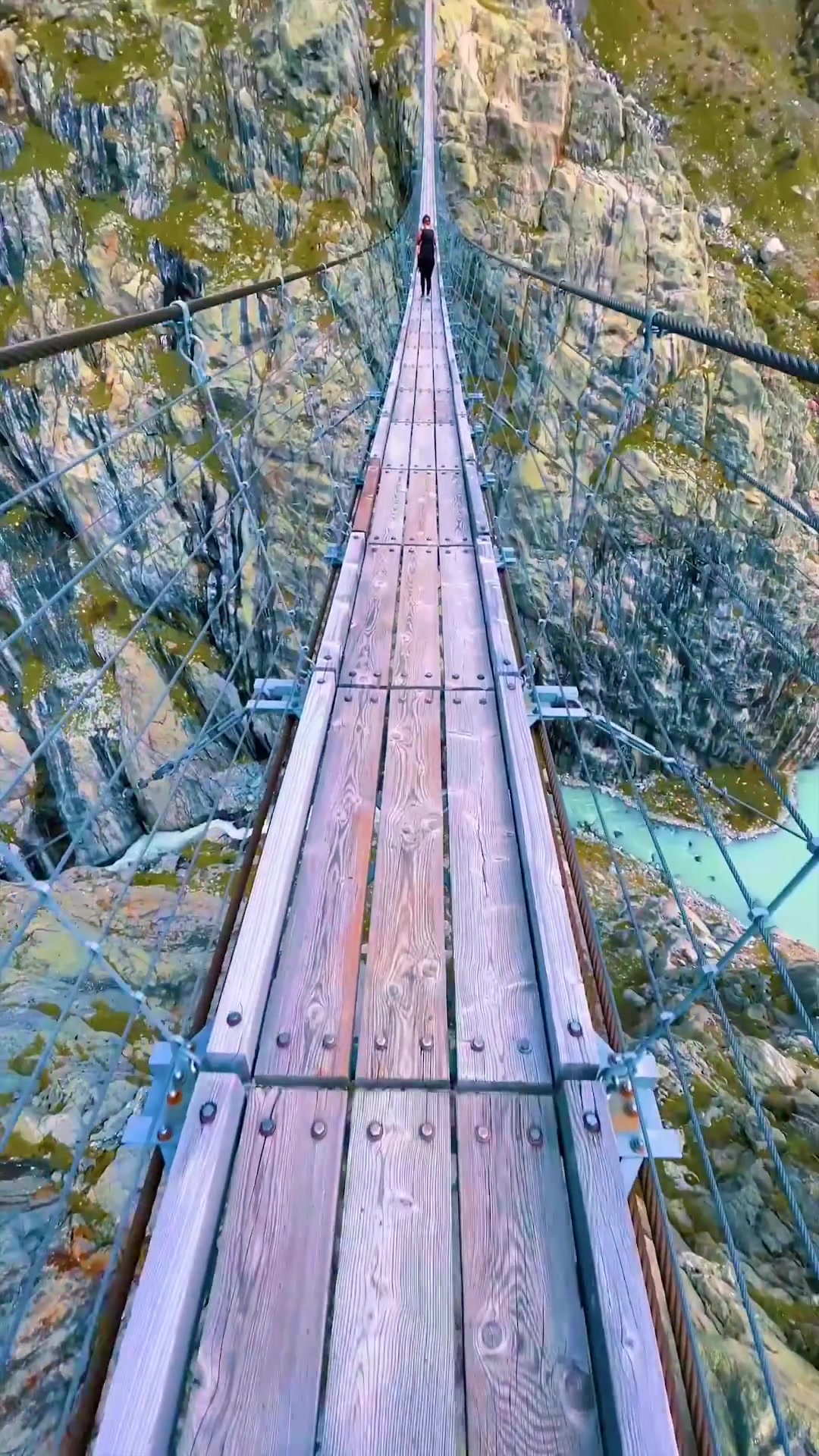
The fingers grip the railing, taking deliberate steps on the suspension bridge. The scenery is so extraordinary that the hiker pauses. The mountains loom; beneath the bridge’ span, a deep gorge gleams bright turquoise. To traverse this bridge is to strafe the edge of the world.
Architecting the Abyss
A suspension bridge is a feat of engineering. It's kept aloft by strong cables that stretch diagonally from the towers to the bridge deck, transferring the load to the anchorages. The deck itself is typically a roadway but on hiking trails, can be a narrow footbridge. The distinctive feature of a suspension bridge is its lightweight deck. This means the bridge can cover longer distances without needing intermediate supports. Suspension bridges stand out from other bridge types, like beam or truss bridges, due to their graceful curves and minimal disruption to the landscape. Because of this, they are often used in scenic areas, including the images from this video. To reach the end is to leave your anxieties suspended in the void.
How Bridges Make a Comeback
Interest in outdoor activities has surged, especially hiking. In the past several years, more people have ventured into natural settings. Part of this surge is due to the pandemic. The desire to explore wilderness has blossomed into a broader trend of outdoor recreation. That the video does not describe the exact locale does not limit its appeal. This suspension bridge could be anywhere from Utah's Zion National Park to the Sierra Nevada Mountains in Northern California. Watching this footage is enough to spark an interest in hiking.
The Vertical Walk
Balancing the Load
Cables and towers are critical to a suspension bridge's stability. The cables extend diagonally, supporting the deck's weight and transferring it to the towers. This entire system acts as one element. This results in a reduction of stress in the cables themselves and a balanced distribution of the loads.
Anchors in Solid Ground
The cables on a suspension bridge do not end at the towers. The cable continues past the towers and anchors into a solid foundation, transferring the bridge's weight to the earth. The anchorages are often out of sight, deep in concrete abutments. This hidden structure prevents the cables from slipping and keeps the bridge stable.
Bracing the Winds
Suspension bridges are built to withstand weather, including wind and snow. Because the deck is lightweight, it can flex in high winds. Thus, crossbracing is used to keep the deck stable and rigid. These braces are designed to withstand forces and keep the bridge deck aligned with the cables. As a result, suspension bridges can be surprisingly safe in extreme conditions, compared to other bridges.
Path Less Traveled
How to Start
The most important part of your first hike is Good Footwear: Traction is key. You’ll need sturdy shoes that provide stability and grip.
How to Keep at It
Choosing the Route: Begin with a hike that matches your fitness level. Don't be afraid to do light research into the trail before you go. Pace Yourself: Don't push yourself too hard. A steady pace will help you last the entire hike.
Come Prepared
Once you’re a regular hiker, Carry a Map: Whether on a phone or paper, a map is your best tool. Bring Water: Bringing enough water with you is essential in the event you get lost or make your hike longer than expected. In the event you need to make a detour, you’ll be glad for the extra water.
The View Makes the Trek
Keeping in mind the components of a suspension bridge — cables, towers, anchorages, and a stable deck — you’ll see that it truly is a feat of engineering. But for those willing to embark on a hike, the anxiety defies the suspension. The journey is a reminder of the world’s grandness.
Questions readers ask
What makes suspension bridges different from other types of bridges?
Suspension bridges stand out due to their lightweight decks and graceful curves. Unlike beam or truss bridges, they can span longer distances without intermediate supports. This design allows them to blend seamlessly with natural landscapes, making them popular in scenic areas.
How do suspension bridges stay stable, especially in windy conditions?
Suspension bridges use a combination of cables, towers, and crossbracing to maintain stability. The cables transfer the bridge's weight to the towers and anchorages, while crossbracing keeps the deck stable and rigid, even in high winds.
Are there any famous suspension bridges in the United States?
Yes, there are several famous suspension bridges in the U.S. Some notable examples include the Golden Gate Bridge in San Francisco and the Royal Gorge Bridge in Colorado. These bridges not only serve as transportation routes but are also iconic landmarks.
What should I consider when planning my first hike on a mountainous suspension bridge?
For your first hike, prioritize good footwear with sturdy traction. Research the trail to choose a route that matches your fitness level. Pace yourself and don't push too hard, especially on unfamiliar terrain.
What is the purpose of the anchorages in a suspension bridge?
Anchorage in a suspension bridge are the structures that secure the cables to the ground. They transfer the bridge's weight to the earth, preventing the cables from slipping and ensuring the bridge remains stable. These anchorages are often hidden in concrete abutments.
Why have suspension bridges become popular for hiking?
Suspension bridges have become popular for hiking due to their scenic appeal and the thrill of traversing a lightweight, flexible deck high above a gorge or valley. The surge in outdoor activities, especially during the pandemic, has also contributed to their popularity.
Related deep dives
Similar reads based on topic and creator.




Recent articles
Fresh deep dives from the latest Reels we unpacked.




Comments
Be the first to comment.