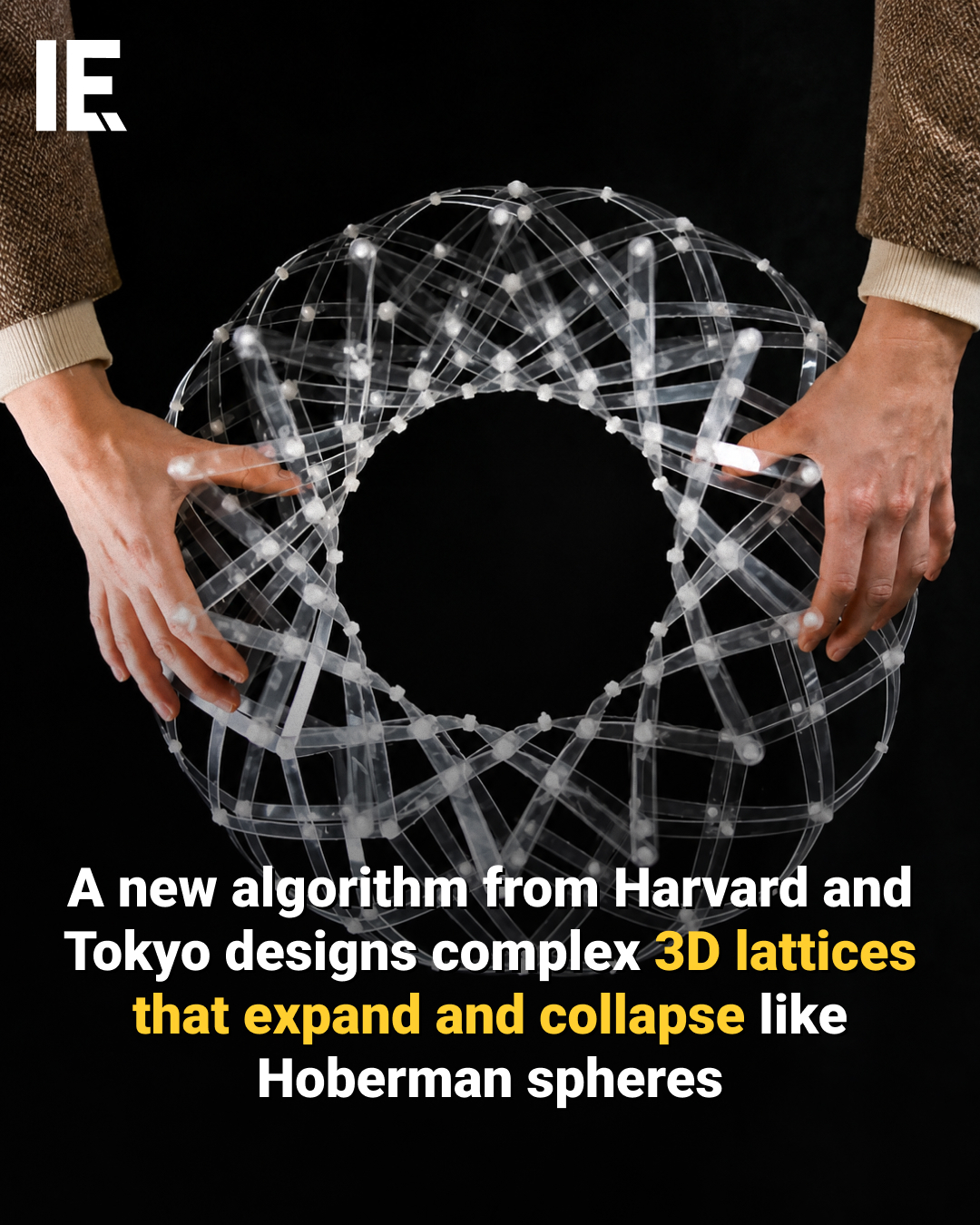
Hoberman Sphere Inspired: 3D Printed Lattices Responding to Motion
Creating origami-like constructions out of complex 3D lattices that collapse and unfold on command has been a longstanding fascination of engineers and designers alike. Researchers from Harvard and Tokyo joined this pursuit by developing an algorithm that makes this dynamic transformation a reality. The 3D lattice design is able to mimic the behavior of Hoberman spheres. Inspired by this algorithm, new 3D structures using this lattice can be dynamically manipulated. Spheres known as Hoberman’s spheres shrink as their edges seem to collapse. Now, similar responses happen in the unfolding of this new algorithm-designed lattice structure. Two hands are shown manipulating the lattice, the same way people might manipulate the edges of a Hoberman sphere.
The Rise of Programmable Matter
The new 3D lattice design is part of a growing trend in programmable materials. These are materials that can dynamically alter their shape, size, or other properties in response to external stimuli. Such materials have wide-ranging applications, from adaptive architecture to biomedical devices. The ability of the 3D lattice to expand and collapse mimics the behavior of Hoberman spheres, showcasing the potential for creating dynamic and responsive structures. Manipulating this lattice, especially in a physical, responsive way, might be a new direction for design. In the future, this algorithm could be used to design complex geometric structures, with an ability to transform and adapt to different environments.
Lattice Design
Hoberman Sphere Inspiration
The Hoberman sphere, named after its inventor Chuck Hoberman, is a collapsible sphere that can fold down to a fraction of its original size. It has long captivated both engineers and artists with its unique design. The 3D lattice design algorithm uses a similar principle to create structures that can dynamically expand and collapse.
Algorithm Development
- Harvard and Tokyo Research Team: A collaborative effort between Harvard and Tokyo developed a groundbreaking algorithm to design 3D lattices that can dynamically expand and collapse. This algorithm helps create complex, intricate structures that can adapt to different shapes and sizes.
- Flexible and Robust Structures: The algorithm creates flexible, robust structures that can be manipulated by hand. The structures can change their form without any loss of stability, making the design highly versatile.
Kinetic Behavior and Possible Applications
- Kinetic Motion: The 3D lattice design showcases kinetic motion, making it an exciting development in responsive materials. The ability of the design to expand and collapse mimics the behavior of Hoberman spheres. It is striking how the lattice design can move with fluidity as it transitions between expanded and collapsed forms.
- Energy Efficiency: The dynamic nature of these lattices offers potential benefits in engineering. The ability of the design to change shape allows for efficient use of materials and energy, making it a sustainable and cost-effective option for future construction.
- Architectural Fascination: The 3D lattice designs could lead to the development of buildings and structures that adapt to different environmental conditions. Future architects might incorporate this technology to create more efficient and responsive buildings.
A New Dimension in Construction
Dynamic Adaptation
The 3D lattice designs show a dynamic adaptation to various forces. The algorithm allows for these structures to be manipulated easily and in a variety of ways. This opens up the possibilities in designing and constructing buildings that can withstand various types of forces, whether through wind or mechanical motion. This makes them resilient and ready for any shift.
Responsive Mechanisms
The way the lattices respond to motion is an exciting feature. The concept is similar to how origami works. Just as a piece of paper can be folded and unfolded to create different shapes, the 3D lattice responds to forces applied to it. The algorithm makes it possible for the lattice to expand and collapse without any loss of stability, making it a highly versatile and responsive structure.
Making It Happening
Buying and Testing Lattice Designs
- Accessing the Algorithm: Future engineers and designers might want to utilize the algorithm. The algorithm can be purchased for access on design software. As more products and software are incorporated into design tools, the potential for widespread use becomes increasingly likely.
- Experimenting with the Lattice: To get hands-on experience with 3D lattice designs, engineers can use the algorithm to create their own models and test their dynamic properties. The lattice can be manipulated by applying controlled forces and observing how it responds.
Thoughts on Large-Scale Implementation
- Testing Materials: Before implementing the design on a large scale, it is essential to conduct thorough tests on the materials used. The design can be made using various materials, and engineers must ensure that the chosen material can withstand the forces applied to it.
- Adaptive Designs: Large-scale implementation of 3D lattice designs requires careful planning and consideration of the environmental factors that may affect the structure. Engineers can use the algorithm to create designs that adapt to various environmental conditions, ensuring that the structure remains stable and resilient.
Lattice Designs in the Dynamic Future
With the new possibilities opened up by the lattice design algorithm, there are exciting times ahead. The ability to produce complex, dynamic structures that expand and contract will see its applications spread across design and engineering. With possibilities ranging from adaptive architecture to automated technologies, the potential of the lattice design algorithm is a truly fascinating new horizon.
Questions readers ask
What exactly is a Hoberman sphere and how does the 3D lattice design mimic it?
A Hoberman sphere is a collapsible sphere that can fold down to a fraction of its original size. The 3D lattice design mimics this by using an algorithm that allows the lattice to expand and collapse in a similar manner, responding to motion and manipulation much like the Hoberman sphere does.
How does the algorithm developed by the Harvard and Tokyo team work?
The algorithm designed by the Harvard and Tokyo team creates complex 3D lattices that can dynamically adapt their shape and size. It allows for the creation of flexible and robust structures that can be manipulated by hand without losing stability, mimicking the behavior of Hoberman spheres.
What are some potential applications of this 3D lattice design?
The 3D lattice design has wide-ranging applications, from adaptive architecture to biomedical devices. Its ability to expand and collapse makes it useful for creating dynamic and responsive structures that can adapt to different environments, offering potential benefits in engineering, sustainability, and cost-effectiveness.
Can the 3D lattice design be used in everyday objects, or is it limited to specialized applications?
While the 3D lattice design has specialized applications in fields like architecture and biomedical devices, its potential extends to everyday objects as well. The dynamic and responsive nature of the design could lead to innovative products that adapt to user needs, making it a versatile technology for various industries.
How does the dynamic nature of these lattices contribute to energy efficiency?
The ability of the 3D lattices to change shape allows for efficient use of materials and energy. By adapting to different forms, these structures can optimize their use of resources, making them a sustainable and cost-effective option for future construction and design projects.
Is the 3D lattice design currently available for public use or is it still in the research phase?
The article does not specify the current availability of the 3D lattice design for public use. It is likely still in the research and development phase, as it mentions future possibilities and potential applications, suggesting that more work is needed before it becomes widely accessible.
Related deep dives
Similar reads based on topic and creator.




Recent articles
Fresh deep dives from the latest Reels we unpacked.




Comments
Be the first to comment.