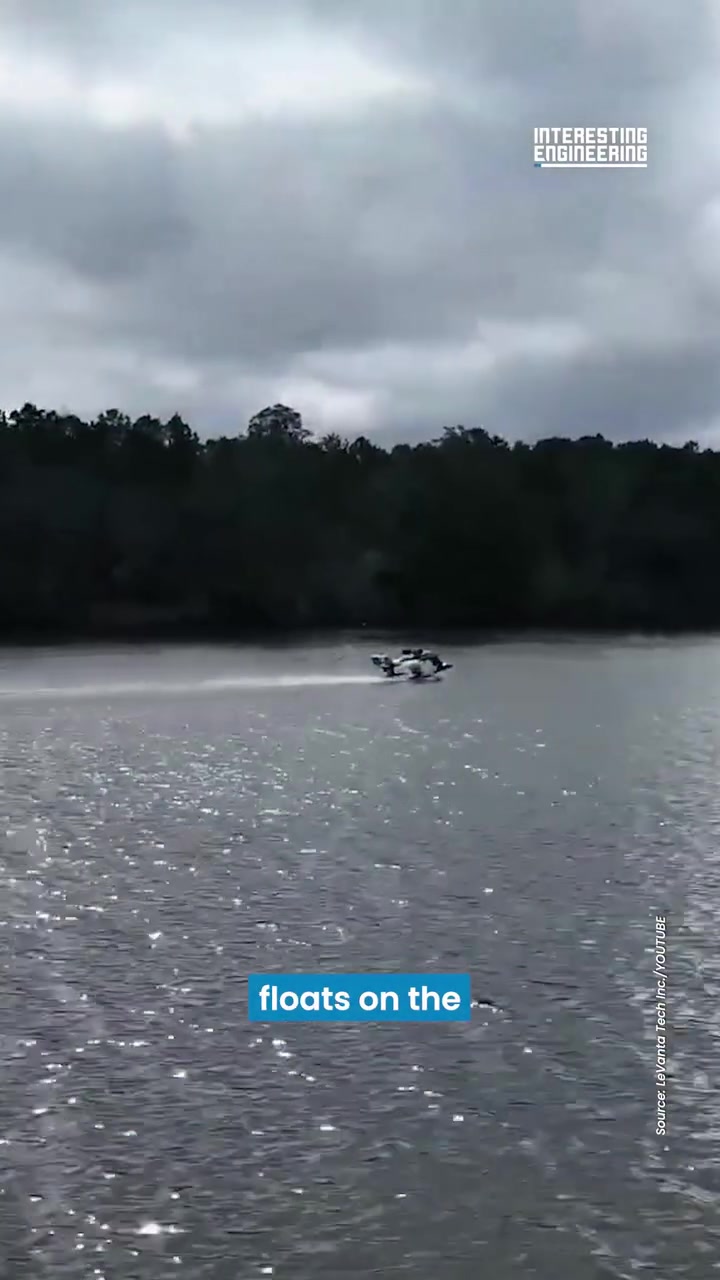
Are you looking for a boat that can operate completely on its own across vast distances, hunt submarines, and even fly short distances? Look no further than HALIA, a unique and efficient autonomous boat developed by the American startup, Levanta Tech.
The Goldilocks Autonomous Boat That Can Float, Skate, and Fly
HALIA is well-disguised, weighing in at 18 pounds and designed to be barely visible, standing upright a mere foot above water level. During most of its trek, it idle-sits on the ocean surface for prolonged periods, like a traditional drone. When it's time to move, HALIA uses its three hydrofoils and raises its hull clear of the water. This special mechanism allows it to skate across the surface until it reaches flying speed. Once airborne, it can take off for short distances before touching down on the water. The drone can travel 30 days on station and reach 20 nautical miles on a full charge. This capability bridges the gap between traditional drones and previously existing autonomous boats. Aerial drones can reach a specific ocean patch quickly, but they need to return to base within hours. Surface drones, on the other hand, can stay for months, but they lack speed. HALIA combines the best of both worlds. An autonomous boat with these abilities solves two major problems. Firstly, aerial drones burn through fuel so fast that they need to return after just a few hours, but HALIA can stick around for weeks on end. Secondly, it eliminates the need to drop heavy sonar buoys (sonaboys) in the path of suspected submarines. HALIA is equipped to lower a sonar from the belly, listen, then fly to get ahead of the contact. The military has taken note of HALIA. The Air Force and Navy have already funded the development of the boat through SBIR contracts, and Ukraine has agreed to test the boat last October. Levanta has a prototype in the water, which has demonstrated a transition from floating to airborne status in under 60 seconds. The most intensive phase of the mission for HALIA — moving fast enough to lift its hull out of the water and into hover mode to leave the ocean surface — is a mere 55 seconds, 5 seconds off their 60-second threshold. The rest of its flight-time travel and engineering toughens its hull and parts.
Surveillance and the Future
HALIA represents a turning point in military surveillance. Currently, submarines are tracked using sonoboys that need to be deployed and then retrieved. HALIA eliminates this need and allows multiple missions to be conducted. The sonoboys that are traditionally used on these missions are a single-use item that drop and expire on the ocean floor. HALIA is capable of lowering a sonar to the surface, listen to the area, relay the data, and then move on while the data flows to the remote pilot. This makes it an efficient and effective tool for submarine tracking.
Range and Payload
The brilliant design of this autonomous boat also allows it to travel 20 nautical miles, a distance standard for military missions, and done within high precision timing.
**Skimming: HALIA's Unconventional Propulsion
HALIAs design uses skimming to zip across the ocean, levitates and propels the boat. The jet propels even higher and propels the hull away from the water, capable of using extended periods of time at sea. During this phase, the boat is able to idle-sit for prolonged periods of time, which vastly conserves energy.
The HALIA Startup Charge
Levanta's HALIA starts a dramatic change in autonomous vehicles.
What’s Next For HALIA?
As Levanta develops new models and versions of HALIA, consider the great potential for autonomous watercraft as a whole. HALIA could not have been deployed without the help of SBIR grants and therefore Levanta hopes to attract more entrepreneurs and startups. This autonomous boat is a harbinger of the development technological innovation. This start up is one of the first of its kind with its ability to float, skate, and fly. If HALIA sees success, other companies will make similar boats for different markets. If the company is successful, the autonomous boat market will grow.
Questions readers ask
How does HALIA transition from floating to flying?
HALIA uses three hydrofoils to lift its hull out of the water and reach flying speed. Once it's moving fast enough, it can take off for short distances before touching down on the water again. The transition from floating to airborne status takes under 60 seconds.
What makes HALIA different from traditional drones and autonomous boats?
Traditional aerial drones can quickly reach a specific ocean area but need to return to base within hours. Surface drones can stay for months but lack speed. HALIA combines the best of both worlds, able to stay on station for up to 30 days and travel 20 nautical miles on a full charge.
How does HALIA help in submarine tracking?
HALIA can lower a sonar from its belly to listen for submarines, then fly ahead to maintain contact. This eliminates the need for heavy sonar buoys and allows for more efficient and effective tracking. HALIA is a reusable tool that can conduct multiple missions, unlike traditional sonoboys which are single-use and expire on the ocean floor.
What are the military applications of HALIA?
The military can use HALIA for ocean surveillance and submarine tracking. The Air Force and Navy have already funded its development, and Ukraine has agreed to test the boat. Its ability to stay on station for extended periods and travel quickly makes it a valuable tool for military missions.
How does HALIA's design allow it to stay on station for long periods?
HALIA is designed to idle-sit on the ocean surface for prolonged periods, conserving energy. When it needs to move, it uses its hydrofoils to lift its hull clear of the water and skate across the surface until it reaches flying speed. This efficient design allows it to stay on station for up to 30 days on a full charge.
What is the most intensive phase of a HALIA mission?
The most intensive phase of a HALIA mission is the initial acceleration to lift its hull out of the water and into hover mode. This phase takes around 55 seconds, during which HALIA moves fast enough to leave the ocean surface and transition to flight.
Related deep dives
Similar reads based on topic and creator.




Recent articles
Fresh deep dives from the latest Reels we unpacked.




Comments
Be the first to comment.