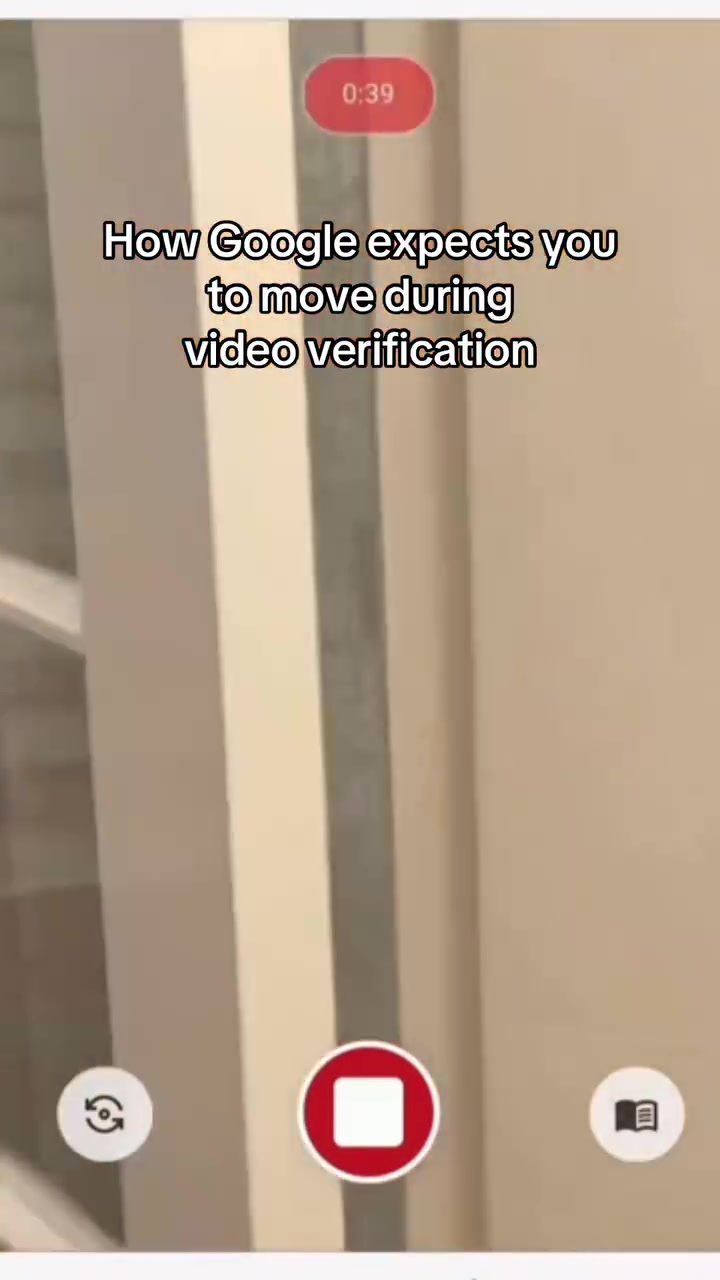
When navigating online services, users are met with an array of security measures. Few are as familiar or fun to complete as Google's video verification process. The process starts off simple and becomes about as strange as it seems to be in the short clip that satirises it.
Humor Out of Frustration
A quick video shows the process is both complicated and often humorous. This particular method is used to confirm that the person interacting with a service or device is indeed a human being. The slight issue for users is that the instructions are anything but clear. Even when being followed to the letter, they can often seem ludicrous. The logic behind the process is to prevent automated bots from accessing the service. Users show the way that bots cannot operate, with the overall process serving to verify the user's humanity. Whether the overall effectiveness of the system is worth the awkwardness remains to be seen. Still, it’s safe to say that the creator of the video feels, at the very least, that the process could be better explained. The video titled "Google Verification" ends on an abrupt and humorous note with a dog on whose nose an insect sits. This further serves as a reminder of how strange the verification process can be. The video – which captures the awkwardness of following a user verification process which begins with a person looking into the camera and mimicking a series of seemingly random movements that are clearly intended to verify a person’s humanity – contrasts two different interpretations of what it means to "be human" in the eyes of a tech company algorithm.
A Wider Truth
Google's video verification process is not unique. It is, however, part of broader push in technology to outpace the tech-savvy automations who would exploit or abuse their systems. This particular system was designed to combat bots from accessing the services meaning that some legitimate users are going to be confused in the process. The video captures the essence of this by contrasting the expected behavior—one that is clear and easy to follow—and the reality of the situation—an often-comical process to make sure that the individual is in fact human. The way it is captured and shared for humor reflects the now common ability for social media users to share and consume these moments. Other companies are likely to have similar processes and the video doesn’t address whether others have a better strategy. The creator is using the process as a commentary on the tech industry’s over-reliance on verification and security processes. Video verification is not only used for person verification, it’s also used to confirm that a user is in fact where they purport to be. Proof of location, an important safeguard in the tech world, can be confirmed by surveying a scene or capturing detail in the background during the video. Verification is necessary for the tech industry but the methods can be confusing.
Rough Hands and Shaky Cameras
The video does a great job of highlighting the awkwardness of following Google's verification process. Though the process starts with a simple prompt, it quickly continues to become more complicated. The visual cues are indicative of this. While the initial movements are simple and the user is reproducing them accurately, the overall task quickly becomes more difficult. As the prompts are followed, the person begins to look around and their confidence wanes. Their movements become more jerky and they start moving their hands in an exaggerated manner. The visuals show the camera is meant to be held in one hand while the other is used to make these movements. The participant is slightly hesitant to move. This is because it’s difficult to hold a phone and follow prompts while holding a steady gaze. The instructions make sense but there are so many of them that it becomes an odd, detailed dance. The purpose of video verification is to demonstrate that the user is a real person. This can be done in a few ways, but one of the more common methods is to ask the user to make distinct movements that are difficult for a bot to replicate. The user's awkwardness at being required to follow a series of prompts by a robot voice is the main humor. The quick verifications are part of the tech industry and are commonplace. The robot voice and the gestures are meant to be an easy-to-understand process. The video highlights that this process is anything but simple and easy to follow.
Motions That Prove Humanity
For users to complete the video verification process, they need to perform a series of movements. Each movement is meant to be done in a precise manner, but it’s often difficult for the user to understand exactly what they need to do. It’s more difficult to watch yourself on the screen and follow along. The creator highlights the absurdity of these movements with a series of comedic gestures. The instructions are intended to be straightforward, but as a user, they can seem confusing. The instructions are difficult to follow and the user becomes increasingly awkward as they try to relax. The video ends with the canine protagonist taking on the verification process. The final scenes show a dog with a butterfly sitting on their nose.
Google's Humanity Algorithm
Google verification has become a common practice, but it's not always clear what they are trying to measure. The video raises an interesting question: what does it mean to be human in the eyes of a verification process? The answer may be difficult to define. The video does an incredible job highlighting the awkwardness and confusion that users often experience during verification. Google’s verification process is meant to be easy to follow and the movements are simple but are they as simple as the process suggests? The purpose of the process is to allow users to verify their human identity. This can be done in a variety of ways, but one of the more common methods is to ask the user to make movements. These movements are meant to be difficult for a bot to replicate.
A Few Simple Prompts
Users may be able to replicate the process in a crowd or interact with it with a bit of practice. The movements the voice prompts through are often strange and uncomplicated. There is a noticeable difference between the expected behavior and the reality of the situation. In the visual, the process has a series of prompts, each of which makes the user look around while holding a camera. Each of the steps is simple. The user is shown holding their camera in one hand while making a series of movements. The user is instructed to watch a series of prompts these have to be followed. The process is straightforward but the user becomes increasingly awkward as they try to follow the prompts. The video ends with the creator’s dog successfully completing the verification process. The final scene shows a dog with a butterfly sitting on their nose.
The Unexpected Climax
The video concludes on an unexpected note. As the dog with a butterfly on its nose sits on the couch, it serves as a humorous contrast to the awkwardness users often experience during verification. The final image leaves a lasting impression that the whole process is strange and nonsensical. The dog is enjoying its time and the person is attempting to relax and move their hands in a normal fashion. The video highlights how bizarre the process is, with the ending where the dog successfully completing the verification process by relaxing on the couch.
Questions readers ask
Why does Google use such a strange verification process?
Google's video verification process is designed to distinguish humans from automated bots. By asking users to perform random movements, Google aims to confirm that a real person, not a bot, is accessing their services. However, the process can feel awkward and confusing, leading to frustration among users.
What is the purpose of the Google video verification process?
The purpose of the Google video verification process is to verify that the user is a real human being and not a bot. This is achieved by having the user mimic random movements that are difficult for automated systems to replicate, ensuring that the user is genuine.
How does the video verification process work?
The video verification process starts with simple instructions, but it can quickly become complicated. Users are asked to perform a series of random movements while being recorded, such as tilting their head or moving their hands in specific ways. The process is designed to be something that a bot cannot easily mimic, thus verifying the user's humanity.
Can other companies use a similar video verification process?
Yes, other companies likely use similar video verification processes to prevent bots from accessing their services. The video highlights the common frustration users feel when dealing with these processes, but it doesn't address whether other companies have better strategies for verification.
What happens if I fail the Google video verification process?
If you fail the Google video verification process, you may be prompted to try again or use an alternative method of verification. It's important to follow the instructions as closely as possible, even if they seem strange, to ensure successful completion. If you continue to have issues, contacting Google support may be necessary.
Recent articles
Fresh deep dives from the latest Reels we unpacked.



Comments
Be the first to comment.