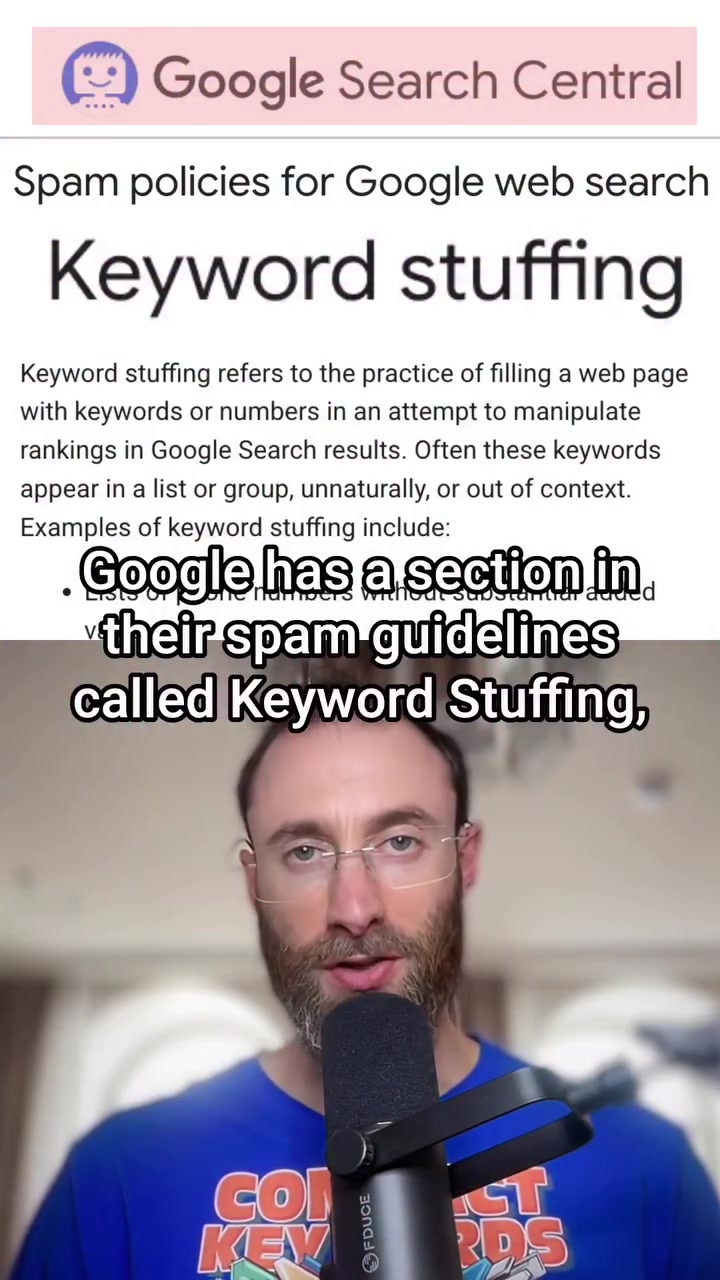
Keyword stuffing, according to Google, is "the practice of filling a webpage with keywords in an attempt to manipulate rankings." It's a common SEO tactic, especially problematic on sites like Chewy, where the term "dry dog food" was used 87 times, including 19 times in a single paragraph. In 2025, Chewy's organic traffic spiked, reaching 98,000 clicks a month from Google, but then plummeted to 21,000. Chewy's story spotlights the risks of keyword stuffing and the importance of following Google's spam policies. Despite using a high-domain authority, Chewy does not even appear on the first page of Google when searching for "dry dog food."
The Anatomy of Keyword Stuffing
Keyword stuffing involves saturating a webpage with target keywords to boost search engine rankings. Chewy's dry dog food page exemplifies this tactic, with "dry dog food" repeated 87 times. That's an excessive amount of keywords in a single paragraph — 19. This is intentional overuse to manipulate site rankings, making the content read unnaturally. Keyword stuffing is a shortcut to higher rankings, but it violates Google's spam policies and can lead to penalties. The most critical locations for keywords are the page title, URL, and H1. Chewy missed out on having it in their URL. The text on the page is crucial for that. Microsoft's Bing and other search engines have similar rules against keyword stuffing, making it a universal SEO no-no. Identifying and avoiding keyword stuffing is key to maintaining a website's health and search engine rankings.
Why It Matters: SEO Shifts and the Rise of Authority
Big brands like Chewy sometimes rely on their established domain authority, which is a key factor in Google's ranking algorithms. Authority is a weighted score between 0 and 100, representing a domain's strength. Chewy's authority score puts them at 78 out of 100. Authority influences a site's ability to rank well. Big brands tend to be unseatable due to their authority. SEO pros recommend investing in backlinks that pass referral traffic, which builds authority. However, Chewy lost their spike in rankings and traffic, dropping from 98,000 to 21,000 clicks a month. This loss was a result of using keywords unnaturally. Use your keywords sparingly and naturally.
What's at Risk?
Chewy's Case Study
Chewy, an e-commerce giant in the pet supplies industry, serves as an example of the risks involved in keyword stuffing. In 2025, Chewy's organic traffic spiked, reaching 98,000 clicks a month from Google but then plummeted to 21,000. Chewy's website was penalized for keyword stuffing. Chewy's authority is 78 out of 100. Their rankings and organic traffic spiked for a few days. Chewy's rankings dropped after a few days. In June 2025, they were at 98,000 clicks a month from Google. Now they are at 21,000 clicks a month. They don't show on page 1 of Google for dry dog food.
The Risk of Poptropica
On the other extreme, Poptropica's keyword approach also shows the risks of stuffing. In attempts to boost rankings for their "dry dog food" page, they've chosen a different path. Avoiding keyword stuffing by not overusing their target keyword. Google's spam policies are clear—excessive keyword usage, especially in unnatural ways, can lead to penalties. Google searches for Poptropica's site are not ranking on the first page of the search engine.
Targeted Practical Guidance for the Ranking-Obsessed
Effective SEO focuses on strategic keyword placement and high-quality, natural content. The following guidelines can help you avoid keyword stuffing and improve your website’s search engine rankings.
- Strategic Use of H1: Use your main keyword once in the H1 tag. Only one H1 tag per page.
- Page Titles: Incorporate your main keyword in the title tag.
- Meta Descriptions: You can use keywords in meta descriptions, but don't be excessive with it.
- Images: Add relevant keywords to your image alt text.
- Links: Use only your most important keyword for internal and external links.
- URL Slug: Make sure your main keyword is in the URL.
- Body Content: Use the keyword 1-2 times, or more if it is a longer post. Make sure your keyword density is between 1-2%.
- Footer: Include keywords in the footer.
Questions readers ask
What exactly is keyword stuffing and why is it problematic for websites like Chewy’s?
Keyword stuffing is when a webpage is crammed with target keywords to artificially boost search engine rankings. For instance, Chewy used 'dry dog food' 87 times on a single page, which is way too much. This kind of tactic makes the content read unnaturally and violates Google's spam policies, leading to penalties and a significant drop in organic traffic, like what happened to Chewy. It can also hurt user experience and make the site less trustworthy.
How does Google detect and penalize keyword stuffing?
Google has sophisticated algorithms that can detect unnatural keyword usage. When a page is stuffed with keywords, it often reads awkwardly and feels manipulative. Google considers this a violation of its spam policies, leading to penalties. These penalties can cause a dramatic drop in search engine rankings, as seen with Chewy, where their monthly clicks from Google plummeted from 98,000 to 21,000 due to excessive use of 'dry dog food.'
Can I use keywords as many times as I want as long as I make the content readable?
While readability is important, there's no exact number of times you can use a keyword without risking penalties. The key is to use keywords naturally and sparingly. Google's algorithms can still detect overuse, even if the content seems readable. It's better to focus on creating high-quality, engaging content that naturally incorporates keywords.
What are the most important places to include keywords on a webpage?
The most critical locations for keywords are the page title, URL, and H1 tag. These elements carry significant weight in search engine algorithms. Chewy, for example, missed out on including 'dry dog food' in their URL, which could have helped their rankings. The text on the page is also crucial, but it should be used naturally and not overstuffed.
What is domain authority and how does it relate to keyword stuffing?
Domain authority is a score between 0 and 100 that represents a website's overall strength and credibility. Chewy, for example, has a domain authority of 78 out of 100. Even with a high domain authority, keyword stuffing can lead to penalties and a significant drop in rankings. Domain authority can help a site rank well, but it doesn't protect against the risks of keyword stuffing.
What should I do if I suspect my site has been penalized for keyword stuffing?
If you suspect your site has been penalized for keyword stuffing, the first step is to review your content and remove any excessive or unnatural keyword usage. Ensure that your keywords are used sparingly and naturally throughout the content. After making these changes, you can submit a reconsideration request to Google, explaining the steps you've taken to fix the issue. It's also a good idea to focus on creating high-quality, engaging content that naturally incorporates keywords.
Recent articles
Fresh deep dives from the latest Reels we unpacked.




Comments
Be the first to comment.