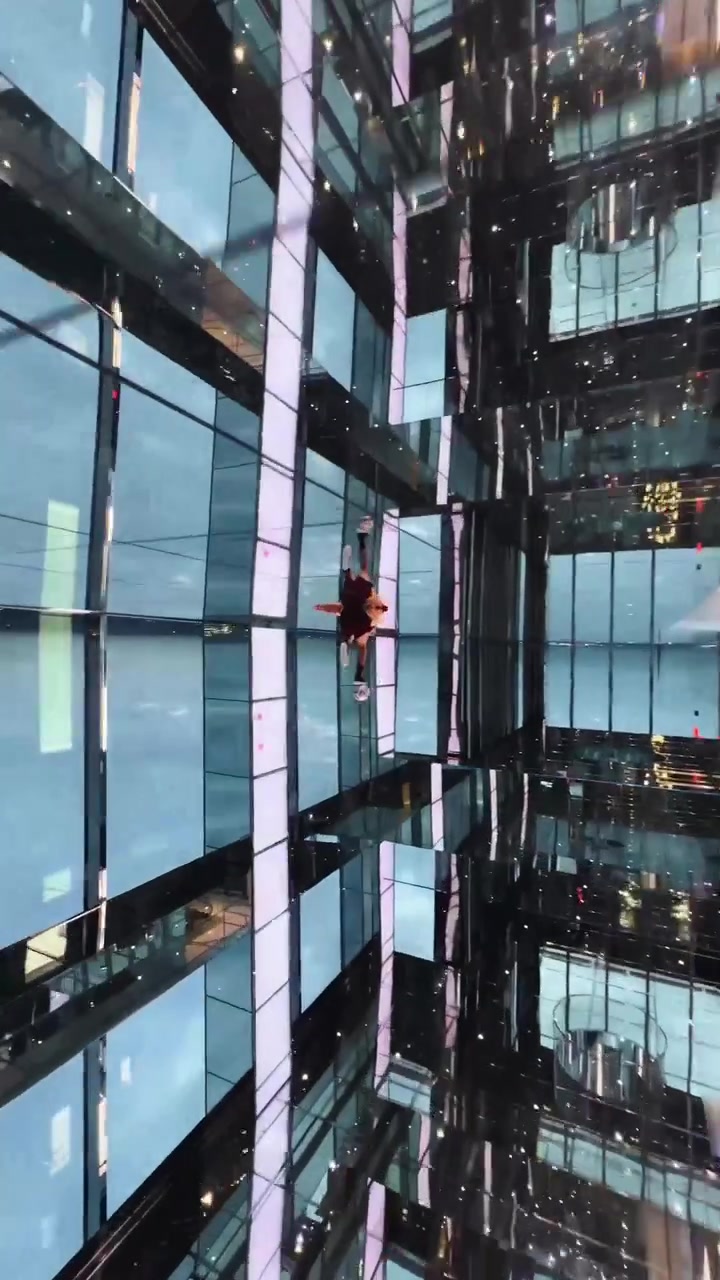
A person walks on the ceiling of a modern building, seemingly giving gravity the slip in a dynamic optical illusion, quick and catchy like a familiar chant. This glass floor illusion relies not on special effects or editing tricks but on an ingenious use of perspective and architectural design.
How Glass Floor Illusions Work
The illusion depicted in the video utilizes a glass floor and the surrounding architectural design to manipulate the viewer's perception. A reflective floor in the room provides the crucial mechanism. The subject walks on a designated path running perpendicular to the actual floor. The reflection of the person walking on the glass floor creates a "mirror" image below, and the overall effect of the role of light and perspective makes the lower image look like the true version of the person walking on the ceiling. The building's modern design and angular architecture play a role as well. The reflective surfaces and glass panels create additional reflections and distractions. Viewers have to actively engage with the space and the structures around the illusion to really get the effect. And as the video transitions, there's a unique blend of vibrant design elements of the buildings that provide additional background visual effects. The result is a disorienting, almost surreal experience. The viewer's brain struggles to reconcile the visual information, creating an illusion that defies gravity. The person appears to be walking on the ceiling, while in reality, they are walking on a clear, reflective floor.
How Perception Tricks You
Our brains are adept at filling in gaps and making assumptions based on visual cues, particularly when confronted with unfamiliar or disorienting images. Glass floor illusions complement other illusion trends. Mirror mazes and 3D projection technology highlight the human desire for experiences outside of the norm. Perceptual illusions that change the way a viewer sees the world are trending across social media. They provide an escape from the everyday world, and prompt viewers to examine their assumptions about how they perceive their surroundings. A video of a person walking on a glass floor illustrates how quickly our brains can be tricked. The person in the video uses natural movements, and the reflection plays off existing architectural features, making it easy to believe the illusion is real.
The Art of the Stunt
Why Reflective Surfaces Create Magic
The strategic placement and use of reflective glass surfaces create a complex interplay of light and reflections. This amplified distortion plays a powerful role in augmenting the brain's tendency to focus on what seems more "right." The interplay between the reflections and the actual space can create an immersive and enchanting experience. As the subject walks, their mirrored image appears to seamlessly blend into the surroundings. The reflections and shadows cause the brain to "see" a continuous and indirect visual path upwards. These reflections make the perception of upside-down more convincing.
How Natural Movements Heighten the Effect
The person in the video executes a routine that isn't "performing magic," but instead, appears to be straightforwardly navigating their world upside-down. The effect is heightened by the person's ordinary movements. Natural actions like walking feels more realistic and less contrived, making the illusion more convincing. This play-acting can even enhance the perception of lies, especially with the visual distraction. People may look at it and think to themselves, "How in the world do they do that?" However, the answer is a combination of architectural design and clever angles.
The Role of Light and Shadows
Light and shadows in the room play a crucial role in reinforcing the illusion. The reflections and shadows on the glass floor distort the viewer's perception. The person's movements, including their shadows, create an illusion that seems to contradict the true nature of the situation. The reflective properties of the glass floor also mimic the appearance of a solid surface, and the shadows further reinforce the illusion of a solid surface underneath.
Design Features That Provide Distractions
Design elements such as angular roofs, glass walls, and even greenery distract the viewer and heighten the effect of the illusion. The illusion of possibility becomes mixed up with the visual complexity, which creates a sense that a person might actually be walking on the ceiling. The viewer can't help but engage with the building and experience the effect of the illusion.
How to Create Your Own Glass Floor Illusion
Your space, whether it be a modern building or a custom stage set, needs some key features to create a convincing glass floor illusion.
- Glass Floor: Ensure that the glass floor is reflective. The increased reflection aids in heightening the depth and convincing nature. Weave the glass floor into the building's overall design to create a seamless look and provide the illusion of an uninterrupted path on the “floor.”
- Light and Contrast: Master the play of light and contrast. Soft lighting makes the glass floor look more distinct, and harsh contrasts tend to fade the illusion.
- Reflective Surfaces: Incorporate strategic installations of reflective spheres, and mirrors to enhance the illusion. These reflect the glass floor illusion further and can be changed or moved to provide an ever-changing experience.
- Dynamic Movement: The more natural and straightforward the movements of the subject are, the more convincing the illusion will be. Small movements and gestures that humans will see can be used, and they play a crucial role in heightening the magical illusion.
Questions readers ask
How do glass floor illusions work?
Glass floor illusions use a combination of reflective surfaces, strategic lighting, and architectural design. The person walks on a clear, reflective floor, and their reflection creates the illusion of walking on the ceiling. The building's design, with its angular architecture and reflective panels, enhances this effect by providing additional reflections and visual distractions.
What role does the building's design play in the illusion?
The building's modern design, with its reflective surfaces and glass panels, is crucial. These elements create multiple reflections and distractions, making it harder for the viewer to distinguish the real from the reflected image. The overall effect is a disorienting, surreal experience that challenges the viewer's perception of gravity.
Can anyone create a glass floor illusion at home?
Creating a glass floor illusion at home would be challenging but not impossible. You would need a clear, reflective surface and a specific architectural setup to manipulate light and reflections effectively. Additionally, you'd need to consider the overall design and lighting to achieve the desired effect.
Why does the illusion work on our brains?
Our brains are wired to fill in gaps and make assumptions based on visual cues, especially when confronted with unfamiliar or disorienting images. The glass floor illusion plays into this by presenting a scenario that seems to defy gravity, making our brains struggle to reconcile what we see, thus enhancing the illusion.
Why are these types of illusions trending on social media?
Perceptual illusions like the glass floor illusion are trending because they offer a unique and engaging experience. They challenge our assumptions about how we perceive the world, providing an escape from everyday life and prompting viewers to question their perceptions.
How do natural movements enhance the illusion?
Natural movements make the illusion more convincing because they are familiar and expected, making it easier for the viewer's brain to accept the illusion as real. The person in the video uses ordinary walking movements, which helps to create a seamless and believable effect.
Related deep dives
Similar reads based on topic and creator.


Recent articles
Fresh deep dives from the latest Reels we unpacked.




Comments
Be the first to comment.