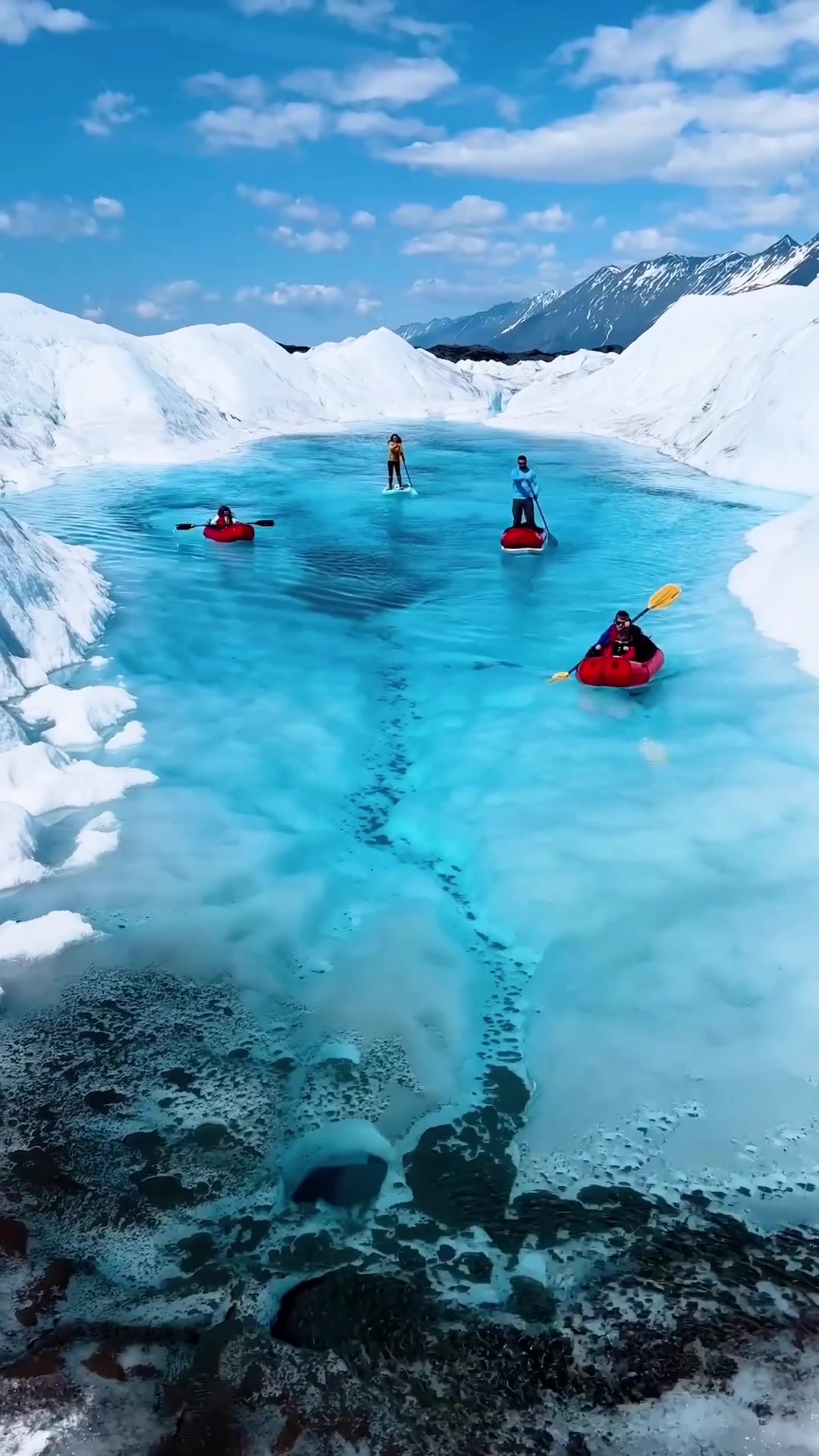
The blue waters of a glacial lake are mirrored against snow-covered mountains and icy formations. The scene could be a painting — except that's not a painting, it's a scene for kayaking. Drifting down this pristine environment has become a summer adventure.
The Kayaker's Frozen Playground
Kayaks, expansive glaciers, and uncharted territories — this is not a scene from the North Pole. This is an actual experience. Glacier kayaking is a unique blend of outdoor adventure, nature immersion, and a leisurely paddle through the tranquil waters of a glacial lake. Kayakers navigate through the pristine waters, maintaining a distance from nearby glaciers to ensure their safety while witnessing the natural beauty that unfolds. Pristine glacial lakes have transformed such adventure paddling into a highly memorable and popular experience. These kayaks are designed to be lightweight and strong enough to endure the journey. The action offers an intimate connection with nature and a unique perspective on glacial landscapes. Locals believe that the experience allows them to appreciate the delicate beauty of glacial environments. The journey involves navigating through crystal-clear waters, providing a glimpse of biodiversity beneath the surface. The blue waters themselves are formed by water melting from glaciers, and the journey to get there might be challenging, but it's certainly worth it. The inherent peace and lack of noise give this activity a much different vibe from its adrenaline-junkie counterparts, such as white-water rafting.
Selling Glacier Kayaking to the World
The increasing popularity of eco-tourism has made glacier kayaking a popular adventure sport. As the world becomes more environmentally aware, more folks want to go out and see what they can before it's gone. With travel and adventure sought by many, glacier kayaking will become more prevalent — this is a fact that is easy to see, especially since the activity revolves around cooler landscapes. With warmer-than-normal temperatures recording across the U.S., Glacier National Park — a mecca for glacier kayaking — is seeing unprecedented tourist traffic. Glacier kayaking is not only about the thrill of adventure but also about raising awareness for its environmental impact. Glaciers are deteriorating worldwide, and painters' brushstrokes are becoming less frequent on a slow-to-change canvas. For the kayaks concerned about this, glacier kayaking has become a way of life, but it's not just about the thrill; it's also about the beauty of the environment. Probably most importantly, this offers a lesson in the urgency of sustainability — that's not much fun to learn even with a blue glacial backdrop. Wearing gravel brakes and over sizing the boat, glacier kayaking is both a challenge and an adventure fit for the "active sightseer."
The Kayak
The kayak is a core feature of this kind of experience. Two devices connected by their stylist are used in this exercise: kayaking and paddleboarding. Some kayaks of the traditional style have a closed deck and a cockpit. Other kayaks are open-top and sit-on-top. They generally range from 5 to 10 feet (1.5 to 3 meters) in length and have a flat bottom, while others have a center keel and skeg or rudder for stability. Kayaks can be designed for individual paddlers or tandem paddlers. The lake kayaks are a specialized model of kayaks. Kayaks range in price from $1,000 to $3,000, depending on the style. The paddleboard consists of a board, a leash, and a paddle. The kayak is more challenging to maneuver than the paddleboard. The paddleboard is more stable in the water, and the kayak can go faster. Cruising along a glacier puddle may seem a fun activity for most people, but the activity can get more involved, especially if you are starting gliding your kayak in the icy cold fjord water. The kayak is used to explore the icy water, especially in the remote unexplored areas. The kayak is equipped with additional features, including driftwood for extra buoyancy and safety harnesses or extra life jackets.
The Glacier
Some glaciers are bigger than the country itself. The glaciers that are accessible for kayaking range in size and the environment varies from deep fjords to clear bodies of water. Glaciers do not exist in isolation but are in chains fed by snowfall upstream. Glaciers flow from higher elevations to lower elevations through gravity and their own weight. Glaciers are grounded on the land at their base, and the object’s gradient causes it to flow downhill. There are two types of glaciers — continental and alpine — and they can cause the ice and snow to form. The name glacier comes from the French word “glace,” which means ice. Fjord-glaciers are the most common glaciers associated with glacier kayaking. These glaciers are characterized by their calm water and carry icebergs. Glacial lakes are formed when glaciers retreat, leaving a depression in the ground behind. Glacier-fed rivers are formed when glaciers melt. Most glaciers are located in high-elevation glacial basins, the highest point in the glacier. The water in these lakes comes from melted glaciers. Paddlers like to go to glaciers to enjoy the glacial scenery and the calming presence of glaciers.
Steering The Kayak
The kayak is steered with a rudder, which is controlled with a foot pedal and a skeg, which is a vertical fin at the underside of the kayak that can be raised or lowered to help control the kayak’s direction in the water. This allows the kayaker to reach the destination without much trouble. Kayaks have a rudder that can be controlled by a joystick. The rudder is a vertical blade that the kayaker can move up or down to steer the kayak. The pedals are used to control the rudder. Some paddlers gripping the sides of the kayak kayak with both hands. Kayakers use a 2-blade paddle to move the kayak forward.
Floatation and Dry Bag
The dry bag is a waterproof fabric bag with a watertight seal. It is used to keep items dry while kayaking. Items that can be stored in a dry bag include a water bottle and a phone. Kayakers must be very concerned about flotation. Floatation is simply the ability of a kayak to stay afloat. The kayak's buoyancy and the weight of the kayak determine its floatation. The kayaker should be very concerned about floatation because it is essential for safety. Floatation is the ability to float in a body of water. The flotation is essential for kayakers and paddleboarders to remain on top of the water surface.
How to Prepare for Glacier Kayaking
Rounding Up Essentials: Glacier kayaking requires proper equipment, appropriate clothing, and sufficient training. For starters, dress in layers. Make sure you have a good waterproof jacket and pants. Wear a waterproof jacket and pants, even if you have a wetsuit suit. You need waterproof gloves, a dry bag, and a first-aid kit. Next, ensure you have proper footwear to protect your feet from the cold water and the sharp ice. Bring a change of clothes in case you get wet or lose your clothes in the water. Checking the Weather: Make sure the water is safe for kayaking. Check the weather forecast and conditions before heading out. The weather can change quickly, so it is important to be prepared. Paddling In Chilly Water: If you get wet, you may get hypothermia. Kayaking in cold water is different from swimming in a pool or lake. It is important to have a life jacket, to be a strong swimmer, and to know how to swim. Learning: Take beginner lessons if you are a beginner, and follow the safety instructions. After the Trip: Get dry and warm. Remove all wet clothes and change into dry clothes. Use a towel to dry yourself.
Questions readers ask
What exactly is glacier kayaking, and how does it differ from regular kayaking?
Glacier kayaking is paddling through the still, pristine waters of a glacial lake, surrounded by glaciers and snow-covered mountains. Unlike regular kayaking, which can involve navigating rivers or open seas, glacier kayaking is all about the serene, tranquil experience of exploring icy landscapes and appreciating the delicate beauty of glacial environments.
How do I get to these glacial lakes for kayaking?
Glacier kayaking typically takes place in national parks or other protected areas with glacial lakes. A popular destination is Glacier National Park in the U.S. You'll likely need to arrange a guided tour, as these areas can be remote and require special permits. Your tour operator will handle the logistics of getting you to the lake.
What kind of kayaks are used in glacier kayaking?
Glacier kayaks are designed to be lightweight and durable, able to withstand the cold temperatures and potential ice hazards. They can be either open-top or closed-deck, depending on the specific tour and conditions. The kayaks used are generally between 5 to 10 feet (1.5 to 3 meters) in length, making them easy to maneuver in the calm waters.
Is glacier kayaking only for experienced kayakers?
Not necessarily. Many glacier kayaking tours cater to beginners and provide all the necessary equipment and instruction. However, it's important to be comfortable with basic kayaking techniques and have a reasonable level of fitness, as the journey can involve some physical exertion and potentially challenging conditions.
What are the environmental implications of glacier kayaking?
Glacier kayaking raises awareness about the environmental impact on glaciers. As glaciers worldwide deteriorate, activities like glacier kayaking highlight the urgency of sustainability. By experiencing the beauty of these environments firsthand, participants are encouraged to appreciate and protect them. However, it's essential to follow Leave No Trace principles to minimize any negative impact on the delicate ecosystems.
What should I expect from a typical glacier kayaking tour?
A typical glacier kayaking tour involves a guided paddle through the calm, crystal-clear waters of a glacial lake. You'll be surrounded by stunning glacial landscapes and have the opportunity to observe the unique biodiversity beneath the surface. The experience is generally leisurely, focusing on appreciating the natural beauty rather than adrenaline-pumping activities.
Are there any safety concerns I should be aware of?
Safety is a top priority in glacier kayaking. Kayakers should maintain a safe distance from glaciers to avoid falling ice. Additionally, proper equipment, including life jackets and appropriate clothing for cold temperatures, is essential. Guided tours will provide safety briefings and ensure that participants are well-prepared for the conditions.
Related deep dives
Similar reads based on topic and creator.
Recent articles
Fresh deep dives from the latest Reels we unpacked.

Comments
Be the first to comment.