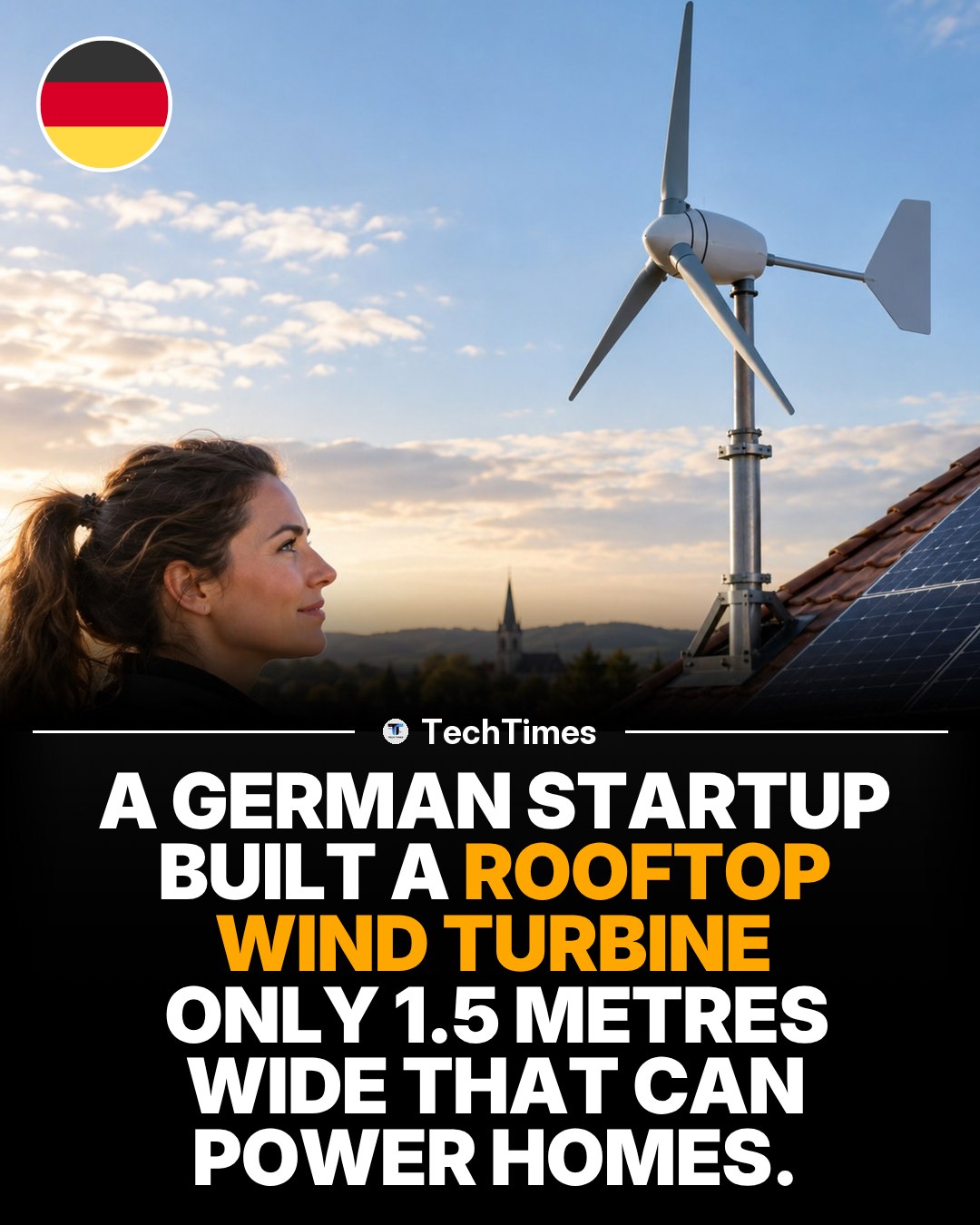
A compact wind turbine stands erect on a rooftop in Germany, ready to power a home. It is only 1.5 meters wide, the size of its height. Yet this modestly-sized device opens the door to a new world of urban wind generation.
The Rooftop Wind Turbine: Small Yet Mighty
The product is a rooftop wind turbine designed for urban environments. The small turbine works by harnessing wind energy through its spinning blades, converting the mechanical energy into electrical energy. This power is then routed through a system to supply the household. A small German startup developed this turbine. The turbine's distinctive characteristic is its compact size; only 1.5 meters wide, it is not only easily installed on private rooftops but also blends seamlessly into any given urban landscape.
Power Generation on the Arrival of Urban Sustainability
This turbine evolves the existing urban sustainability trend, optimizing power generation. The small turbine fits seamlessly into urban spaces. As a consequence this turbine is a key to a broader trend towards decentralizing power generation. Homeowners will no longer depend entirely on the national grid or massive standalone renewable energy sites. The turbine's compact size allows it to be installed in densely populated areas, making it possible for urban residents to embrace wind energy.
Supporting Urbanization as a Cloud Backdrop
Across Europe, Germany is a leader in urban density. Cities like Berlin, Hamburg, and Munich have high populations and limited land for conventional wind farms, presenting a challenge. The compact turbine has the ability to power homes in these cities, this turbine helps bridge the gap between the need for renewable energy and the constraints of dense urban environments.
The Science of a Small Machine
Multiple parts constitute the turbine system. These include a turbine blade, a generator, a power inverter, a mounting system, and a control system — all packaged into a small, functional unit. The blades harness the wind's energy. The generator converts mechanical energy into electrical energy. The inverter then transforms the direct current (DC) produced into alternating current (AC) suitable for home consumption. The turbine's generator is efficient and works well with the variable wind patterns common in urban areas. The turbine's blades catch the wind as it crosses between buildings and structures.
Urban Power Generation and Innovation.
The turbine has an advantage over traditional large-scale wind turbines: placing them on rooftops reduces the need for expansive land typically required for wind farms. Urban wind turbines are designed to generate energy even in low wind conditions. Their placement on rooftops also minimizes their impact on the local environment and reduces land usage. One of the key points, as noted earlier, is that the turbine is designed to power homes. This design makes it particularly appealing to environmentally-conscious homeowners. It allows urban residents to contribute to a greener future by reducing their reliance on traditional grid energy.
Practical Tips for Homeowners
If you intend to power your home with a similar rooftop wind turbine, consider the following:
- Assess Your Rooftop Conditions: Ensure your rooftop can support the additional weight and exposure to wind. The ideal structure must be strong and have consistent wind patterns.
- Evaluate Your Wind Energy Requirements: This turbine is rated at a maximum width of 1.5 meters and primarily designed for homes. It is essential to know if your home meets criteria for a similar product.
- Check Local Regulations: Investigate any zoning restrictions or building codes that might affect installation. This includes regulations on height and noise levels.
- Research Installation Costs: Price out the complete installation process, including the turbine, mounting equipment, and any required permits or professional installation.
- Consider Maintenance: Understand the maintenance needs. Most wind turbines require regular inspections and upkeep to ensure they operate efficiently.
Questions readers ask
How does the rooftop wind turbine convert wind energy into electricity?
The turbine uses its spinning blades to harness wind energy, converting it into mechanical energy. This mechanical energy is then transformed into electrical energy by a generator. The generated direct current (DC) is converted into alternating current (AC) by an inverter, making it suitable for home use.
Can this turbine power an entire home or just a few appliances?
The turbine is designed to power a home, but the exact capacity depends on the specific model and the average wind speeds in your area. It's best to consult with the manufacturer to understand the power output and how it aligns with your home's energy needs.
How does the turbine's compact size benefit urban environments?
Its small size allows for easy installation on rooftops, making it ideal for densely populated cities where land is scarce. This also means it blends into the urban landscape, minimizing visual and environmental impact.
Can I install this turbine myself, or do I need professional help?
While the turbine is compact and designed for easy installation, it's recommended to have a professional handle the setup. This ensures safety and optimal performance, as the installation involves electrical components and potential structural considerations.
How does this turbine compare to traditional large-scale wind farms?
Unlike large-scale wind farms, which require expansive land and are often located far from urban areas, these rooftop turbines can be placed directly on homes in cities. They are designed to generate energy even in low wind conditions, making them more versatile for urban environments.
What are the key components of the rooftop wind turbine system?
The system includes turbine blades, a generator, a power inverter, a mounting system, and a control system. The blades capture wind energy, the generator converts it into electrical energy, and the inverter transforms it into a usable form for home consumption.
Does the turbine work efficiently in areas with low wind speeds?
Yes, the turbine is designed to work well with the variable wind patterns common in urban areas. Its efficiency in low wind conditions makes it suitable for cities where wind speeds may not be as high as in rural or coastal areas.
Related deep dives
Similar reads based on topic and creator.


Recent articles
Fresh deep dives from the latest Reels we unpacked.



Comments
Be the first to comment.