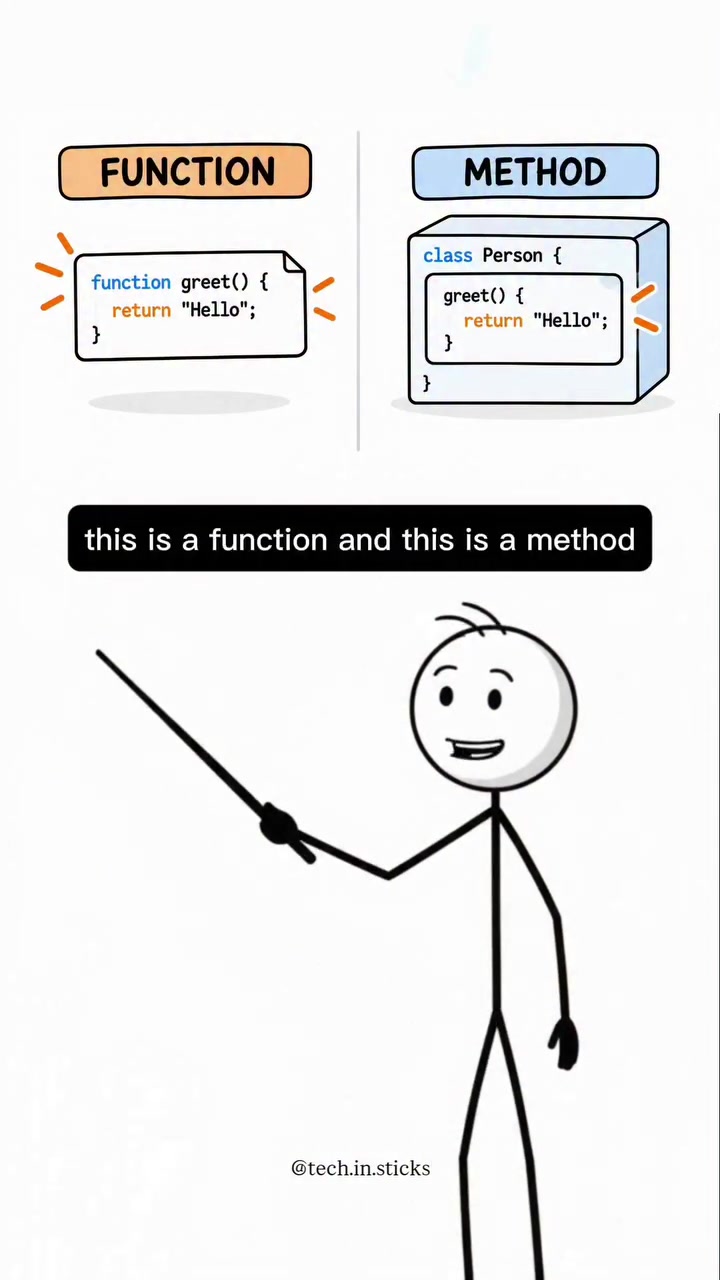
The function vs. method difference is the basic block of code vs. the class-bound worker
It is easy to assume functions and methods are interchangeable in programming. They both perform tasks and can be called for results. The subtle distinction is where and how they are called. A function is designed to be standalone and reusable, while a method has the added context of a class. The difference becomes clearer in terms of functionality and scope.
The computer programming class and object side of that equation
To understand the divide between programming functions and methods, consider the object-oriented programming trend. Functions are sometimes thought of as the independent parts, whereas methods operate within the bounds of a class or object. Methods adhere to the behavior defined by the class, while functions are more like solitary machines that perform specific tasks like calculating totals or returning greetings.
Different missions between functions and methods
The problem-solving function
In a programming language, a function is a single unit that performs a discrete task. Without much hassle, you can reuse a function to solve similar problems across different applications. For example, a basic function named calculateTotal() calculates the sum of items for an order, which can be used by a web app, mobile app, and desktop app individually. The function's purpose is to produce a total value from a given array of items.
The calculateTotal() function example is:
function calculateTotal(items) {
    let total = 0;
    for (let i = 0; i < items.length; i++) {
        total += items[i];
    }
    return total;
}
It has been designed to add all items in a list and return the total.
The object-bound method
A method completes a task in a similar way, but it is bound to a class or object. Methods provide additional context and structure. Methods like calculateTotal() belong to a class known as ShoppingCart. Although the method is similar to the function, the function will become a method if it is connected to the object. The code changes slightly to fit the class structure:
class ShoppingCart {
    // Omits the implementation of other methods
    calculateTotal() {
        let total = 0;
        for (let i = 0; i < this.items.length; i++) {
            total += this.items[i];
        }
        return total;
    }
}
As a method, calculateTotal() adds an array of items as part of the ShoppingCart class, giving it the context of a shopping cart. This means you can use the method with other functions in the class, such as adding or removing items from the cart.
The object’s code encapsulation
The differences in detail
The difference between functions and methods “is the distinction between standalone code and code bound to an object or class,” explained tech.in.sticks. The analogy between functions and methods is its separation. A function is like a simple machine, while a method is the function encapsulated inside the machine's body. A method cannot function independently without the object it is controlling. The class structure defines how the object interacts with the method and the method's role in the object’s behavior. Changing the method’s behavior impacts the behavior of the object, and modifying the object alters the method's context.
The context of code reuse
In programming terms, reuseability is one of the most important concepts, especially for developers. Functions can be called and reused in different applications without making changes to the code. This makes functions more versatile for a variety of programming tasks. When a method is bound to a class, its reuse abilities decrease. You can reuse a method, but only within the context of a specific class. Therefore, methods are more context-bound and task-specific.
The responsibilities of code
The difference between code that is usable as a standalone function and code bounded by the rules of a class or object is significant. For example, a function acts like a simple tool, but a method needs the context of a class. The code expects a class to be present, and the class is the one managing the method as part of its behavior. The fundamental idea is that a function equals standalone reusable code, and a method equals a function connected to an object or class.
Don’t need the networking any more to code
For those looking to understand and implement functions and methods in their programming, remember these key ideas:
- For standalone code: Write functions for tasks that can be reused across different applications.
- For object-specific tasks: Create methods within classes to define behavior and functionality specific to an object.
- For context-aware code: When you need the contextual advantage that comes with being part of a class, use methods. They work inside the object model, offering structured management.
- For an actual problem-solving: Do not forget that both functions and methods follow the same fundamental principles of performing tasks, but the key difference lies in how and where they are used.
- (What code and coding terminology can lead developers astray?**) Use code comments and documentation to explain the distinctions, making your code easier to understand and maintain.
The boundaries of standalone vs. object-bound
Functions and methods are both essential components in programming, but they operate in different contexts. Functions are standalone and reusable across different applications, while methods are bound to a class or object and provide specific behavior and functionality. Understanding the difference between these two concepts is crucial for any programmer. This distinction helps developers write more efficient and organized code, leveraging the strengths of both functions and methods in appropriate scenarios.
Questions readers ask
What exactly is a function in programming, and how does it differ from a method?
A function is a standalone block of code designed to perform a specific task. It can be reused across different applications to solve similar problems. A method, on the other hand, is a function that is bound to a class or object, providing additional context and structure within that class.
Can you give an example of how a function and a method might be used differently in a program?
Sure. A function like `calculateTotal()` can be used independently to sum up items in an array. However, when bound to a class like `ShoppingCart`, it becomes a method and can interact with other parts of the class, such as adding or removing items from the cart.
Why would I use a method instead of a function in my code?
You would use a method when you need the function to be part of a class or object, providing a specific context and structure. Methods can interact with other parts of the class, making the code more organized and easier to manage.
How do functions and methods work within object-oriented programming?
In object-oriented programming, functions are often seen as independent units that perform specific tasks. Methods, however, are functions that are part of a class or object, adhering to the behavior defined by that class. This allows methods to have a deeper integration into the overall structure of the program.
Is there a way to convert a function into a method?
Yes, you can convert a function into a method by binding it to a class or object. This involves slightly modifying the code to fit the class structure, giving the function the context of the class it belongs to.
Related deep dives
Similar reads based on topic and creator.


Recent articles
Fresh deep dives from the latest Reels we unpacked.


Comments
Be the first to comment.