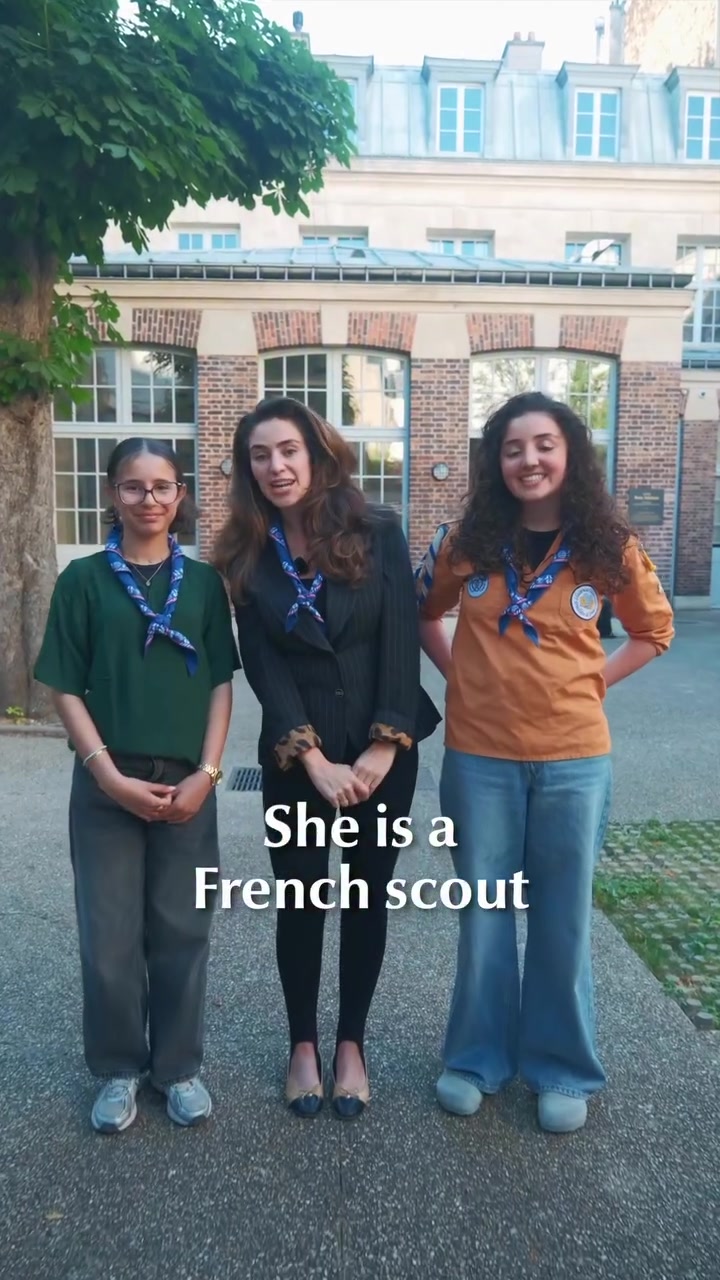
Jewish and Muslim girls, both part of the French Scouts, unexpectedly found common ground, growling “Salam” and “Shalom” in the shared exhilaration of outdoor games and teamwork. One of them revealed, "They thought they were different until they met and they realized... 'On est comme des cousines!'"
The French Scout Experience
France's Scout movement is distinctive in its religious segregation. Girls and boys join separate branches as Eclaireuses et Eclaireurs (or Girl Scouts and Boy Scouts) namely Eclaireuses et Eclaireurs unionistes de France and Eclaireurs de France. This division is a reflection of France’s broader secular model of separation of religion from the state, laïcité, but also the preservation of religious traditions and identities. However, these separate scouting groups uniquely share a common curriculum: “Tous les Scouts apprennent la même chose. Etre un leader,” or "All the scouts learn the same thing. To be a leader.” Each member learns navigation, first aid, and campfire skills, among others. They also cultivate a specific sense of duty to their community and a sense of honor. Scout life is shaped by these shared skills and values. Yet, the religious aspects of the program are also sacred. The Muslim French Scouts may say their Islamic prayers at sunrise, and Jewish Scouts — like Israeli soldiers — may don tefillin during prayers. Each branch is committed to its own rituals, foods, and traditions, different from the national French culture and the local community. In addition to these nuances, the Scouts also focus on values that transcend any religious affiliation. The importance of social skills and leadership is underscored with specific practical training: outdoor activities, camping, and competition. Competition, for example, can help the participating groups build skills. In a group project, the scout can learn to work with others, to be a good citizen, and to work together.
Bridging Cultural Divides
France’s secular model of social organization means the country’s diverse population often resides in utopian self-segregation. Although this separation encourages cultural preservation, a neighborhood or town will often have separate cultural communities. When Catholic children walk to the municipal school, for instance, they may walk past Muslim, Jewish, or Christian children who attend religiously affiliated schools. The French Scouts, however, are empowering a new generation to bridge these divisions by fostering friendships between girls from religiously distinct groups. Separation is simply not an end-goal of the Girl Scouts or Boy Scouts. In the open environment of Scout camps and competitions, friendships can form between kids from different religious groups. The sense of discovery is a core part of the Scout ethos, and this camp experience will be especially valuable for girls who haven’t stepped outside their religious community before. Jewish Scouts and Muslim Scouts may carry out the outdoor activities they grew up with side by side. A Scout can learn the other’s traditions, who leads prayers, and who leads a Jewish dance and follow suit.
Common Threads
The source of unexpected intimacy is the revelation that Jews and Muslims and Christians are in fact quite similar, even though the myths of difference linger. In one competition, scout groups composed of diverse religions played a game called Salam Shalom, sharing new Hebrew and Arabic phrases, and discovering the similarities in food and common words — both languages are Semitic. In fact, Muslims and Jews and Christians share far more in common. The two cultures, for instance, celebrate the same religion of Abraham. The established traditions of the French Scouts blur the lines of difference effectively teaching their unique sense of community, respect, and values.
The Power of Play
The competition is a vital technique in the French Scout movement. Play is key for making real-world friendships. The two teams work together for a common goal, learning about each other’s cultures while playing a game that tests their awareness and confidence. In addition, the mix of outdoor activities, competitions, and campfire stories presents a unique opportunity to navigate difficult questions about religion, family, and identity. When a Muslim Scout spends a week with a Jewish Scout, she may learn about her family’s own Moroccan roots as well as those of her Jewish friends, and the two Scouts may find they are cousins.
Scout Culture and Values
Cultivation for Leadership
The practical experience of Scouts is complemented by the cognitive and social skills that come into play. At the campsite, they shape an individual’s sense of duty and honor, among other valuable cultural knowledge. The Scouts learn about different religions and cultures. For instance, a Muslim Scout may learn Hebrew words, Shalom and Lirey, and a Jewish Scout may learn the Arabic word for thank you. They might even share common words on their menus. The camaraderie formed during these activities not only teaches Scouts a new language and cultural information but also opens their horizons to the idea that one’s religion is not an obstacle to friendship.
The Universal Language of Teamwork
At the most basic level, the Scouts in France are deeply and mutually enriching. The leader seems to emphasize the value of friendship and finding common ground. However, the Jewish and Muslim Scouts' experience of teamwork and sportsmanship is truly invaluable. If Scouts are able to transcend their differences, if they can move beyond their initial hesitancies, and open their hearts to friendship, they can form bonds that are the bedrock for a more integrated and progressive society. Furthermore, the experience of fun and competition can help Scouts build resilience, empathy, and leadership skills that will translate to all aspects of their social lives. It prepares them to navigate a world that is changing rapidly. For instance, the Scouts can learn how to adapt to new situations and cultures, and make friends with people who are different from them.
Practical Steps for a Young Scout
- Find your tribe: Choose from local Scout chapters, often recommended by other Scouts or local religious or community organizations.
- Create new traditions: Set new goals to include other Scouts and learn about their traditions.
- Organize a competition: The competition can bring together the girls of different religious groups to participate in activities.
- Learn new food and words: Learn the Arabic word “Shukran” and Hebrew “Shalom” for thank you, and make a point of trying a new tradition, like another girl’s favorite recipe.
- Act now, bond later: Keep the momentum going by exchanging messages, meeting up for coffee, or planning the next event together.
The Foundations of the Future
The playful, adventurous and competitive nature of the French Scouts is a reminder that even as the world around us grows more polarized, it is still possible to find common ground.
Questions readers ask
What are the main differences between the French Scout groups for girls and boys?
The French Scout groups for girls and boys are religiously segregated, with branches like *Eclaireuses et Eclaireurs unionistes de France* and *Eclaireurs de France*. These groups maintain their own religious rituals, foods, and traditions. However, they share a common curriculum that focuses on leadership, navigation, first aid, and campfire skills, along with a sense of duty and honor.
How do the French Scouts foster unity among diverse religious groups?
The French Scouts foster unity by encouraging friendships and shared experiences in an open environment through outdoor adventures and teamwork. Even though the groups are religiously segregated, the shared curriculum and values help bridge cultural divides. This is especially impactful for girls who may not have stepped outside their religious community before.
Can a scout from one religious group participate in the rituals of another group?
Yes, the French Scout experience encourages learning about each other’s traditions. For example, Jewish Scouts can learn about Muslim prayers and vice versa. This exchange helps to build understanding and unity among the diverse groups.
How does the French Scout experience compare to other Scout organizations around the world?
The French Scouts are unique in their religious segregation, which reflects France’s secular model of separation of religion from the state, known as *laïcité*. While many Scout organizations around the world are secular, the French Scouts maintain a strong focus on religious traditions and identities, while also fostering unity through shared values and experiences.
Can a Scout who is not religious still join the French Scouts?
The article does not specify the possibility of non-religious Scouts. However, it is clear that the French Scouts are organized around religious groups, and the shared curriculum and values are designed to bridge cultural divides. It is likely that non-religious Scouts would be welcomed, but more information would be needed to confirm this.
How do the Scouts encourage leadership and social skills?
The Scouts encourage leadership and social skills through practical training and outdoor activities. They emphasize the importance of social skills and leadership with specific training in outdoor activities, camping, and competition. These activities help the Scouts learn to work with others, be good citizens, and work together.
What is the significance of the French Scouts' shared curriculum?
The shared curriculum is crucial because it ensures that all Scouts, regardless of their religious background, learn the same fundamental skills and values. This includes navigation, first aid, and campfire skills, as well as a sense of duty to their community and a sense of honor. This common ground helps to bridge cultural divides and foster unity among the diverse groups.
Recent articles
Fresh deep dives from the latest Reels we unpacked.



Comments
Be the first to comment.