Free Trial Roadblocks
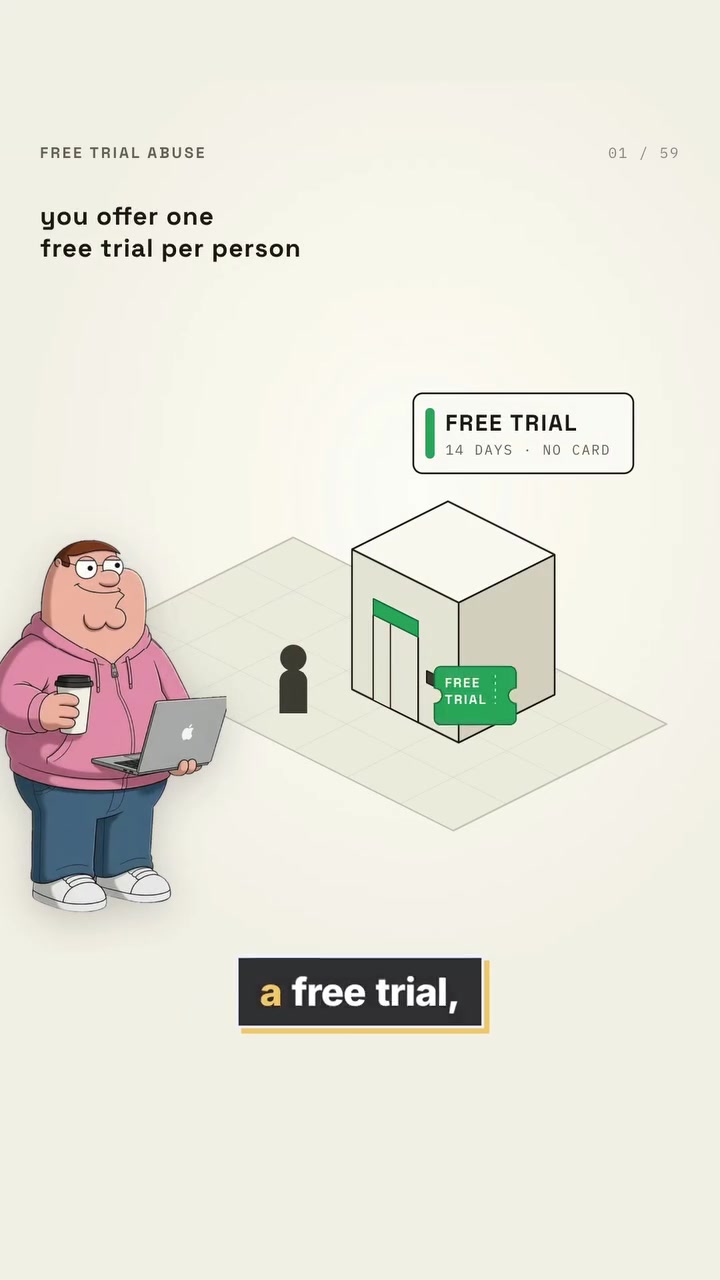
Four people live in the same house. All use the same Wi-Fi network, which means they share the same public IP address. If one person in the household starts a free trial, the others may find themselves blocked from doing the same. This isn't an isolated problem; it happens in offices, universities, hotels, and mobile networks where many users share an IP address. This shared IP address can inadvertently block legitimate users, leading to frustration and lost opportunities. Unfortunately, public IP blocking is not a foolproof solution to prevent trial abuse.
The Shifting Landscape of Net Abuse
Frustration with free trial programs has increased as more people look for ways to bypass the system. Businesses have had to adapt. With the rise of remote work, sharing networks is more common, exacerbating the issue. Even before this shift, legitimate users often found themselves blocked due to shared IPs at work or school. This isn't just about inconvenience; it's about lost revenue and damaged reputations for companies trying to offer genuine value through free trials.
Who's Behind The Screen?
The IP Address Illusion
The simplest method to control free trial sign-ups is to limit one trial per IP address. While this might seem effective at first, it quickly falls apart. In a typical home, all devices share the same public IP address. This means if one person in the household starts a free trial, the others could be blocked from doing the same, even if they are legitimate users. The same issue arises in offices, universities, and other shared network environments. Therefore, relying solely on IP addresses to manage free trials is inherently flawed.
Unmasking Devices
The next line of defense is device fingerprinting, which involves collecting various signals from the device, such as the browser type, operating system, screen size, language, time zone, and other browser characteristics. These signals can help estimate whether two accounts are likely coming from the same device. However, this method isn't foolproof. Users can switch browsers, clear storage, or use different devices to alter their digital fingerprint, making it challenging to accurately identify repeat users.
The Risk Score Method
A more effective approach involves creating a risk score for each signup. This score takes into account multiple factors, such as whether the device has been used for a previous trial, if the payment method is the same, if the IP address is shared, and the frequency of account creations. Each of these factors adds a layer of risk. For example, if five accounts are created from the same device in one hour, the risk score increases significantly. This method allows for a more nuanced assessment of potential abuse.
Combining Signals
The goal isn't to build a magical identifier that recognizes every human on earth. Instead, combining multiple weak signals into a strong decision is key. These signals include IP addresses, device fingerprints, payment methods, account history, and user behavior. By integrating these signals, companies can assess the likelihood of abuse more accurately. This approach allows for a more probabilistic assessment, where the focus shifts from asking, "Is this definitely the same person?" to "Given everything we know, how likely is it that this person is abusing the free trial?"
Keeping It Real
Putting these strategies into practice means implementing a risk-based approach. Evaluate IP Address: Start by evaluating the IP address to see if it has been used for previous trials. Assess Device Fingerprint: Check the device fingerprint to determine if it matches any known fraudulent patterns. Score Payment Methods: Pay close attention to the payment method, as this can be one of the strongest signals. Monitor Account Activity: Keep an eye on account creation velocity and behavior to detect unusual patterns. Set Thresholds: Establish risk bands and apply appropriate actions. For example, low-risk users might get immediate access, while medium or high-risk users might require additional verification or be denied the trial altogether. This balanced approach helps to minimize fraud while ensuring legitimate users have a positive experience.
Questions readers ask
Why are shared IP addresses a problem for free trial sign-ups?
Shared IP addresses can cause issues because free trial programs often limit one trial per IP. If multiple people in the same household, office, or university use the same IP address, one person's trial sign-up can block others from doing the same, even if they are legitimate users. This is a common issue in environments where many users share a network.
How does device fingerprinting work, and is it effective?
Device fingerprinting collects various signals from a user's device, such as browser type, operating system, and screen size, to estimate if two accounts are likely coming from the same device. While it can help identify repeat users, it's not foolproof because users can easily alter their digital fingerprint by switching browsers, clearing storage, or using different devices.
What is a risk score, and how is it used in free trial fraud detection?
A risk score is a method that assesses the likelihood of fraud by considering multiple factors, such as whether the device has been used for a previous trial, the payment method, the IP address, and the frequency of account creations. This score helps companies make a more nuanced assessment of potential abuse, allowing them to better distinguish between legitimate users and fraudsters.
Can companies completely eliminate free trial fraud using these methods?
No method is completely foolproof. While combining multiple signals like IP addresses, device fingerprints, and payment methods can significantly improve fraud detection, it's still challenging to build a system that can recognize every instance of abuse. The goal is to create a more accurate assessment, but there will always be some level of risk and potential for legitimate users to be blocked.
How has the shift to remote work affected free trial programs?
The rise of remote work has made shared networks more common, exacerbating the issue of IP address blocking. With more people working from home and using shared networks, the likelihood of legitimate users being blocked from free trials has increased, leading to frustration and potential lost opportunities for both users and companies.
What can a user do if they are mistakenly blocked from a free trial?
If you find yourself blocked from a free trial, it's a good idea to reach out to the company's customer support. Explain your situation and provide any relevant information that might help them verify your legitimacy. Some companies may have a process in place to review and potentially unblock legitimate users.
Are there any other methods companies use to detect free trial fraud besides IP blocking and device fingerprinting?
Yes, companies are increasingly using more sophisticated methods like risk scoring and combining multiple signals. Risk scoring takes into account various factors to assess the likelihood of fraud, while combining signals involves integrating data from IP addresses, device fingerprints, payment methods, account history, and user behavior to make a more accurate assessment.
Related deep dives
Similar reads based on topic and creator.




Recent articles
Fresh deep dives from the latest Reels we unpacked.




Comments
Be the first to comment.