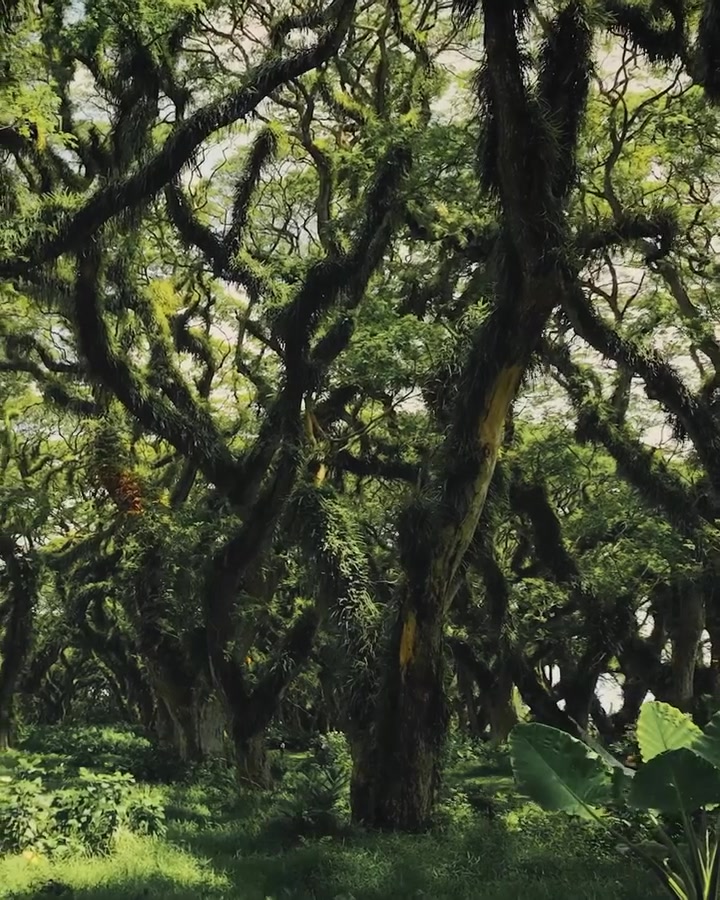
The video captures the green vault of the forest canopy, where sunlight stitches through gaps, casting the forest floor's dappling shadows. Trees reach high, weaving dense, leafy lattices blocking the sky. The scene is a panorama of green life.
An Upward Encounter with the Forest
A forest canopy is the densest and richest part of the forest. It’s are the highest layer of trees, forming a cover or an upper limit at the top of the forest. Trees stretch high, leaves branching out to form a layer that can be as much as 40 meters above the ground. The branches and leaves form an expansive network, often intertwining with neighboring trees to create a complex web. This layer is crucial because it plays a vital role in absorbing much of the rainwater. It also provides habitation for numerous species. The forest canopy's density and scale — the intricate network of branches and leaves — make it a unique ecosystem. The canopy is also where sunlight reaches the ground in speckles. It’s what creates that dappled effect we associate with forests. This layer of the forest is homeostatic — regulating humidity, airflow, and temperature for the entire ecosystem.
The Top Story of the Green World
The canopy's green architecture is the pulse of the forest. It's the primary reason forests are called the lungs of the earth, where the most significant amount of photosynthesis occurs. The setting communicates the quiet complexity of a living cathedral. This is an experience overlooking the placid rivers of a forest with the trees’ green canopy reaching for the sky and spreading outward. Nearly half of the world's plants, animals, and other lifeforms rely on the canopy's ecosystem. That's why preserving forests is vital for ecosystem health on all levels. A vibrant canopy signals a robust and healthy forest ecosystem.
A Green Involution
The forest canopy is one of the most complex and dynamic ecosystems on Earth. The sheer number of plants and animals living in the canopy is staggering. Trees from north America and some parts of Canada have leaves that give out oxygen and absorb carbon dioxide during the day. This is why the canopy is crucial to the world's climate control and oxygen production.
Transition Across Zones
The canopy also serves as a critical transition zone. There are distinct differences in the environments at the forest floor and at the canopy. However, the canopy touches both. This enables the heat to distribute throughout the forest, creating a stable climate.
Inhabitants of Canopy
The canopy is home to several species. Along with the trees themselves, which add to the landscape, this area is also teeming with life. The canopy is a shelter for these species, ranging from insects to birds to mammals. Therefore, it forms a vital habitat for many animals, who also rely on it for food and shelter. At the same time, the animals live on the canopy, contributing to the canopy's nourishment and survival.
The Healthy Forest
However, the forest canopy ecosystem is fragile, and it is crucial to maintain it. Several studies show that the decline in the canopy can cause several disturbances for the whole ecosystem. Therefore, forest management, and preserving the canopy, is an important aspect of forest management. The forest canopy is a crucial ecosystem component that requires our attention and protection.
The Art of Balancing
The canopy also regulates how much water gets to the forest. It's a balancing act of rain and sunlight. When the water gets to the forest floor, it’s collected and redistributed throughout the ecosystem, ensuring the forest ecosystem flourishes.
Inspired By The Canopy
Those captivated by the beauty of a forest canopy might want to experience it firsthand. Here are some tips:
- Explore Nearby: Find local forests. Many will have guided tours that are informative and safe.
- Join a Tree Climbing Adventure: Some organizations offer tree canopy climbs. Ensure these are conducted by experienced professionals and are safe. The climbing equipment used for this kind of adventure is specialized and should be handled by professionals only.
- Bird Watching: Many species migrate to the canopy during parts of the year. A good pair of binoculars or a spotting scope can provide a fantastic canopy experience. Some species that might be spotted include birds, bats, and primates. These activities can offer a unique perspective on the forest and its ecosystem. Those inspired by the canopy might consider ways to contribute to forest conservation efforts.
The Place Where the Earth and Sky Meet
The forest canopy has the ability to take your breath away. The complexity and rich biodiversity of the canopy are part of the reason forests are called green lungs. The canopy layer’s beauty and playfulness create a dynamic where the forest heels and soothes the human soul.
Questions readers ask
What makes the forest canopy so dense and intricate?
The forest canopy's density comes from the trees stretching high and their leaves branching out to form a complex web of branches and leaves. This layer can be as much as 40 meters above the ground, creating an expansive network that often intertwines with neighboring trees. The canopy's intricate structure is what makes it such a unique and vital ecosystem.
How does the canopy regulate the forest's climate?
The canopy plays a crucial role in regulating the forest's climate by absorbing much of the rainwater and providing a buffer against extreme temperatures. It also helps to distribute heat throughout the forest, creating a stable climate. Additionally, the canopy's density and scale make it a homeostatic layer, regulating humidity, airflow, and temperature for the entire ecosystem.
What kinds of creatures live in the canopy?
The canopy is home to a vast array of species, ranging from insects to birds to mammals. These creatures rely on the canopy for food and shelter, and in turn, they contribute to the canopy's nourishment and survival. The canopy's complex ecosystem supports nearly half of the world's plants, animals, and other lifeforms, making it a vital habitat for many species.
Why is the canopy crucial for the world's climate control and oxygen production?
The canopy is crucial for the world's climate control and oxygen production because it is where the most significant amount of photosynthesis occurs. The leaves of the trees in the canopy absorb carbon dioxide and release oxygen, playing a vital role in mitigating climate change and providing the air we breathe.
What happens to the forest ecosystem if the canopy declines?
If the forest canopy declines, it can cause several disturbances for the whole ecosystem. The canopy's role in absorbing rainwater, regulating climate, and providing habitat for numerous species means that its decline can have cascading effects on the forest's health and the species that depend on it.
Can the canopy be accessed by humans?
Accessing the canopy can be challenging due to its height and density. While some researchers and adventurers use specialized equipment like drones, ropes, and harnesses to explore the canopy, it's not a typical experience for most people. The canopy's fragile ecosystem also means that human access should be carefully managed to avoid causing disturbances.
How can the canopy be preserved to maintain a healthy forest ecosystem?
Preserving the canopy involves protecting the forest as a whole, as the canopy is a critical part of the forest ecosystem. This can include measures like reforestation, sustainable logging practices, and protecting forests from deforestation and other threats. Additionally, supporting research and conservation efforts can help ensure that the canopy remains a vibrant and healthy part of the forest ecosystem.
Related deep dives
Similar reads based on topic and creator.



Recent articles
Fresh deep dives from the latest Reels we unpacked.



Comments
Be the first to comment.