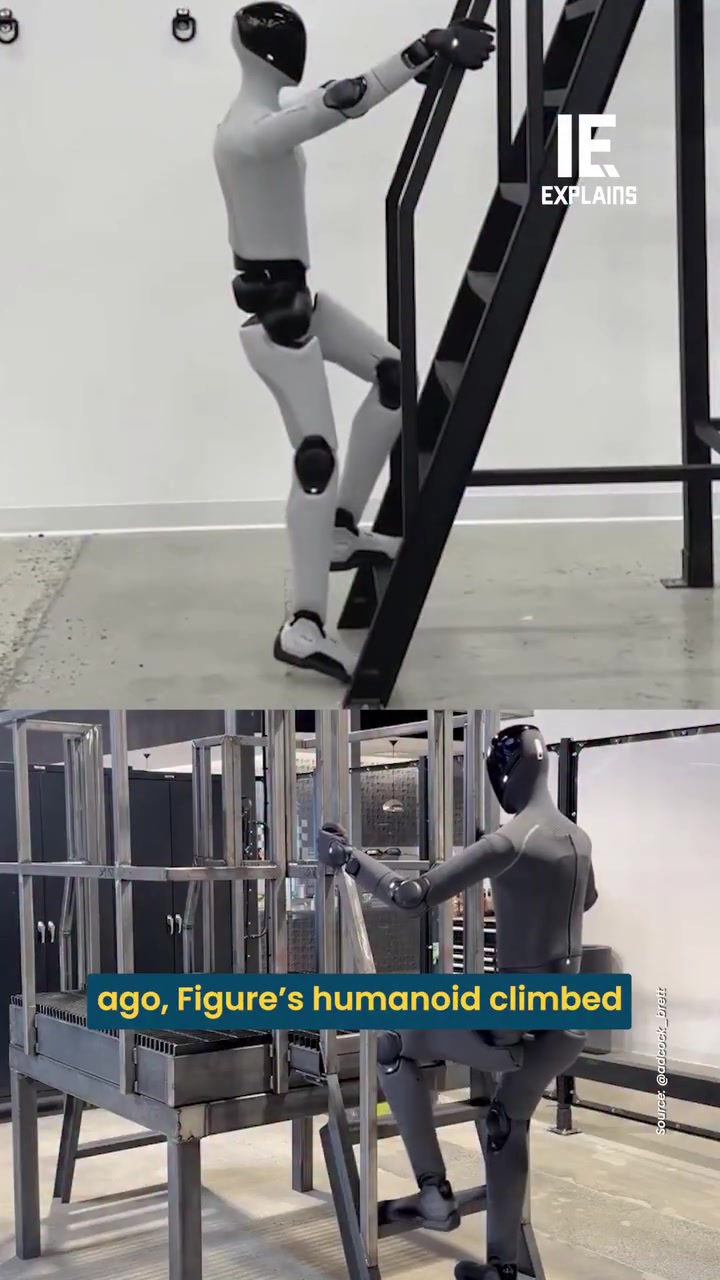
A 15-Foot Feat in Humanoid Robotics
Humanity's fascination with ladder-climbing robots might seem like a niche obsession, but there's a compelling reason behind this month’s viral video. Figure Humanoid, the humanoid robot that climbed a 15-foot ladder, represents a significant advancement in robotics that could revolutionize industrial safety. Founder Brett Adcock showcased the robot's ability to scale and descend a ladder without human assistance or tether cords. The prowess displayed by the robot is not just about the climb up; the descent is where this robot technology truly shines.
Humans Made an Impact
For all the groundbreaking innovations in robotics, ladder-climbing robots offer a novel and immediate solution to a persistent industrial problem: worker safety. While sledges and other lifting machines can handle moving large objects, climbing ladders remains a uniquely human task. Fixed ladders are a ubiquitous feature of industrial settings, from telecom towers to silos and factory racks. Climbing ladders poses a significant safety risk to workers; in the United States, falls, slips, and trips took 844 lives out of 5,070 workplace deaths in 2024.
The Climb Up
Robotics in hazardous heights is not novel; robots have tackled climbing ladders before. However, applying that technology to industrial settings includes a new set of challenges. To climb efficiently, the robot must coordinate multiple limbs and balance itself as it ascends. The Figure Humanoid takes a different approach by using real-time stereo vision to see the rungs and land on them. It also uses white canisters that simulate a human-like weight distribution.
The Climb Down
The descent is more technically demanding than the ascent. When descending, the robot moves backward into an unfamiliar space, relying on its own sense of proprioception—its sense of where its body is—to find and place each footprint on the rungs. Instead of relying on pre-programmed steps, the robot controls each step as a "controlled fall." It relies on its limbs to grip the rungs tightly enough to slow the fall and stabilize itself. The robot adapts to unexpected obstacles like momentum, wind, and weight distribution, demonstrating real-time problem-solving skills. For example, when the robot reaches the final rungs, it pivots its body and uses its arms to stabilize itself on the ladder.
Helix: The Brain Behind the Brawn
Figure's robot relies on Helix, an in-house AI system. Helix manages balance, contact, and the robot's understanding of its own body, updating a thousand times a second. This real-time coordination enables the robot to navigate the unknown space of the descent far more adeptly than a human. To enhance adaptability, Helix mixes stereo camera vision with the robot's proprioception. This allows it to place its foot on a rung it can't see, a critical aspect of its descent.
Breaking from Wheeled Bots to Humanoid Design
One of the most groundbreaking aspects of this technology is its departure from traditional wheeled robots. Adcock has labeled wheeled robots as a "dead end" for this specific task. Humanoid design offers a crucial advantage: balance and maneuverability. Wheeled robots are easily tripped by obstacles, whereas humanoid robots can navigate stairs, ladders, and other uneven surfaces. This innovation marks a turning point in robotics, extending its capabilities from simple tasks to complex, dynamic environments. Humans can now interact with robots in a more intuitive and collaborative manner.
A Mock-Up of Human-Like Ability
While the robot is still slower than a human, the machine's ability to navigate a 15-foot, human-sized ladder by relying on vision and balance is a significant breakthrough. The robot's ability to climb and descend is just the beginning. With further development, humanoid robotics could revolutionize various industries, from construction to aerospace.
How to Imaginary Practice with Helmets
Demonstrating these technologies is a realistic way to showcase their abilities in a safe, controlled environment. For those wishing to get involved, here are some guidelines:
- Observe the demo: Watch the robot climb and descend to understand the balance and coordination involved.
- Design an environment: Create a similar environment to test the robot's capabilities. Include obstacles and different ladder structures to observe its adaptability.
- Adjust parameters: Use the feedback from the robot's performance to adjust the settings and see how it affects the climb.
- Safety protocols: Safety is paramount, and it is essential to follow all safety protocols during the demonstration. There are helmets and gloves to protect the workers from any potential hazards.
- Analyze the data: Collect data from the climb, including speed, agitation handling, and balance. Use this data to improve the robot's performance and adaptability. Document how the robot adapts to its environment in real time.
Beyond the Robots: Why We Need Them
Ultimately, robotics advancements are not just about advancing technology: they're about saving human lives. With over 800 workplace deaths due to falls in the United States in 2024 alone, the real-world applications of robots like Figure's Humanoid are undeniably vital. 15 feet up and back down is not just a feat of engineering; it's a testament to the potential of robotics to transform industrial safety. As Figure continues to build, refine, and deploy its robots, becoming both faster and more efficient, the future looks brighter for both humans and machines.
Questions readers ask
How does the Figure Humanoid robot manage to climb and descend a ladder safely?
The Figure Humanoid robot uses real-time stereo vision to see and accurately place its feet on the ladder rungs while ascending. During the descent, it relies on proprioception and controlled falls, adjusting its grip and stabilizing itself to navigate the ladder safely. It also uses an in-house AI system called Helix to manage balance and body awareness, updating a thousand times a second.
What makes the descent more challenging than the ascent for the Figure Humanoid robot?
The descent is more challenging because the robot moves backward into an unfamiliar space, relying on its proprioception to find and place each foot. It must control each step as a 'controlled fall,' adapting to unexpected obstacles like momentum, wind, and weight distribution. The final rungs require the robot to pivot and use its arms for stabilization.
How does the Helix AI system enhance the Figure Humanoid robot's performance?
Helix is an in-house AI system that manages the robot's balance, contact, and body awareness, updating a thousand times a second. It combines stereo camera vision with the robot's proprioception, allowing the robot to place its foot on a rung it can't see. This real-time coordination enables the robot to navigate the unknown space of the descent more adeptly than a human.
Why is the humanoid design of the Figure Humanoid robot considered an advantage over traditional wheeled robots?
The humanoid design offers superior balance and maneuverability, which are crucial for tasks like climbing ladders. Wheeled robots are seen as a 'dead end' for this specific task because they lack the ability to adapt to the dynamic and unpredictable nature of climbing and descending ladders in industrial settings.
What are the potential safety benefits of using humanoid robots like the Figure Humanoid in industrial settings?
Humanoid robots can significantly reduce the risk of workplace injuries and fatalities associated with climbing ladders. By taking over this hazardous task, robots can help prevent falls, slips, and trips, which are major causes of workplace deaths. This technology could revolutionize industrial safety, especially in settings where fixed ladders are common.
How does the Figure Humanoid robot's ability to climb and descend ladders compare to previous attempts by other robots?
While other robots have tackled ladder-climbing before, the Figure Humanoid stands out because it addresses the unique challenges of industrial settings. It uses real-time stereo vision and proprioception to navigate both the ascent and descent, adapting to unexpected obstacles and demonstrating real-time problem-solving skills. This makes it more versatile and capable in dynamic environments.
Related deep dives
Similar reads based on topic and creator.

Recent articles
Fresh deep dives from the latest Reels we unpacked.




Comments
Be the first to comment.