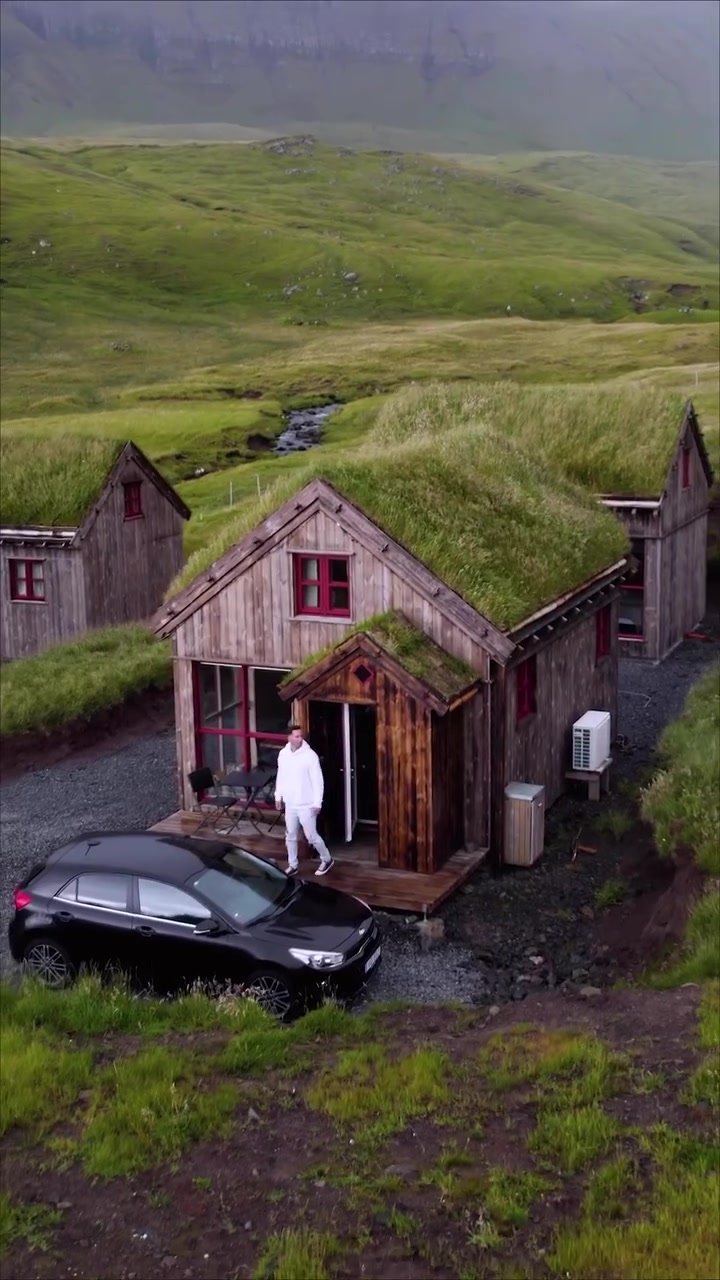
The Faroe Islands, Denmark. A cluster of isles where a thousand-some years of a tradition of building houses with grass roofs lives on. It stands out — from the lush greenery, the valley, coastal views and waterfalls. The blend of naturalistic architecture and the surrounding landscape captures the heart of the Faroe Islands.
Traditional Grass Roofs of the Faroe Islands
In the Faroe Islands, traditional grass roofing is common. The houses are wooden , with grass on top. ) The grass roof is known as ‘turf roof’. A grass roof offers thermal mass and insulation, keeping houses warm in winter and cool in summer. The roofing is seamless and can last for several decades. This grass can nourish future grass, and the cutting and maintenance of the grass once a year with the purpose of cutting the grass will ensure no mud collapse. It is an environmentally-friendly method of building and maintaining houses. This eco-friendly characteristic is critical to its enduring tradition. Unlike roofs that rely on artificial materials for insulation and waterproofing, grass roofs absorb rainwater and provide a protection against heavy wind, rain, and sub-zero temperatures. Grass roofs are part of a tight-knit society. Houses are passed down through generations, and the community often comes together to complete the annual maintenance of the roofs.
The durability of the traditional grass-roofed house
The Faroe Islands' use of grass for roofing is not only a traditional method but one that is both sustainable and economical, for its durability and its heat preserving features. Locals maintain these roofs annually. The grass is cut from the roof in the spring and regrown in fields. This practice not only ensures the longevity of the roof but also enhances the beauty of surrounding fields.
Architectural Identity
The Faroe Islands' grass-roofed houses have evolved over centuries. The traditional dwellings are deeply rooted in the geography, culture, and climate of the islands. The core architectural structure is wooden. The use of wood reflects the islands’ reliance on local materials, which are abundant and sustainable. The grass that tops the wooden structure not only serves insulation, but also a living roof, nourished by the local weather. The geometric shapes and distinctive layout of the houses are inspired by the islands’ landscape. The rough, sloped terrain has necessitated the design of these compact, sturdy structures. The grass serves a practical purpose but it fits into its setting as nature’s camouflage. The houses blend seamlessly into the verdant backdrop, making them look like extensions of the landscape. The color harmonizes with the natural surroundings, providing visual harmony.
The Faroe Islands' Grass Roofs
The Faroe Islands' grass-roofed houses preserve the local climate. The grass roofs contribute to thermal mass and insulation. The roofs maintain an indoor temperature due to the thermal mass of the grass. It can decrease the surface temperature due to insulation. The roof minimizes the gap between surface and air temperature. This kind of roof is effective in maintaining the thermal mass.
Environmental Sustainability
Grass roofs are more environmentally sustainable than traditional roofs. Grass roofs are a local tradition of the Faroe Islands and they stand out in biodiversity, for their capacity and resistance to climate change. Grass roofs absorb rainwater and maintain the surrounding microclimate. The grass roofs help to preserve the environment due to their local natural maintenance. They are durable and contribute to the preservation of the environment. They have a longer life than traditional roofs. The Faroe Islands' houses are typically not built for single families. They do not have an electrical bill. All of these factors make the grass-roofed houses of the Faroe Islands both economical and sustainable.
Embracing the Faroe Islands’ Legacy
Anyone can organize a visit to the Faroe islands in the spring, when the grass will be cut in the spring from the roof. The grass will be regrown, and replenished. They will be able to see the beauty of the houses and their surroundings. The houses can make you experience an eco-friendly life. When you pass down a generation or after ten years of living in a grass-roofed house, the house will be ready to last another ten years of maintenance. Visiting the Faroe Islands is not just about appreciating the natural beauty but also understanding a way of life that has been sustained for centuries. You may not see the future of these traditional grass-roofed houses, but you can see the legacy of these houses that are over a thousand years old. There is a timelessness to the grass-roofed houses of the Faroe Islands. The islands have preserved a tradition that blends seamlessly with its surroundings.
Questions readers ask
What are the grass roof houses in the Faroe Islands called and how were they built?
The grass roof houses in the Faroe Islands are called 'turf roofs.' They are built with a wooden structure and topped with grass. The grass is cut from the roof annually in the spring and regrown in fields to maintain its longevity and the beauty of the surrounding landscape.
How do grass roofs contribute to the sustainability of the Faroe Islands?
Grass roofs in the Faroe Islands contribute significantly to sustainability. They offer natural insulation, keeping houses warm in winter and cool in summer, and they are environmentally-friendly. This eco-friendly characteristic is crucial to the tradition's endurance, as the grass can nourish future growth and the cutting and maintenance of the grass once a year ensures no mud collapse.
What is the significance of the annual maintenance of grass roofs in the Faroe Islands?
The annual maintenance of grass roofs in the Faroe Islands is a community effort that involves cutting the grass in the spring and regrowing it in fields. This practice ensures the longevity of the roofs and the beauty of the surrounding fields. It also highlights the tight-knit society of the islands, where houses are often passed down through generations and the community comes together for maintenance.
How do the grass roofs in the Faroe Islands help with insulation and thermal mass?
Grass roofs in the Faroe Islands help with insulation and thermal mass by absorbing rainwater and providing protection against heavy wind, rain, and sub-zero temperatures. The grass roofs contribute to the thermal mass and insulation of the houses, maintaining an indoor temperature due to the thermal mass of the grass and minimizing the gap between surface and air temperature.
What is the architectural significance of the grass-roofed houses in the Faroe Islands?
The grass-roofed houses in the Faroe Islands have evolved over centuries and are deeply rooted in the geography, culture, and climate of the islands. The use of wood for the core structure reflects the islands' reliance on local materials, while the grass on top serves as insulation and a living roof, blending seamlessly into the natural surroundings.
Related deep dives
Similar reads based on topic and creator.
Recent articles
Fresh deep dives from the latest Reels we unpacked.
Comments
Be the first to comment.