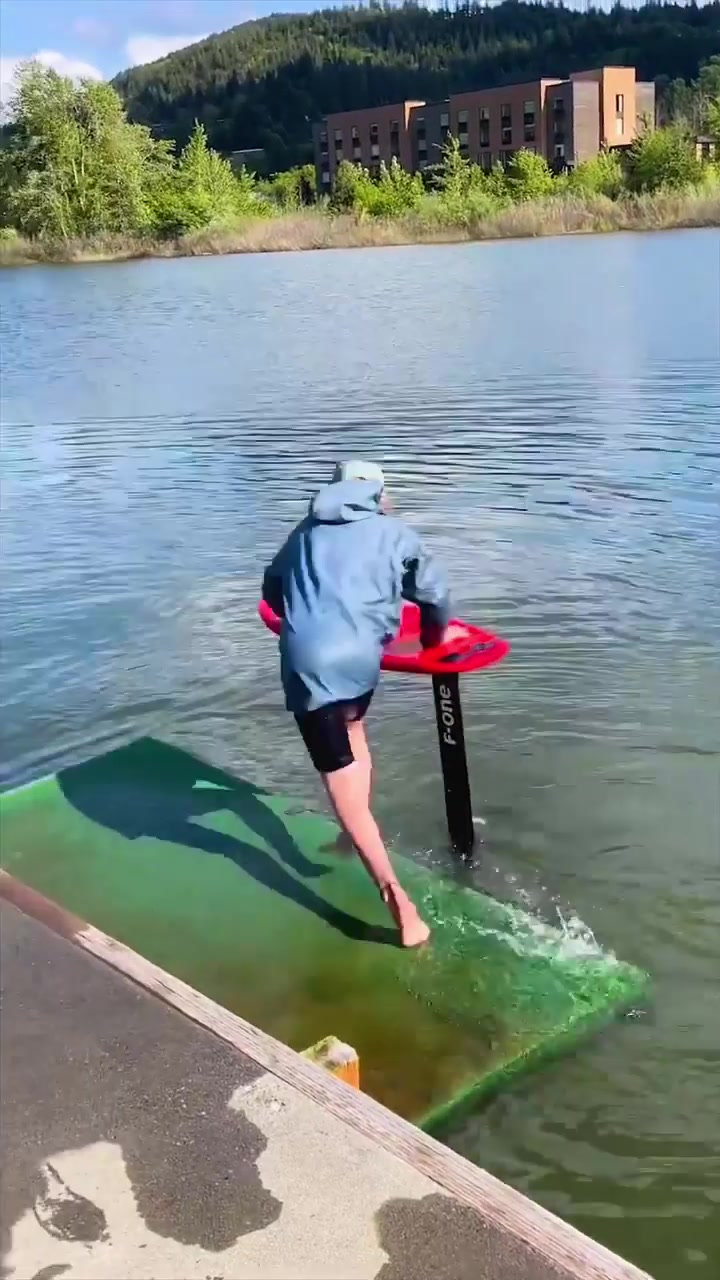
Hood River, Oregon, is a water sports playground. There, a circular water float device helps even beginners try a challenge that keeps the most seasoned athletes honest.
The Float Device: A Water Sports Circuit Intro
F-one’s unique water float device is not a high-tech board, but a circular float designed to introduce beginners to water sports. The lightweight device is perfect for anyone looking for a fun, low-risk introduction to water balance. The float, which is ridden while standing, allows users to navigate across the water. The main challenge, however, is the balancing act. The float tilts and wobbles with any shift in weight— testing the rider's ability to stay upright. At first, the circular device prompts even the most experienced water sports athletes to approach it with caution. The F-one float device is accessible — but going at it without the right training means getting splashed— as the rider behind this device proves.
From Inflatable to the Boardwalk: Why Balance Matters
Balance is seen as the gateway to all water sports. The float device helps build the skill from a safe vantage point — feet supported and a low center of gravity. It’s an enticing invitation to try a new sport. Water sports like wakeboarding and jet skiing are not only more fun but safer to try when the rider has built up balance skills on a float device.
Foundations
Balancing act
Riding the F-one float device is an unusual challenge that uses both strength and patience. The device shifts underfoot in a way that is new to even seasoned water sport athletes. The solution is not to stiffen but to maintain a loose posture with a stable core. Staying loose so that the body can flow with the device's movements is necessary to finding equilibrium. Once balanced, the rider must then learn the float's peculiar rhythm.
The fall
The float challenges the rider to step off the dock onto a moving platform. It's a gradual challenge that increases in difficulty as the rider's confidence grows — until the moment of truth with the fall. The fall is a part of the experience. Falling off the float teaches the rider to react quickly. Once in the water, the rider learns to stay calm while stepping back onto the float. It’s a moment for both the rider and the float to reset.
Training tools
Practice and patience are necessary to mastering the float device. A simple way to train is to keep on practicing. Training starts with finding balance — the body’s natural rhythm mirrors the float’s movements. When training, it's important to catch the float, and to be comfortable with the sensation of the water splashing. For training, Hood River, Oregon is a perfect spot. The area offers the right kind of water conditions — calm but with a small swell — and plenty of space to practice without disruption. Float a few feet, reset and try again and soon enough, the rider will know what it's like to find the float's rhythm.
Our Floating Guide Enters The Water
The difficutly with falling
Riders may find floating easier than balancing — especially at first. They should find balancing easier with the right preparation. If the rider attempts to balance and it’s difficult, the solution is not greater focus but a slower start. When the float starts to wobble, the rider should catch the float. This means stopping the float with the legs and learning the tilt. When working with the float, it's important to learn not only how to keep the balance, but how to maintain it in different water conditions. For beginners, the conditions need to be great — they must be calm with a gentle swell. Moving past the basics, float device riders learn how to progressively handle rougher waters.
Falling isn't failing
Falling off the float is part of the experience. The video shows a common outcome — falling off into the water. The float could be especially difficult to manage at first, especially with an inexperienced float rider. The rider has to be ready to take the plunge. Getting back on the float after falling off is essential. The experience can be an eye-opener on how a single piece of equipment can open the gates to a whole new experience. For those who want an adrenaline rush from water sports, the float device test is worth tackling. There’s nothing like mastering a water float device on a fine sunny day in Hood River. The experience is worth it.
Questions readers ask
What exactly is the F-one water float device and how does it work?
The F-one water float device is a circular, lightweight float designed for beginners in water sports. It's ridden while standing and challenges users to maintain balance as it tilts and wobbles with shifts in weight. The device is meant to introduce users to the basics of water balance in a low-risk environment, making it a great entry point for sports like wakeboarding.
Is the F-one float device suitable for experienced water sports athletes?
Even experienced water sports athletes might find the F-one float device challenging due to its unique balancing requirements. The device tilts and wobbles, testing the rider's ability to stay upright, which can be a new and unexpected challenge for those used to other types of water sports equipment.
How does the F-one float device help in preparing for other water sports?
The F-one float device helps build balance skills, which are crucial for water sports like wakeboarding and jet skiing. By practicing on the float, riders can improve their balance and get used to the sensation of shifting weight in a safe and controlled environment, making the transition to other water sports safer and more enjoyable.
What kind of training is required to master the F-one float device?
Mastering the F-one float device requires practice and patience. Riders should focus on maintaining a loose posture with a stable core, allowing their body to flow with the device's movements. Training involves gradually increasing the difficulty as confidence grows, and being comfortable with the sensation of falling and resetting. Hood River, Oregon, is an ideal spot for this training due to its calm water conditions with a small swell.
What should a beginner expect when first trying the F-one float device?
A beginner should expect a challenging but fun experience. The float device will tilt and wobble, requiring the rider to maintain balance and stay upright. Falling off is a natural part of the learning process and riders should expect to get splashed. With practice, beginners will get used to the float's rhythm and improve their balance skills.
Related deep dives
Similar reads based on topic and creator.



Recent articles
Fresh deep dives from the latest Reels we unpacked.

Comments
Be the first to comment.