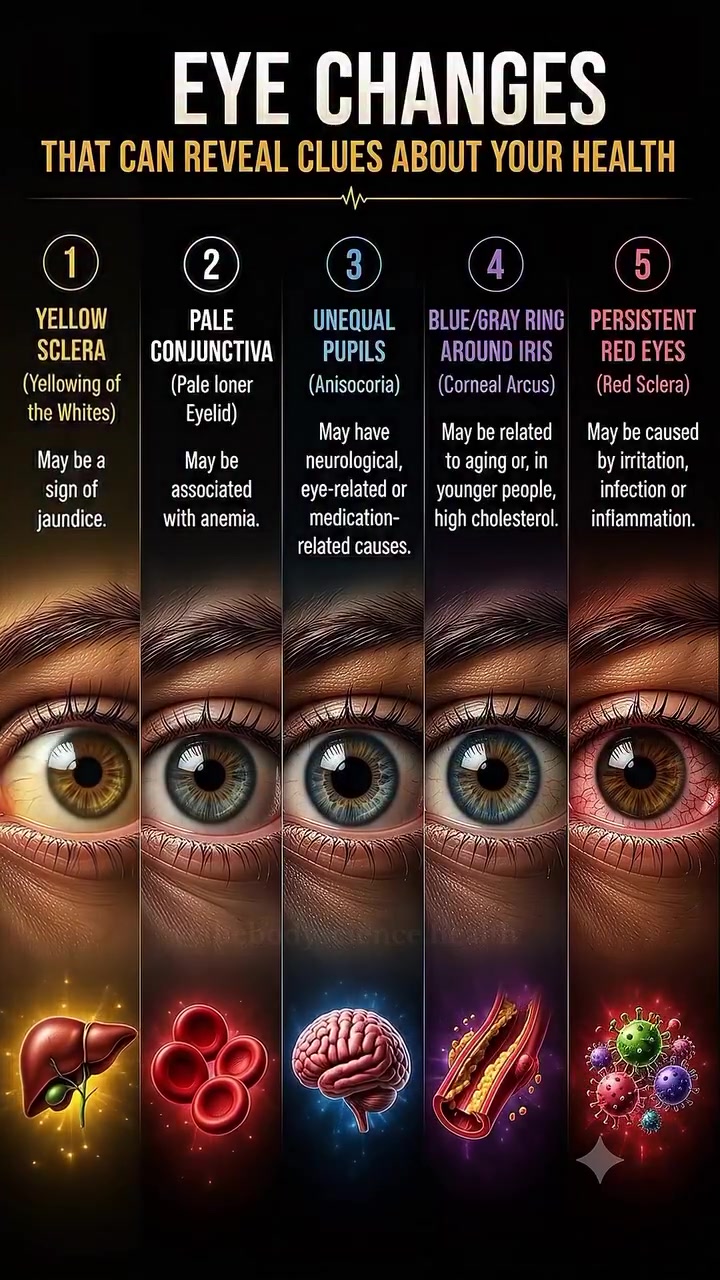
What makes your eyes a window to your health
Eye color can signify genetic inheritance, but it may also be a marker of internal health and risk factors. Such as a yellowing sclera (whites of the eye) which can indicate jaundice. Other potential eye changes listed in a recent infographic include pale eyelids, unequal pupils, and a persistent redness in the eyes. Each alteration can reveal insights into underlying health issues. These range from minor eye conditions to severe medical concerns. An eye health infographic showcases several key conditions. ranging from subtle changes to more pronounced symptoms. It provides clear visuals and concise explanations for each indicator. Each entry pairs a specific eye symptom with potential causes and next steps. And the detailed visual display makes each condition easy to follow. What informs the symptoms the most? The conditions are organized logically, moving from common issues to more serious signs.
Our eyes as diagnostic tools
As preventive care becomes increasingly important, people look for early warning signs of health issues. Our eyes are examined during routine check-ups, but few know what 10 key changes in the eyes may indicate. Besides providing vision support, the eyes now function as diagnostic tools for a variety of health conditions. This trend highlights the importance of regular eye exams. Those exams not only assess vision but can also detect early signs of systemic diseases. By focusing on eye health, individuals can take proactive steps towards maintaining their overall well-being. The reported trends emphasize the need for regular check-ups. They also highlight the role of the eye as a diagnostic tool.
Visualizing eye health
Spotting common eye symptoms
The infographic highlights easy-to-spot eye symptoms to look for in the mirror. Yellowing of the whites of the eyes can indicate jaundice. This condition results from an excess of bilirubin, a yellowish pigment produced by the breakdown of red blood cells. Pale eyelids can suggest anemia, where the blood lacks red cells. An accumulation of iron-rich hemoglobin in the blood. And neurological, eye-related, or medication factors can cause unequal pupils. The blue or gray ring around the iris, known as the corpus, is common in older adults. Among younger people, it can indicate high cholesterol. And persistent redness could point to irritation, infection, or inflammation. What they reveal about our health is significant.
When to seek help
Identifying sudden flashes of light in the vision or new floaters could indicate a retinal problem. And these sudden vision changes are warning signs. Drooping eyelids might indicate nerve, muscle, or eyelid issues. And dry eyes can stem from various factors. Including dry-eye disease, medications, and other conditions, should also be evaluated. A blood spot on the white of the eye, termed subconjunctival hemorrhage, can occur after minor trauma or straining. Further evaluation could reveal blood-vessel changes. And visible retinal blood-vessel changes may signal diabetes or high blood pressure. An adequate prognosis requires a proper approach.
Eye health indicators in depth
Our eyes are intricate organs, susceptible to many changes. Yellowing of the whites of the eyes, known as jaundice, may indicate liver or gallbladder issues. Anemia can cause pale conjunctiva. Neurological, eye-related, or medication issues can cause unequal pupils. A blue or gray ring around the iris could signal recent aging concerns. Stress, allergies, and incorrect contact lens use can all cause persistent red eyes. And drooping eyelids or ptosis can reveal nerve, muscle, or eyelid conditions. Sudden flashes or new floaters in the vision can indicate a retinal issue. Dry eyes can have multiple causes. Subconjunctival hemorrhage can result from minor trauma or straining. Those visible retinal blood-vessel changes might indicate diabetes or high blood pressure. Regular eye checkups can identify these issues, prevent potential vision loss, and enhance your overall well-being.
Age's influence on eye health
Age can exacerbate certain conditions, such as the blue/gray ring around the iris. Corneal arcus is related to aging. This condition can show up in older people. It becomes even more pronounced in younger adults. It could signal high cholesterol. Age is a significant factor in the development of these and other conditions. Those that require ongoing evaluation. Ressurecting your eyes. With age, vision typically declines. This makes regular eye checkups essential for maintaining overall well-being. These exams help identify issues early. They also provide an opportunity to discuss treatment options and lifestyle modifications to improve eye health. All this contributes to sustained vision health. Seeking immediate medical attention for sudden vision changes is crucial. These changes can indicate a serious retinal problem. Although, it is sometimes difficult to determine the cause of blood spots in the eye. It is likely due to minor trauma. How you respond to symptoms can help manage any risks.
How to maintain healthy vision
Schedule regular eye checkups: Regular eye examinations can detect early symptoms of potentially serious conditions. They also provide an opportunity to discuss treatment options and lifestyle modifications. Monitor changes in your vision: Keep an eye out for any changes in your vision, such as sudden flashes of light, floaters, or persistent redness. Watch out for changes in the color of your eyes and eyelids. If you notice any of these changes, consult an eye care professional immediately. Avoid eye strain: Take regular breaks when using digital devices or reading to reduce eye strain. Even if you're just sitting back for a minute. Wear protective eyewear: Wearing sunglasses with UV protection and safety glasses during activities that pose a risk of eye injury can help prevent eye injuries and infections. Healthy vision is more within reach.
Questions readers ask
What are some common eye symptoms that might indicate health issues?
The infographic discusses several eye symptoms to look for, such as a yellow tinge in the whites of the eyes, which can indicate jaundice, pale eyelids which can suggest anemia, unequal pupils, persistent redness in the eyes, and a blue or gray ring around the iris (corpus).
What does it mean if I have a yellow tinge in the whites of my eyes?
A yellow tinge in the whites of your eyes, or sclera, can indicate jaundice. This condition occurs when there is an excess of bilirubin, a yellowish pigment produced by the breakdown of red blood cells. If you notice this symptom, it's a good idea to consult with a healthcare professional for further evaluation.
Can unequal pupils be a sign of a serious health issue?
Yes, unequal pupils can be a sign of several health issues, including neurological problems, eye-related conditions, or side effects from certain medications. If you notice that your pupils are not the same size, it's important to seek medical attention to determine the underlying cause.
What are the potential causes of persistent redness in the eyes?
Persistent redness in the eyes can be caused by a variety of factors, including irritation, infection, or inflammation. It's important to monitor this symptom and consult a healthcare professional if it persists, as it could indicate an underlying health issue that needs to be addressed.
How can eye exams help detect systemic diseases?
Eye exams can help detect early signs of systemic diseases by examining the blood vessels and other structures in the eye. For example, visible changes in the retinal blood vessels can signal conditions like diabetes or high blood pressure. Regular eye exams are an important part of preventive care and can provide valuable insights into your overall health.
Related deep dives
Similar reads based on topic and creator.

Recent articles
Fresh deep dives from the latest Reels we unpacked.




Comments
Be the first to comment.