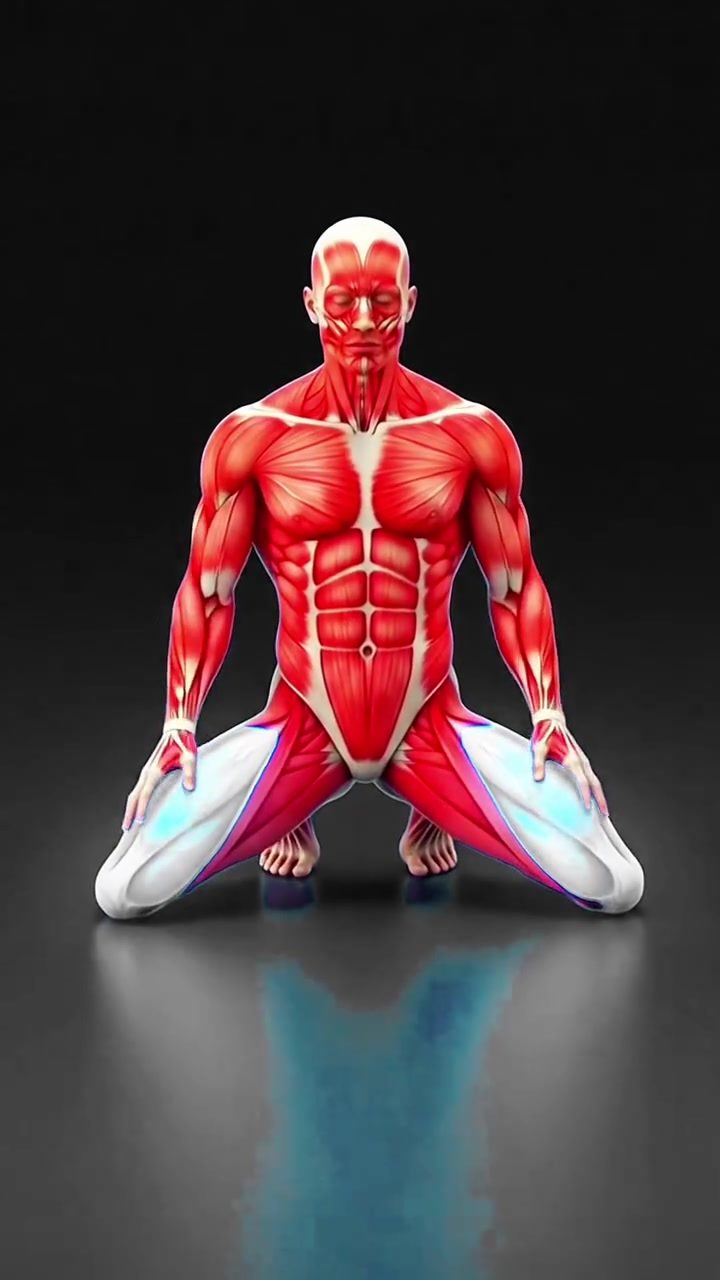
Human Anatomy Visualization
Medical visualization tools play a crucial role in understanding the complex structures of the human body. These tools provide detailed views of muscles, skeletal arrangements, and internal structures, making them invaluable for medical professionals, students, and enthusiasts alike. The visualization of these anatomical structures offers insights into how different parts of the body interact and function.
Why This Matters
Anatomy Visualization in Education and Practice
Medical visualization tools are essential for both educational purposes and practical applications in the medical field. They allow for a deeper understanding of the human body's intricacies, which is vital for accurate diagnoses, effective treatments, and precise surgical procedures. Whether you're a medical student learning about the body's structures or a professional honing your skills, these visualizations offer a clear and detailed view of the human anatomy.
Detailed 3D Models
One of the most significant advantages of medical visualization is the ability to create detailed 3D models. These models provide a comprehensive view of the body's structures, allowing for a more in-depth understanding of how muscles, bones, and other tissues interact. Detailed 3D models can showcase various poses and anatomical structures, making it easier to visualize how the body moves and functions. This is particularly useful for demonstrating muscle attachments and skeletal alignment, which are crucial for understanding flexibility and range of motion.
Visualizing Muscle and Skeletal Structures
Medical visualization tools often focus on the muscles and skeletal structures of the body. These visualizations can highlight different muscle groups and bone arrangements, providing a clear view of how the body's structures support movement and stability. By visualizing these structures, it's possible to understand how the spine, lats, obliques, and deep spinal muscles work together to maintain balance and flexibility. This is particularly important for exercises and poses that involve bending and stretching, as seen in the side bend pose described in the visualization.
Practical Tips for Using Medical Visualization
When using medical visualization tools, it's important to focus on specific areas of the body and understand how different structures interact. Here are some practical tips for getting the most out of these visualizations:
Focus on Key Muscle Groups
When studying muscle groups, it's helpful to focus on key areas such as the spine, lats, and obliques. These muscle groups are crucial for maintaining balance, flexibility, and overall body stability. By visualizing how these muscles interact, you can better understand their functions and how they contribute to movement and stability.
Understand Muscle Attachments
Muscle attachments are vital for understanding how muscles move and interact with other structures in the body. By visualizing these attachments, you can gain a deeper understanding of how the body's muscles support movement and stability. This is particularly important for exercises and poses that involve bending and stretching, as these movements can help release built-up tension through the entire spinal chain.
Study Skeletal Alignment
Skeletal alignment is crucial for understanding how the body moves and maintains balance. By visualizing the skeletal structure, you can see how the bones support the body's weight and how different movements affect alignment. This is particularly important for exercises and poses that involve bending and stretching, as these movements can help improve flexibility and range of motion.
Important Takeaways
Medical visualization tools offer a wealth of information about the human body's structures and functions. By using these tools, you can gain a deeper understanding of how muscles, bones, and other tissues interact to support movement and stability. This knowledge is invaluable for medical professionals, students, and enthusiasts alike, as it allows for more accurate diagnoses, effective treatments, and precise surgical procedures.
Some important takeaways from medical visualization include:
- Detailed 3D models provide a comprehensive view of the body's structures, making it easier to understand how muscles, bones, and other tissues interact.
- Visualizing muscle and skeletal structures is crucial for understanding flexibility and range of motion, as well as how different parts of the body support movement and stability.
- Focusing on key muscle groups, understanding muscle attachments, and studying skeletal alignment are practical tips for getting the most out of medical visualization tools.
Conclusion
Medical visualization tools are invaluable for understanding the complex structures of the human body. By providing detailed 3D models and visualizations of muscle and skeletal structures, these tools allow for a deeper understanding of how the body moves and functions. Whether you're a medical student, professional, or enthusiast, medical visualization can enhance your knowledge and skills, making it an essential tool for anyone interested in the human body. By focusing on key muscle groups, understanding muscle attachments, and studying skeletal alignment, you can gain a comprehensive understanding of the body's structures and functions.
Questions readers ask
What are the key benefits of using 3D anatomy visualization tools?
3D anatomy visualization tools offer several benefits, including detailed views of muscles, bones, and internal structures. These tools help users understand how different body parts interact and function, making them valuable for medical professionals, students, and enthusiasts. They also aid in accurate diagnoses, effective treatments, and precise surgical procedures.
Who can benefit from using 3D anatomy visualization tools?
3D anatomy visualization tools are beneficial for a wide range of users, including medical professionals who need to understand complex body structures for diagnoses and treatments, students who are learning about the human body, and enthusiasts who are interested in the intricacies of human anatomy. These tools provide a comprehensive view of the body's internal and external structures, making them accessible to various audiences.
How do 3D anatomy visualization tools aid in medical practice?
In medical practice, 3D anatomy visualization tools are invaluable. They allow healthcare providers to visualize complex body structures in detail, which is crucial for accurate diagnoses. These tools also help in planning and performing precise surgical procedures, as well as in developing effective treatment plans. They enhance the understanding of how different body parts interact and function, leading to better patient outcomes.
What types of structures can be viewed using 3D anatomy visualization tools?
3D anatomy visualization tools can display a wide range of body structures, including muscles, bones, and internal organs. They provide detailed views of the skeletal system, muscular system, and internal structures like the heart, lungs, and digestive system. This comprehensive visualization helps users gain a deeper understanding of how these structures interact and function within the body.
How do 3D anatomy visualization tools enhance learning about the human body?
3D anatomy visualization tools enhance learning by providing interactive and detailed views of the human body. Users can explore different layers of the body, rotate structures, and zoom in on specific areas to gain a better understanding of complex anatomical relationships. These tools make it easier to grasp the spatial arrangements and functional interactions of various body parts, aiding in practical applications and research.
Are there any specific features that make 3D anatomy visualization tools unique?
Yes, 3D anatomy visualization tools offer unique features such as the ability to rotate, zoom, and dissect virtual models of the human body. These features allow users to explore different layers and structures in detail, providing a dynamic and immersive learning experience. Additionally, some tools offer labeling and annotation capabilities, making it easier to identify and study specific body parts.
Related deep dives
Similar reads based on topic and creator.




Recent articles
Fresh deep dives from the latest Reels we unpacked.




Comments
Be the first to comment.