A Launchpad for De-escalation
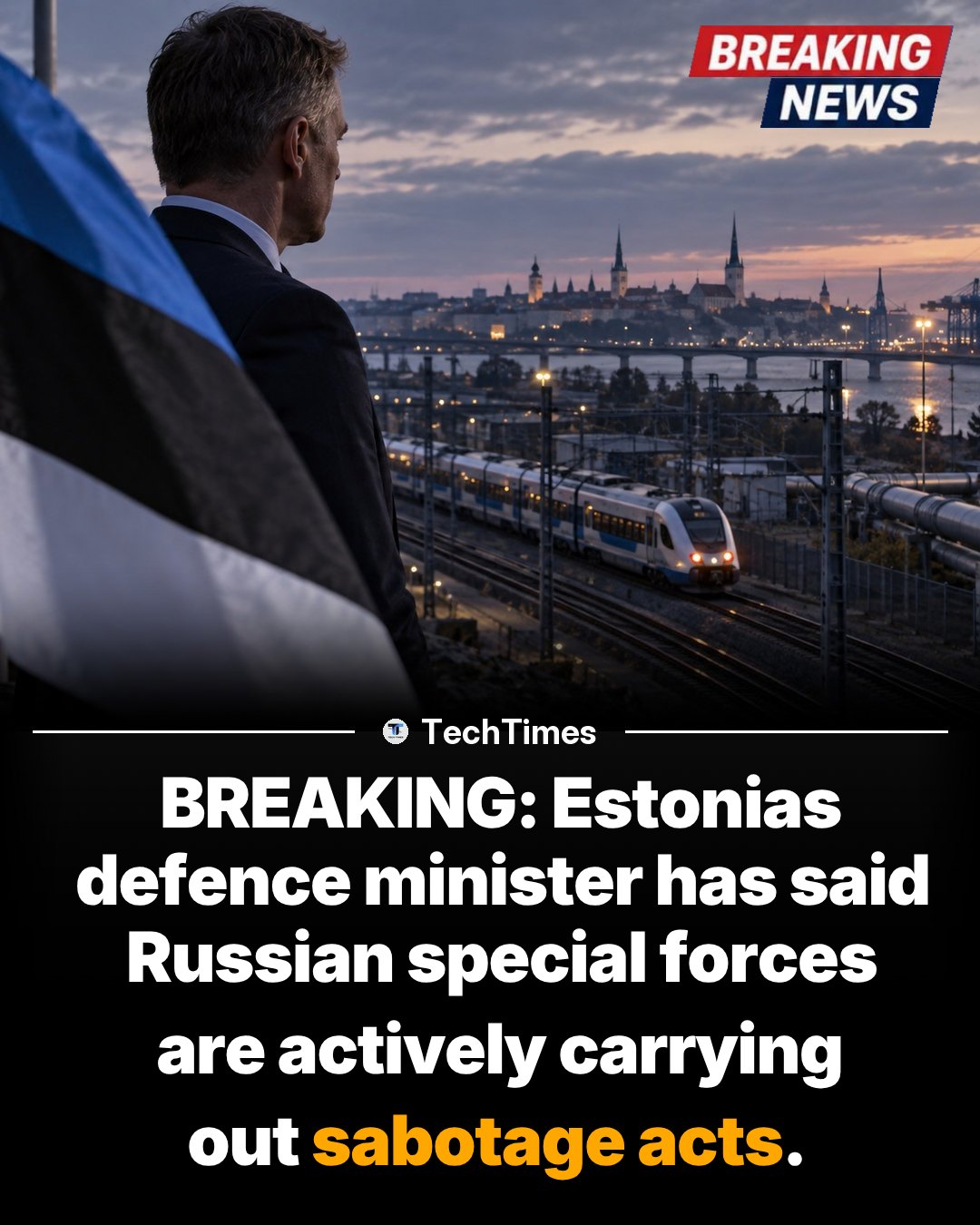
Estonia's defence minister announced that Russian special forces are conducting sabotage acts. This is the most recent escalation in the ongoing political tension between the two nations. The claim comes through a brief news reel that airs nothing but a man in a suit reading this headline in front of an Estonian flag, with the words "RUSSIAN SPECIAL FORCES" and "ACTIVELY CARRYING OUT SABOTAGE ACTS." This act may seem minor in the larger geopolitical climate, but Estonia taking an active stance on espionage and sabotage could force the whole European Union to rethink its stance.
Russian Sabotage in Estonia: What We Know
The specific acts of sabotage are unclear, but the Estonian government provided a clear, unambiguous message with this announcement. Estonia pins the blame on Russia, not a rogue group. Considering the geopolitical location of Estonia, the accusation means trouble. Estonia is a part of the Eastern European region, directly bordering Russia. They have a history of being used as a geopolitical stepping stone. The claim is the first high-level accusation from an EU nation of Russian sabotage in years. It was made in an uncertain political climate. Estonia's claims of sabotage are open to speculation. As a response, the tensions between the two nations escalate, while the media spotlights the situation.
A Tinderbox in Central Eastern Europe
Escalating tensions test Europe’s strength. The entire Russian operations into Estonia may be part of a larger push into Eastern Europe. The first signs of a shift in Russia's plan include a Russian military officer giving a speech at the Moscow State University. The geographic proximity of Ukraine to Estonia could increase tensions. Yet, Russia has far more at stake. The consequences of its actions can severely affect its relationship with the EU. Russia's actions could provide further evidence of geopolitical aggression in the eyes of Western nations. The fierce independence of Estonia has no room for compromise, neither does the Russian government.
The Baltic States' Pushback
This is the first high-level accusation from an EU nation of Russian sabotage in years. However, Estonia's claim is not the first of its kind. Even though it sits on the edge of the EU, Estonia is required to adhere to EU guidelines. Estonia is one of the smallest EU states and doesn't have the strongest military. However, the defense minister's statement is a reminder of Estonia’s independence. Despite its relatively small presence in the EU, Estonia has a history of pushing back against Russia’s actions. Unlike the EU, Estonia is unlikely to back down.
Sabotage Exposed in Estonia
The fact that this news is from Estonia may mean they are targets of espionage. Therefore, Russia's activity may not be limited to sabotage. Estonian officials are facing reality. They realize that Russia may attempt to destabilize Estonia through political fraud and cybercrime. Russian sabotage may not stop at material damage. Information could be stolen or compromised. The following are possible targets: Personal Identifcation information: Russia could be after personal identification information. Government documents: Russian authorities may be after government documents. Public information: Public information is sensitive and Russia may be trying to disrupt it. The EU might be entirely powerless to stop such acts, since the Estonian government seems to take the blame for disrupting the Russian special forces.
A Balanced Response
Not all actions against Russian espionage are as serious as military intervention. There are a few down-to-earth methods that the Estonian government can use. Much of these are already in effect or could easily be included. Estonia is already attempting to develop an information security strategy. The government can enhance its strategy using these methods:
- Recognizing the truth: The Estonian government should acknowledge that Russian espionage is a growing problem.
- Early warnings: The government can use warnings in the form of press releases and public announcements.
- Communications guidelines: The Estonian communication policy should be updated. Estonia is a small country. The damage of the saboteurs could not only impact Estonia but also spill over to the EU. Estonia should use political pressure rather unilaterally. The Estonian government will have to take action. The Estonian government has a lot to lose, and the EU will have to face the issue.
Final thoughts on Sabotage in Central Eastern Europe
Estonia may not be able to stop all of Russia’s activity. Russia is a larger, more powerful nation, and Estonia is on their border. The public position of Estonia may be dramatic, but the statements are public and the risk is real.
Questions readers ask
What exactly are the sabotage acts that Estonia is accusing Russia of?
The specific acts of sabotage are not detailed in the defense minister's announcement. However, Estonia has clearly attributed these activities to Russian special forces, suggesting a coordinated effort rather than isolated incidents. The nature of these acts could range from physical damage to infrastructure to more covert operations like cyberattacks or political manipulation.
Why is Estonia's accusation of Russian sabotage significant in the geopolitical landscape?
Estonia's accusation is significant because it is the first high-level allegation from an EU nation in years. Given Estonia's history as a geopolitical stepping stone and its proximity to Russia, this claim could escalate tensions in Eastern Europe. It also forces the EU to re-evaluate its stance on Russian activities, potentially leading to broader changes in European policy.
How might Russia’s actions in Estonia affect its relationship with the EU?
Russia's alleged sabotage in Estonia could severely impact its relationship with the EU. If proven, these actions would provide further evidence of geopolitical aggression, potentially leading to increased sanctions or other diplomatic repercussions. The EU, which values the independence of its member states, may feel compelled to take a stronger stance against Russia.
What is the potential impact of Estonia's claim on the broader Eastern European region?
Estonia's claim could increase tensions throughout Eastern Europe, particularly given its geographic proximity to Ukraine. The region is already a hotbed of geopolitical activity, and any escalation in Estonia could have ripple effects. Russia's potential actions in Estonia may be part of a larger strategic push into the region, which could further destabilize an already volatile area.
How does Estonia's response to Russian sabotage compare to other EU nations' responses to similar threats?
Estonia's response is notable for its directness and independence. As one of the smallest EU states, Estonia doesn't have the strongest military, but it has a history of pushing back against Russian actions. Other EU nations might be more cautious or reliant on collective EU responses, whereas Estonia's response is a clear assertion of its sovereignty and independence.
What are some of the potential consequences of Russia's alleged sabotage activities in Estonia?
The consequences of Russia's alleged sabotage activities in Estonia could be far-reaching. Beyond physical damage, Russia could be targeting Estonia's information infrastructure, aiming to steal or compromise personal identification information, political data, or other sensitive information. This could lead to widespread destabilization and undermine Estonia's security and sovereignty.
Recent articles
Fresh deep dives from the latest Reels we unpacked.


Comments
Be the first to comment.