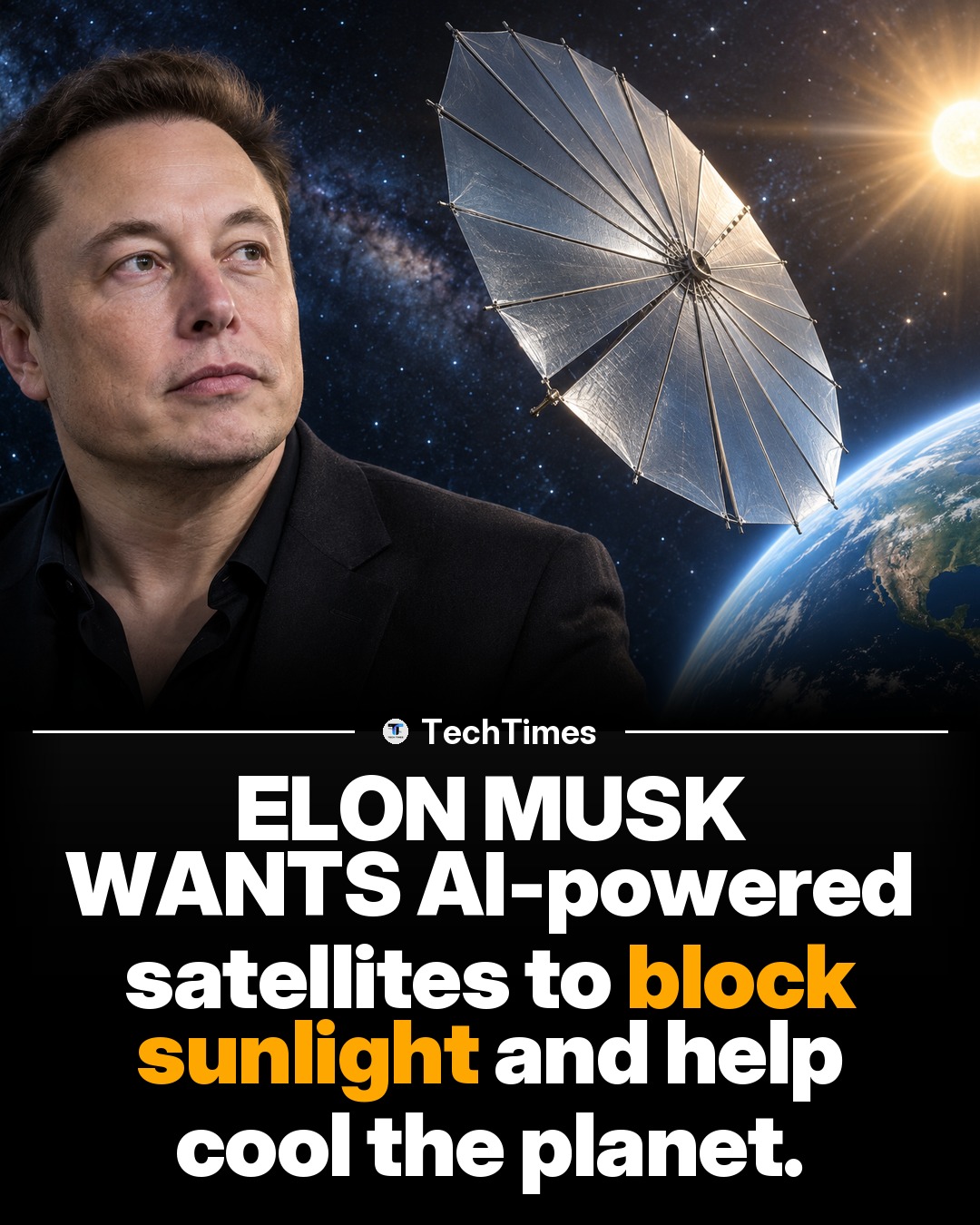
Elon Musk has proposed an ambitious plan: using AI-powered satellites to block sunlight and cool the planet. The concept, visualized with a digitally rendered image of Musk and a satellite against the backdrop of Earth, aims to address one of the most pressing challenges of our time — global warming. TechTimes reported the proposal as an innovative solution to mitigate the effects of climate change.
The Proposed Cooling Program
AI-powered satellites, as envisioned by Musk, would act a bit like a planetary parasol. They would strategically block sunlight and reflecting it back into space, reducing the amount of solar radiation that reaches Earth. The AI component is crucial as it would allow the satellites to adapt and optimize their positioning in real-time, ensuring the cooling effect is both effective and safe. Unlike traditional sunshades or geoengineering methods, Musk's idea leverages advanced technology to create a more dynamic and responsive system. The proposal isn't just about placing satellites in orbit; it's about creating an intelligent network that can learn and adapt. These satellites would use AI to monitor atmospheric conditions, adjust their positions, and ensure that the cooling effect is evenly distributed. The AI would also help mitigate any potential risks, such as disrupting weather patterns or agricultural cycles. Although specific mechanisms and timelines were not detailed, Musk’s idea emphasizes the use of cutting-edge technology to tackle a global issue.
Climate Action in the Age of AI
Musk's proposal aligns with a growing trend of leveraging AI to address environmental challenges. Climate change is no longer a distant threat; it's a pressing reality. Melting polar ice, rising sea levels, and increased frequency of extreme weather events are stark reminders of the need for urgent action. Traditional methods of reducing carbon emissions, while crucial, are often seen as insufficient. Musk's plan offers an unconventional yet potentially powerful solution. Musk's idea is a bold step in a direction many experts are already exploring. AI has begun to provide governments and researchers with predictive models, optimizing energy consumption, and enhancing our understanding of climate patterns. For instance, AI-driven predictive tools are helping inform policy changes to mitigate the effects of climate change. Using the same AI principles for blocking sunlight exemplifies the transformative potential of technology in climate action.
The Mechanics
AI-Powered Orbit Adjustment
The core functionality of these AI-powered satellites is their ability to dynamically adjust their orbits. Traditional geoengineering solutions are static and often face significant implementation challenges. AI, however, enables a flexible approach. The satellites could continually monitor environmental conditions and reposition themselves to ensure optimal sun shading without causing unintended side effects, such as local area cooling that disrupts ecosystems. Once the satellites are positioned, advanced algorithms would then analyze real-time data from various scientific sensors to ensure that the desired cooling effect is achieved. The AI system would optimize the satellite trajectories to avoid potential negative consequences, keeping the methodology dynamic and adaptable.
The Role of AI Algorithms
At the heart of this proposal lies the AI component, which would manage everything from initial positioning to ongoing adjustments. The AI algorithms would be trained on extensive datasets covering climate patterns, atmospheric conditions, and historical weather data. This comprehensive training would equip the AI with the necessary intelligence to make real-time decisions, ensuring that the sunshading effect is both effective and safe. These algorithms would also incorporate feedback mechanisms to continually improve their accuracy and efficiency. As the satellites collect more data, the AI would become better at predicting and mitigating risks, making the entire system more robust and reliable.
Safety and Ethics
Assessing Risks
While the idea of blocking sunlight to cool the planet is innovative, it comes with inherent risks. The primary concern is the potential impact on Earth's ecosystems. Blocking sunlight could disrupt agricultural cycles, affecting crop growth and food security. Additionally, changing the planet’s temperature could have unforeseen effects on weather patterns, potentially leading to increased frequency of extreme weather events. Musk's proposal acknowledges these risks and emphasizes the role of AI in mitigating them. The AI-driven system would continuously monitor the impact of the sunshading effort and make real-time adjustments to minimize any negative consequences. The goal is to create a balancing act where cooling is achieved without compromising the planet's delicate ecological equilibrium.
Ethical Considerations
Beyond the technical challenges, the ethical implications of such a project are immense. The decision to intervene in the Earth's climate system is not one to be taken lightly. Questions arise about who has the authority to make such interventions and how the benefits and risks are distributed globally. Musk's proposal doesn't directly address these ethical concerns but highlights the need for a well-regulated, transparent, and inclusive approach to implementing such technologies. Ethical frameworks, public consultations, and stringent regulatory oversight would be essential to ensure that any AI-powered geoengineering solution is both effective and equitable.
The Practical Path
Elon Musk’s idea to use AI-enhanced satellites can be a first step in serious global efforts, but clarity on the next tangible steps remains unclear. Potential enthusiasts or researchers could approach it by looking at the following points:
- Educational Resources: Musks proposal is far from being implemented. Researchers would need to dive into academic journals and authoritative sources in the field of AI and geoengineering to understand the underlying theories and technical requirements.
- Collaboration with Experts: Engage with climate scientists, AI specialists, and engineers who have expertise in related fields. Collaborative efforts can offer valuable insights and help refine the concept.
- Research Funding: Seek funding for research and development. Academic institutions, government bodies, and private organizations may offer grants or investment opportunities for projects that align with Musk’s goals. The chances of this plan becoming a reality anytime soon are slim, yet it signifies a crucial moment in exploring how technology and science could offer innovative solutions to global warming. It pushes the boundaries of existing research, encouraging us to think creatively about our planet's future.
Questions readers ask
How would AI-powered satellites adjust their positions to block sunlight effectively?
The AI would analyze real-time data from scientific sensors to monitor environmental conditions and optimize the satellites' positions. This dynamic adjustment ensures that the cooling effect is evenly distributed and minimizes any unintended side effects, like disrupting weather patterns or local ecosystems. It's a bit like having a smart parasol that moves with you to provide shade where it's needed most.
What makes Musk's plan different from other geoengineering methods?
Traditional geoengineering solutions are often static and can have significant implementation challenges. Musk's plan uses AI to create a more dynamic and responsive system. The satellites can adapt in real-time to environmental changes, ensuring a more controlled and effective cooling process.
How does Musk's proposal fit into the broader trend of using AI for climate action?
Musk's idea aligns with the growing use of AI to address environmental challenges. AI is already helping with predictive models, optimizing energy consumption, and enhancing our understanding of climate patterns. By applying AI to block sunlight, Musk's plan exemplifies how technology can offer innovative solutions to combat climate change.
What are the potential risks of deploying AI-powered satellites for cooling the Earth?
The proposal acknowledges potential risks, such as disrupting weather patterns or agricultural cycles. The AI component is designed to mitigate these risks by adapting the satellites' positions in real-time and ensuring the cooling effect is evenly distributed. However, specific mechanisms and timelines for addressing these risks aren't detailed in the proposal.
Is this plan already being developed, or is it still a concept?
As of now, the proposal is more of a concept, but it is a bold step in a direction that many experts are already exploring. The specifics of the mechanisms and timelines for development are not detailed, but it emphasizes the use of cutting-edge technology to address global warming.
What are the next steps for Musk's AI-powered satellite plan?
The article does not provide specific next steps or timelines for Musk's proposal. However, it suggests that further development would involve creating an intelligent network of satellites that can learn, adapt, and optimize their positions using AI. This would require significant technological advancements and likely collaboration with experts in the field.
How would these AI-powered satellites ensure a balanced cooling effect across the globe?
The satellites would use AI to monitor atmospheric conditions and adjust their positions accordingly. This real-time adaptation ensures that the cooling effect is evenly distributed, preventing any local areas from becoming too cool or too hot. The goal is to create a balanced cooling effect that mitigates the risks of disrupting ecosystems and weather patterns.
Related deep dives
Similar reads based on topic and creator.




Recent articles
Fresh deep dives from the latest Reels we unpacked.




Comments
Be the first to comment.