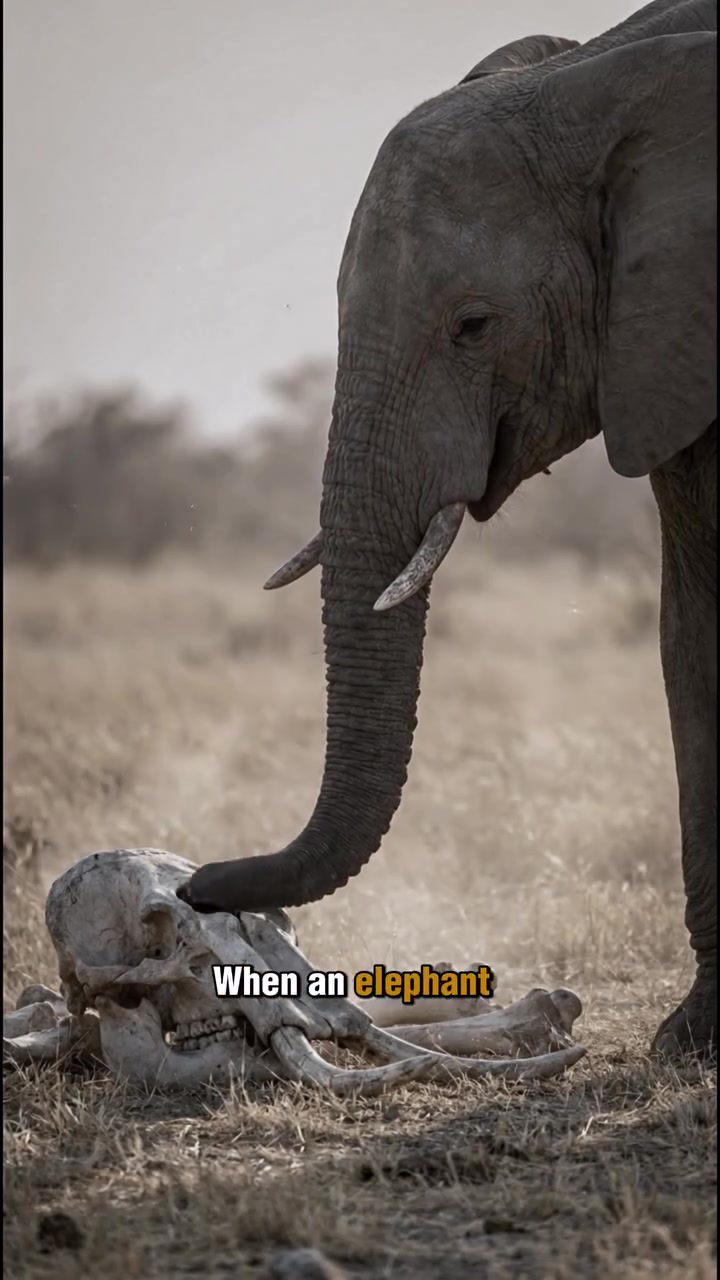
Elephants, one of the world's most intelligent and emotionally complex creatures, exhibit a peculiar behavior when one of their own dies. They gather around the remains, touching the bones with their trunks for hours, silently interacting with the remains of their kin — as if they process the loss of the deceased.
The Elephant's Grieving Process
Elephants exhibit a complex behavior called "bone touching" — caressing the skull and tusks of the dead for extended periods Statements like, "The others come back for the body. They gather in silence around the bones and gently touch them with their trunks," reveals that elephants exhibit a complex behavior called "bone-touching." They caress the skull and tusks of their deceased companions for hours, seemingly recognizing who it was. This behavior is not just a brief acknowledgement of death but a prolonged, silent interaction. The elephants often cover the body with branches and stand guard over it. This behavior is even more profound when they return to the same bones years later and fall completely silent, suggesting a deep emotional connection and recognition of the loss. This ritualistic behavior, while mysterious, adds richness and complexity to our understanding of grief in the animal kingdom.
Mysteries of The Elephant Graveyard
The elephant graveyard is a legend that has haunted our understanding of elephant behavior for centuries. It is a place where elephants are believed to go to die. Perhaps the legend is a way for us to understand the elephants' behaviour in our own terms, i.e., "The way they grieve is very real." The "elephant cemetery" or "elephant graveyard" is a mythical concept that has long captured human imagination. The term refers to a place where elderly elephants are believed to go to die, although no such place has ever been found. According to what is said in the video, "For centuries, people believed in a secret graveyard where elephants go to die. It was never found, but the way they grieve is very real," suggests that the elephant graveyard might be more of a legend than a reality. The reference to the graveyard in the video humorously highlights the mysterious nature of elephant behavior. The legend points to a human tendency to anthropomorphize elephant behavior. The video emphasizes that while the myth of the elephant graveyard remains unproven, the elephants' genuine grieving process is undeniable.
The Science of Elephant Grief
Scientific insights provide a totally different angle on the elephant visit to deceased. Perhaps elephants know more than we realize. Scientists struggle to definitively explain why elephants exhibit such profound grief. What do they understand about death? The question remains open, even years after these interactions. Elephants, being among the most intelligent and emotionally complex animals, might understand death in a unique way. This understanding, however, is difficult to quantify or prove, leading to ongoing debates in the scientific community. "Scientists still argue about what this means," The lack of definitive answers adds to the mystery of elephant behavior. The profound nature of their grief underscores the complexity of their emotional lives and challenges our understanding of animal intelligence.
Emotional Depth of Elephant Behavior
The emotional depth of elephants is undeniable. Standing guard over the body and returning years later to the bones seems to be a profound grieving process. The profound nature of elephant grief is evident in their behavior. Elephants stand guard over the body, sometimes covering it with branches, and return to the bones years later to fall completely silent. This behavior suggests a deep emotional connection and a recognition of loss. The elephants' ability to remember and return to specific locations years later highlights their remarkable memory and emotional depth. The silence they maintain indicates a level of solemnity and respect for the dead, emphasizing the complexity of their emotional lives.
The Cultural Significance of Elephant Grief
The cultural fascination with elephant behavior reflects our own emotional experiences and interpretations of death The cultural significance of elephant grief lies in its reflection of human emotions and our interpretation of death. The myth of the elephant graveyard and the fascination with their grieving behavior stem from our own emotional experiences. The way elephants handle death resonates with human experiences of loss and mourning, making it a poignant reminder of our own mortality. This fascination highlights the universal nature of grief and the shared emotional experiences between humans and animals. The elephant's behavior serves as a mirror, reflecting our own understanding of death and loss, and inviting us to consider the emotional lives of animals more deeply.
WANT TO BE IN ON THE ELEPHANT TRUTH?
For those who wish to explore the profound world of elephant behavior and grief, there are several practical steps:
- Observe in Wildlife Sanctuaries: Visit wildlife sanctuaries or national parks that provide safe habitats for elephants. Observing elephants in their natural settings can offer firsthand insights into their behavior. Some sanctuaries and conservation organizations allow controlled interactions, giving visitors a more intimate understanding of these animals. However, never approach elephant or their remains — you might in danger and disrupt their rituals. Observe from a safe distance. Elephants are big and dangerous and their behavior near the dead can surprise you.
- Support Research and Conservation: Contribute to or support organizations that conduct research on elephant behavior and conservation. The more we understand about elephants, the better we can protect them. Supporting research can lead to breakthroughs in understanding their complex emotional lives and ensuring their survival in the wild
- Engage in Educational Programs: Participate in educational programs or workshops focused on animal behavior and conservation. Many institutions offer courses and seminars that delve into the intricacies of elephant behavior, providing a deeper understanding of their emotional and social lives.
Fossil in a Sentence
When an elephant dies, the survivors' behavior is far stranger than the mythical graveyard. They recognize the bones, caress the skull, and return years later — all without words. Only an elephant knows what they feel, but it is there, in the body language with the remains of their own kind.
Questions readers ask
What exactly is 'bone touching' and why do elephants do it?
'Bone touching' is a behavior where elephants caress the skull and tusks of their deceased companions with their trunks for extended periods. Scientists believe this ritual helps elephants process their loss, as they seem to recognize the remains of their kin and interact with them in a profound, silent manner. This behavior is not just a brief acknowledgment but a prolonged, respectful interaction.
How do elephants behave when they encounter the remains of their kin?
When elephants encounter the remains of their kin, they gather around the bones and touch them gently with their trunks. They often cover the body with branches and stand guard over it, sometimes returning to the same bones years later to fall silent, suggesting a deep emotional connection and recognition of the loss.
What is the 'elephant graveyard' and is it a real place?
The 'elephant graveyard' is a mythical concept referring to a place where elderly elephants are believed to go to die. However, no such place has ever been found. The legend is more of a human interpretation of elephant behavior, highlighting our tendency to anthropomorphize their actions rather than a literal cemetery.
Do elephants understand the concept of death?
Scientists are still debating whether elephants truly understand death. Elephants exhibit profound grief and recognition of loss, but it's challenging to quantify or prove their understanding of death. Their behavior suggests they might have a unique, complex comprehension of mortality, but more research is needed to confirm this.
What do scientists make of elephant grieving behavior?
Scientists are intrigued by elephant grieving behavior and are actively studying it. They recognize the profound nature of the elephants' grief but struggle to definitively explain why elephants exhibit such complex rituals. The ongoing debates and research highlight the mystery and depth of elephant emotions.
How do elephants' grieving rituals compare to human grieving processes?
Elephants' grieving rituals, such as bone touching and standing guard over remains, show similarities to human grieving processes in terms of recognition of loss and respect for the deceased. However, the exact emotional and cognitive mechanisms behind these rituals in elephants are still not fully understood, making comparisons complex.
Can elephants remember the deceased for extended periods?
Yes, elephants have been observed returning to the remains of their kin years later, suggesting a long-term memory of the deceased. This behavior indicates a deep emotional connection and recognition of loss that persists over time, adding to the complexity of their grieving process.
Related deep dives
Similar reads based on topic and creator.




Recent articles
Fresh deep dives from the latest Reels we unpacked.




Comments
Be the first to comment.