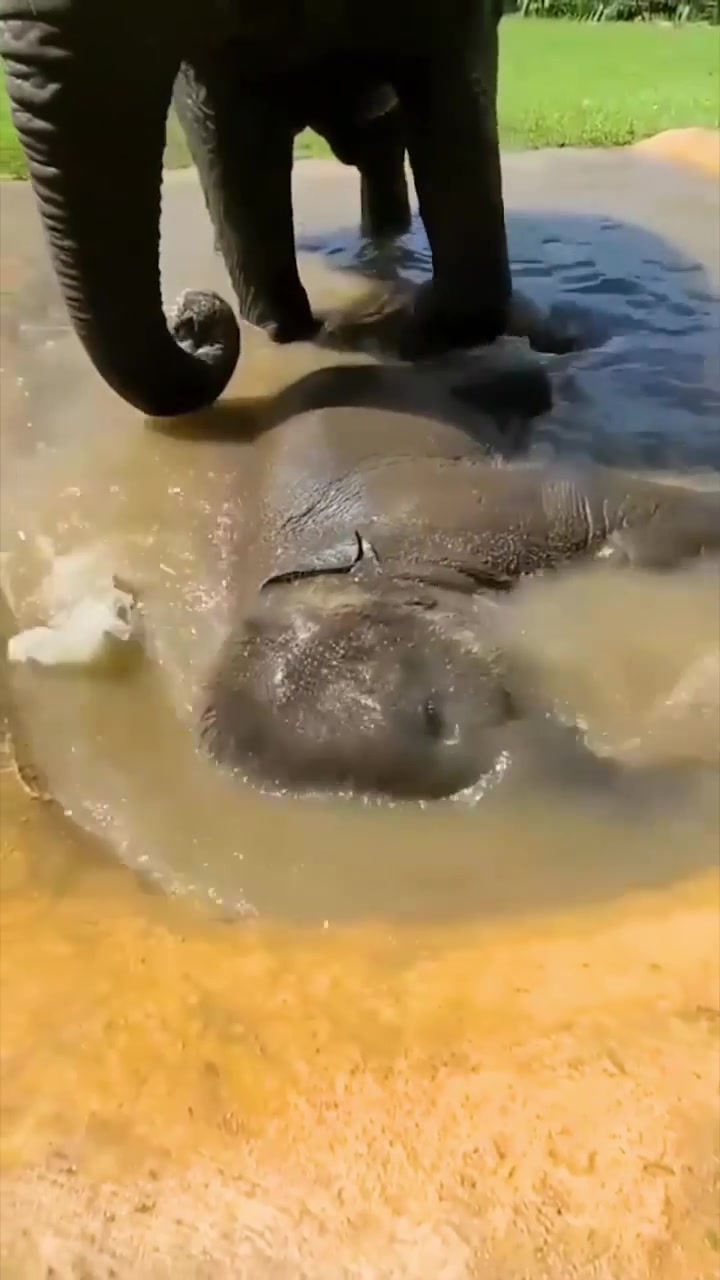
Murky water splashes as an elephant calf kicks and splashes it’s trunk. Above, a mother elephant watches with gentle patience. The rhythmic motion of the calf’s trunk as it beats the water makes an entirely fun and heartwarming scene.
Calves and splashing: the joy of learning in nature
Elephant calves discover the world through playful movements and interactions. Spending time in water teaches them critical skills. Playing in the water is an important part of the learning process for young elephants. Not just a fun break — calf’s activities prepare them for their future. Calves will learn essential swimming abilities and water safety. Playing in water helps with coordination and strength development. The water environment enables calves to practice social interactions and bonding as well. This is more than just splashing fun. How does water play fit into the lives of elephant calves as a whole? “Calves are energetic and curious, and water play is a great way for them to explore and learn. They can practice balancing and moving through the environment.”
This distinction helps calves meet physical and emotional challenges
Water offers a multi-sensory environment that stimulates a calf's senses. For young elephants by providing a varied and dynamic environment, the pool encourages problem-solving and learning. Additionally, water play can promote relaxation and stress relief. The rhythmic natural motions of the pool calm them and reduce stress. Water also provides a cool environment to escape the heat. This natural water feature helps calves regulate their body temperature. Elephants are susceptible to heat exhaustion, so cooling down is critical.
When it comes to social play, calves learn to swim
Water play is often a group activity, involving both calves and adults. This social aspect helps calves learn to navigate social hierarchies and form bonds. It’s a safe and supportive environment. Calves can practice moving their bodies and coordinating with other elephants, how to interact safely and appropriately, and how to communicate. These are the social skills that the calf will need as an adult. What’s more is that the water makes learning fun. Calves find water play enjoyable, which ensures that they engage actively and repeatedly.
The importance of open water for an elephant family
Water is a key element in the natural habitats of elephants. As elephants need large amounts of water to stay hydrated, water also makes a contribution to the well-being of an entire herd. They can drink, swim, and play in pools and wetlands.
Safety in the wild
Wildlife habitats provide a safe, dynamic environment for the calves. Playing in the wild is better than playing in captivity. Wild environments contain physical and social challenges that can’t be replicated in captivity. The wild provides room to run, swimming pools, and natural vegetation to browse and chew on, as well as social groups of varying sizes. Not only do wild elephants benefit from this, but it also retains their mental health.
Encounters in a pool
Watching for a calmer splash
Elephants who watch their calves at play remain calm, and nearby family members will interact playfully. This observation is essential for the emotional development of the calf. Calves learn to read these body cues to anticipate play. The elephant calves will repeat the motions the older elephants demonstrate. This is an instance of social learning. The water provides a sensory environment as well. This helps the calf learn to use water in the same ways their elders do.
Be patient, and expect occasional backing off
Calves are going to be curious and want to learn for themselves. It’s important to be patient with them as they explore and try to figure out the world around them.
Questions readers ask
What specific skills do elephant calves develop by playing in water?
Elephant calves develop several critical skills through water play. They learn essential swimming abilities, improve coordination and strength, and practice social interactions and bonding. The water environment also helps them understand water safety and how to navigate their bodies through the water.
How does water play help elephant calves with stress and relaxation?
Water play offers a multi-sensory experience that can promote relaxation and stress relief for elephant calves. The rhythmic motions of the water help to calm them and reduce stress. Additionally, water play provides a cool environment that helps them regulate their body temperature, which is crucial for their well-being.
Why is it important for elephant calves to play in water with other elephants?
Playing in water with other elephants helps calves learn social skills and navigate social hierarchies. It provides a safe and supportive environment for them to practice moving their bodies, coordinating with others, and learning how to interact safely and appropriately. This social aspect is essential for their development into well-adjusted adults.
How does water play contribute to the overall well-being of an entire elephant herd?
Water is a key element in the natural habitats of elephants, contributing to the well-being of the entire herd. It provides a source of hydration, a place to swim and play, and helps regulate their body temperature. Water is crucial for maintaining the health and happiness of the herd.
What are the differences between water play in the wild and in captivity for elephant calves?
Water play in the wild offers a more dynamic and challenging environment for elephant calves. It provides physical and social challenges that can’t be replicated in captivity, such as room to run, natural vegetation, and social groups of varying sizes. Wild environments also help retain the mental health of elephants, making it better for their overall development.
Can water play in the wild be dangerous for elephant calves, given the presence of predators and other hazards?
Water play in the wild can pose some risks, but elephants are generally cautious and protective of their young. Mother elephants and other adults in the herd watch over the calves with gentle patience, ensuring their safety. The wild provides a safe and dynamic environment for calves to learn and grow, despite potential hazards.
Related deep dives
Similar reads based on topic and creator.




Recent articles
Fresh deep dives from the latest Reels we unpacked.



Comments
Be the first to comment.